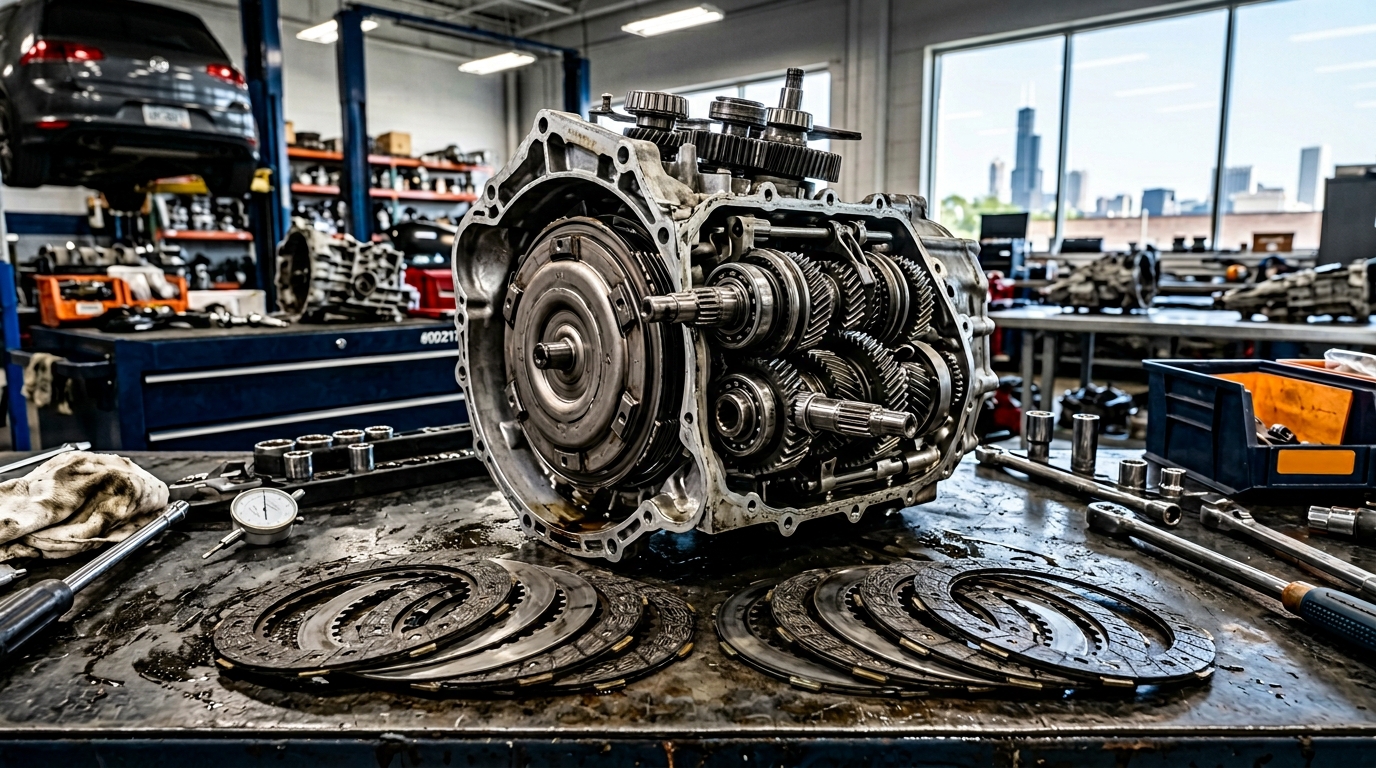
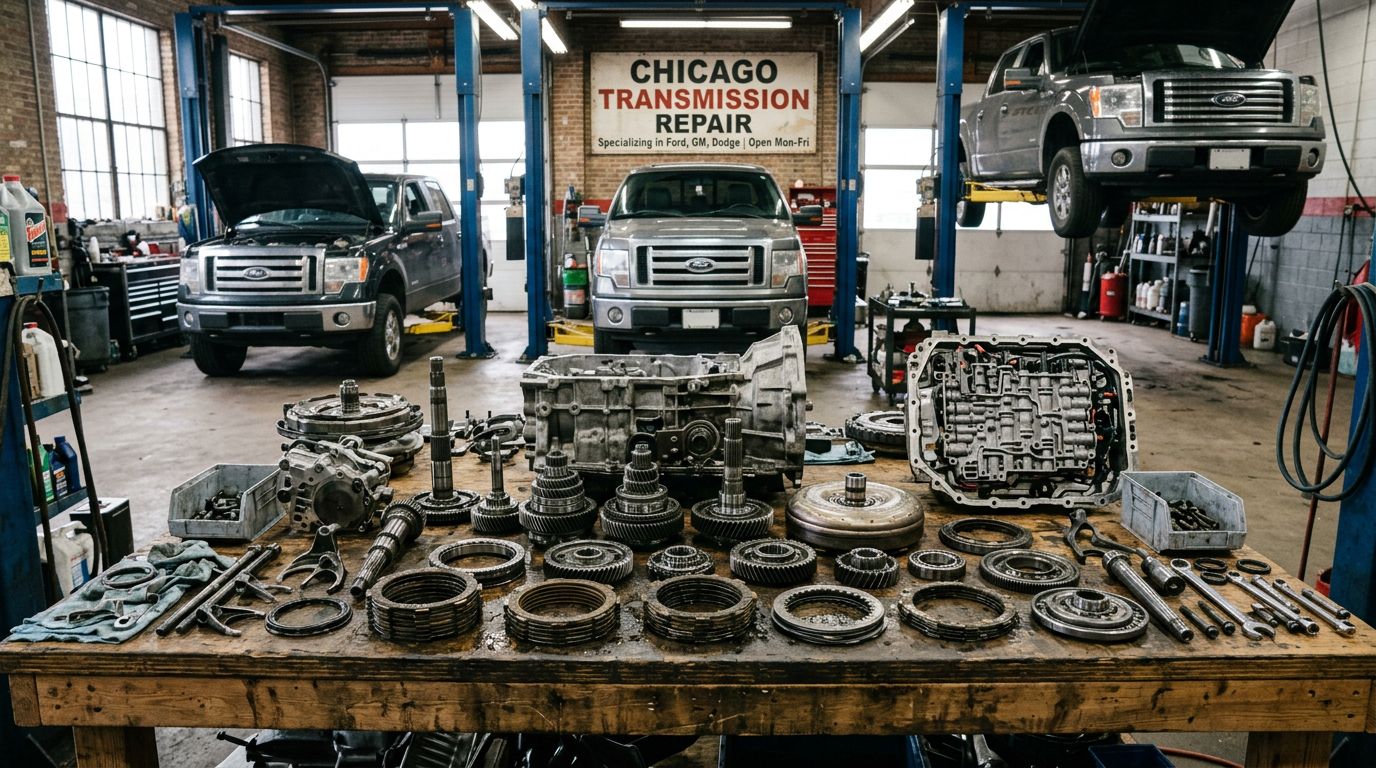
A torque converter replacement in Arlington Heights should be quoted after scan data, road testing, and fluid inspection confirm the converter is the likely source of the shudder or lockup fault. German vehicles such as BMW, Mercedes, and Audi can add access, programming, and parts-availability questions. Here's what drives the decision and how to know whether replacement, fluid service, or deeper diagnosis is the next step.
What Is a Torque Converter?
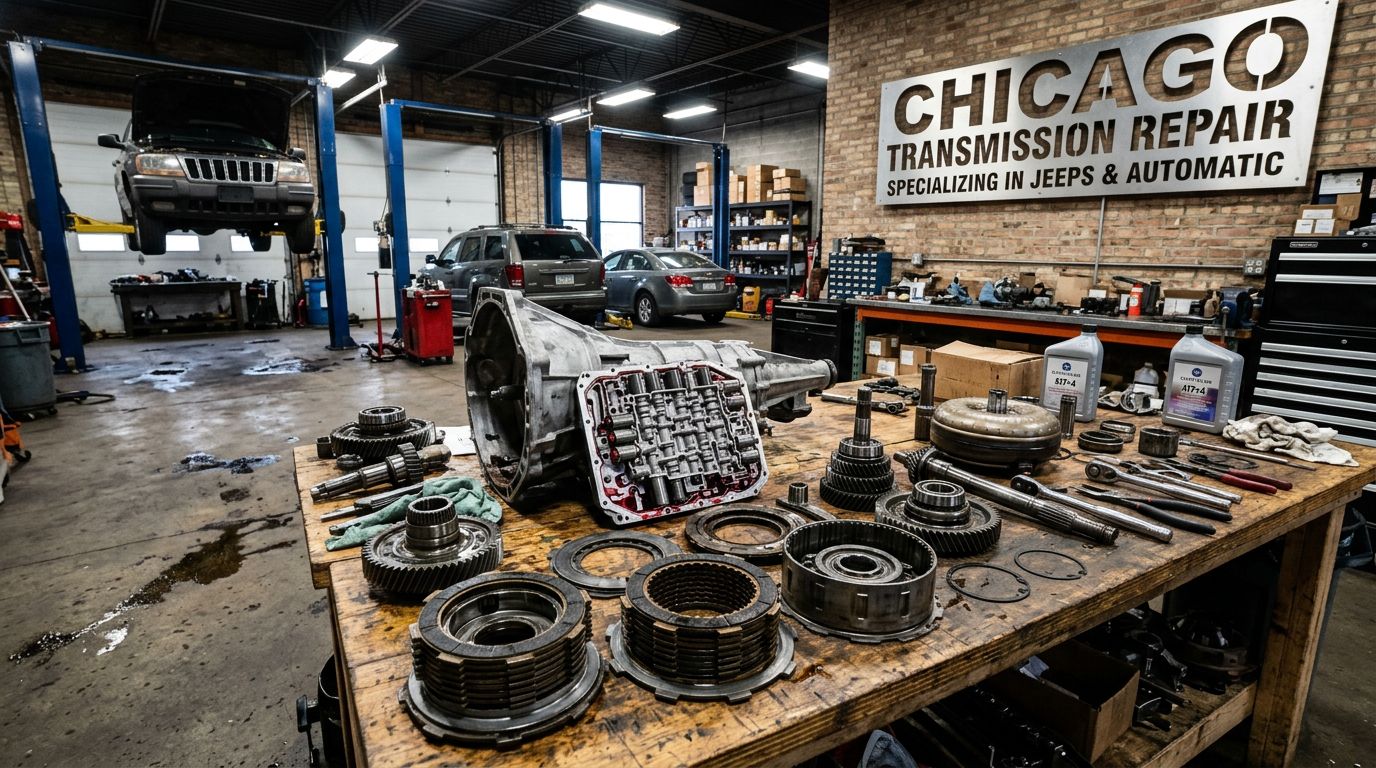
The torque converter is the fluid coupling between the engine and the transmission. It allows the engine to keep running when the vehicle is stopped (so you don't stall in traffic), multiplies torque during acceleration, and - via the torque converter clutch (TCC) - locks up at cruising speed to eliminate slippage and improve fuel economy.
It's a sealed unit. When the torque converter fails internally, it cannot be serviced - it's replaced as an assembly.
Signs of a Failing Torque Converter
- Shudder at 30 - 50 mph: The most common symptom. Feels like driving over rumble strips at steady highway speed. Caused by the torque converter clutch (TCC) lining wearing and slipping inconsistently.
- Slipping: Engine revs rise but the car doesn't accelerate proportionally. TCC failure disrupts the mechanical lock-up.
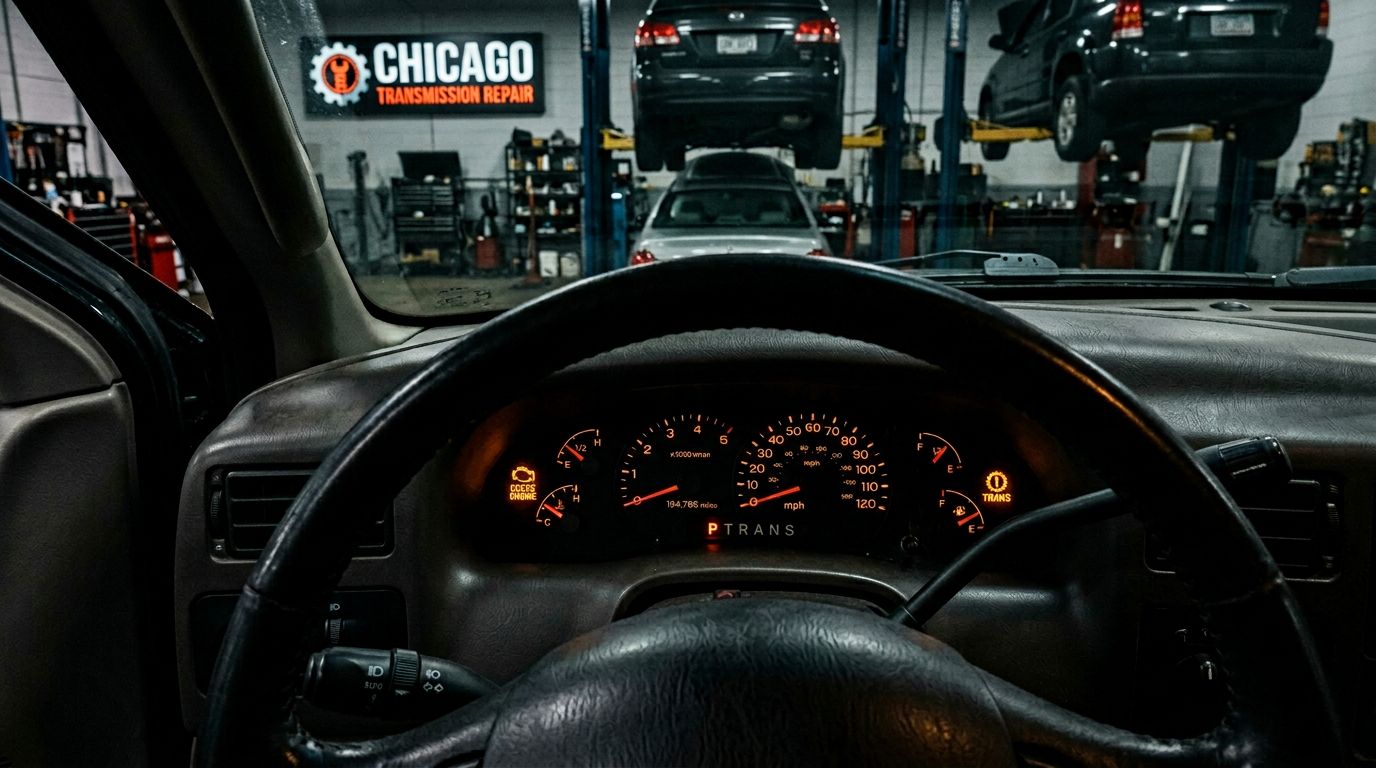
- Overheating: A slipping TCC generates heat. If the transmission temperature warning comes on, a failing converter is a common cause.
- Stall or delayed engagement: The converter may fail to transfer power from the engine when pulling away from a stop.
- P0740, P0741, P0742: These codes directly indicate TCC circuit failure. P0740 is the most common torque converter code.
Torque Converter Replacement Cost by Vehicle
Domestic Trucks and SUVs
- Ford F-150 (6R80, 10R80): quoted after diagnosis, access check, and parts availability.
- Chevy Silverado / GMC Sierra (6L80, 8L90): quoted after diagnosis, access check, and parts availability.
- Dodge Ram (545RFE, 68RFE): quoted after diagnosis, access check, and parts availability.
- Jeep Grand Cherokee (545RFE): quoted after diagnosis, access check, and parts availability.
Honda and Toyota
- Honda Accord, CR-V (B7TA): quoted after diagnosis, access check, and parts availability.
- Toyota Camry, RAV4 (U660E): quoted after diagnosis, access check, and parts availability.
- Nissan Rogue CVT: CVT-equipped vehicles use a different coupling system - not a traditional torque converter
German Luxury
- BMW (ZF 8HP): quoted after diagnosis, access check, and parts availability.
- Mercedes (722.6, 722.9): quoted after diagnosis, access check, and parts availability.
- Audi (ZF 8HP or Multitronic): quoted after diagnosis, access check, and parts availability.
Why Replacement Requires Transmission Removal
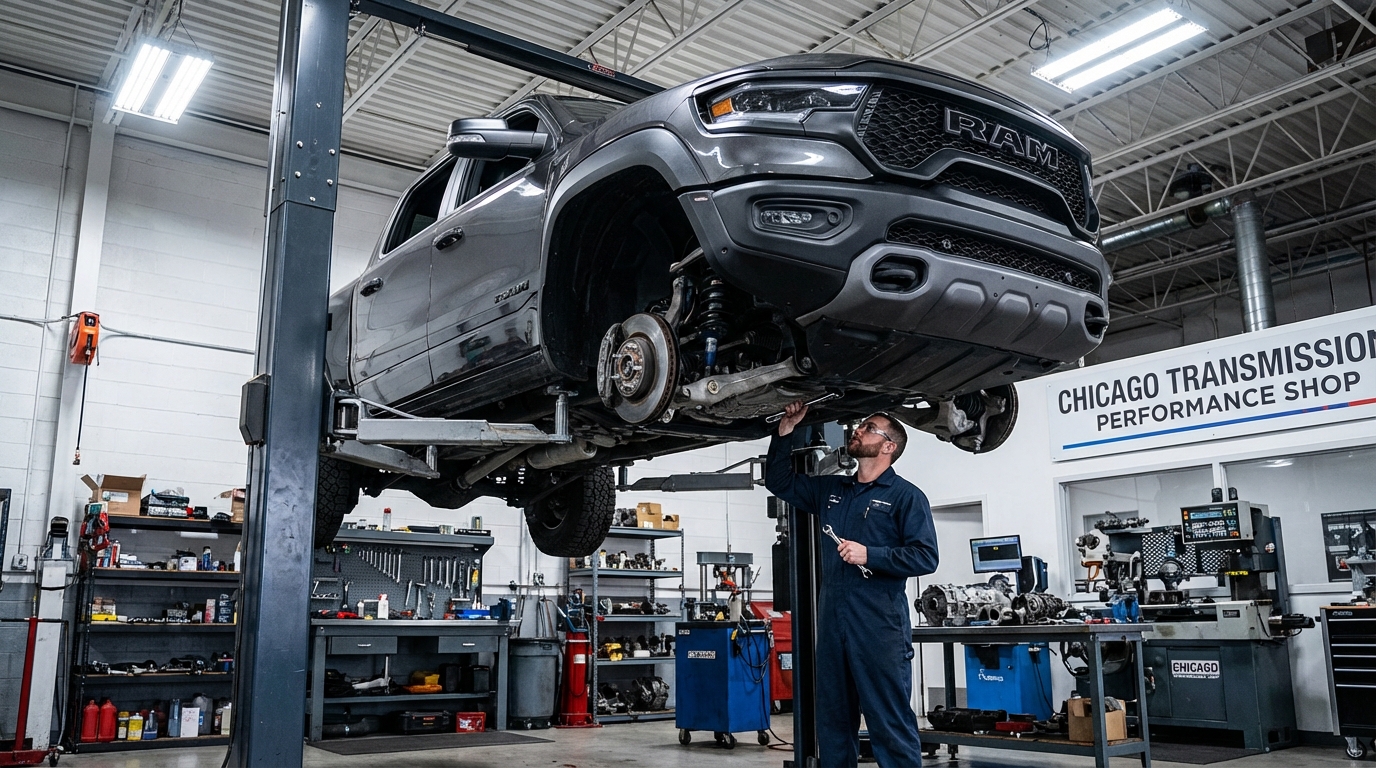
The torque converter sits between the engine flywheel and the transmission bell housing. To access it, the transmission must be unbolted and dropped from the vehicle. This is 3 - 5 hours of labor depending on the vehicle - which is why torque converter replacement seems expensive for what is, in isolation, a relatively inexpensive part.
On front-wheel-drive vehicles, the transmission is transversely mounted, which can make access more difficult. On rear-wheel-drive trucks, the process is more straightforward.
Torque Converter vs Full Rebuild: How to Decide
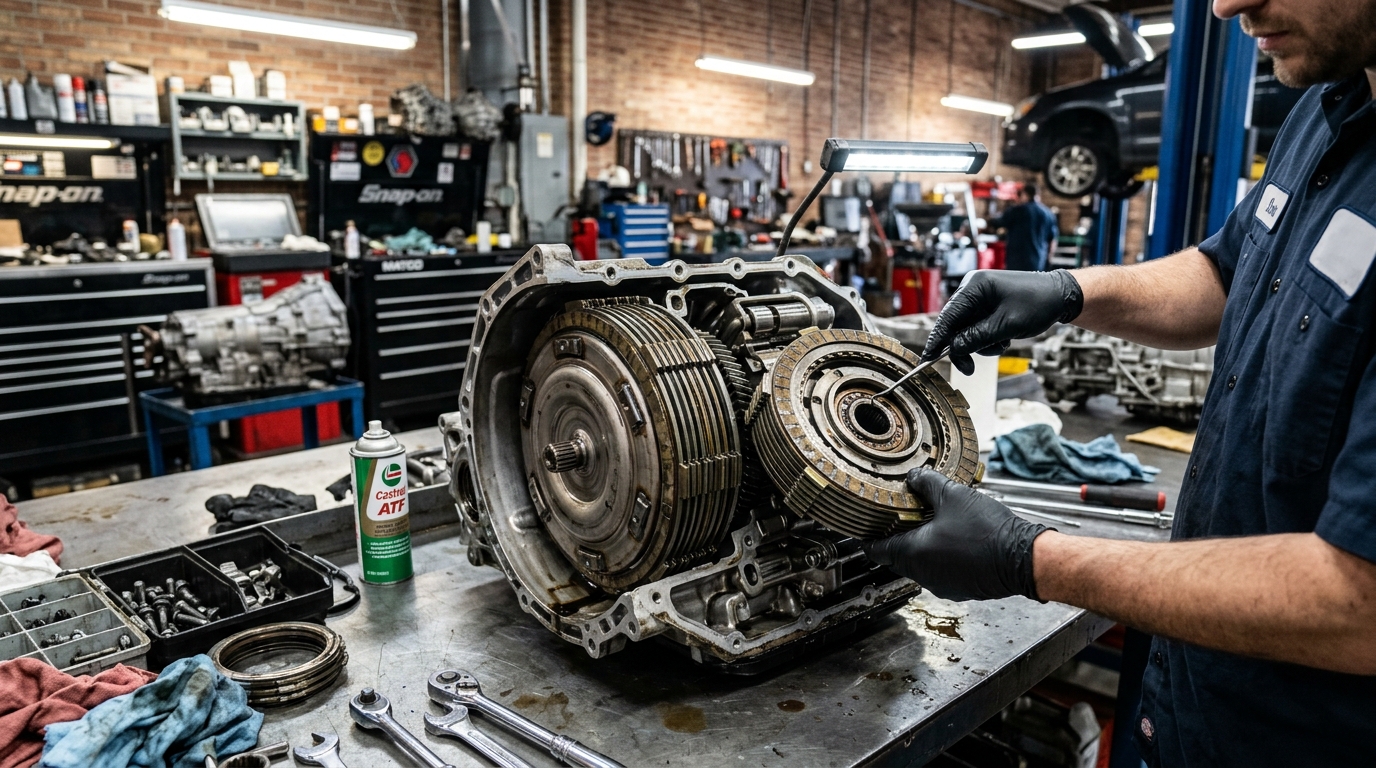
If the only symptom is TCC shudder and no other transmission problems are present, torque converter replacement is the correct repair. If there are additional symptoms - slipping in multiple gears, unusual noises, multiple DTC codes - the torque converter may be just one of several failing components, and a full rebuild may be more cost-effective than replacing parts piecemeal.
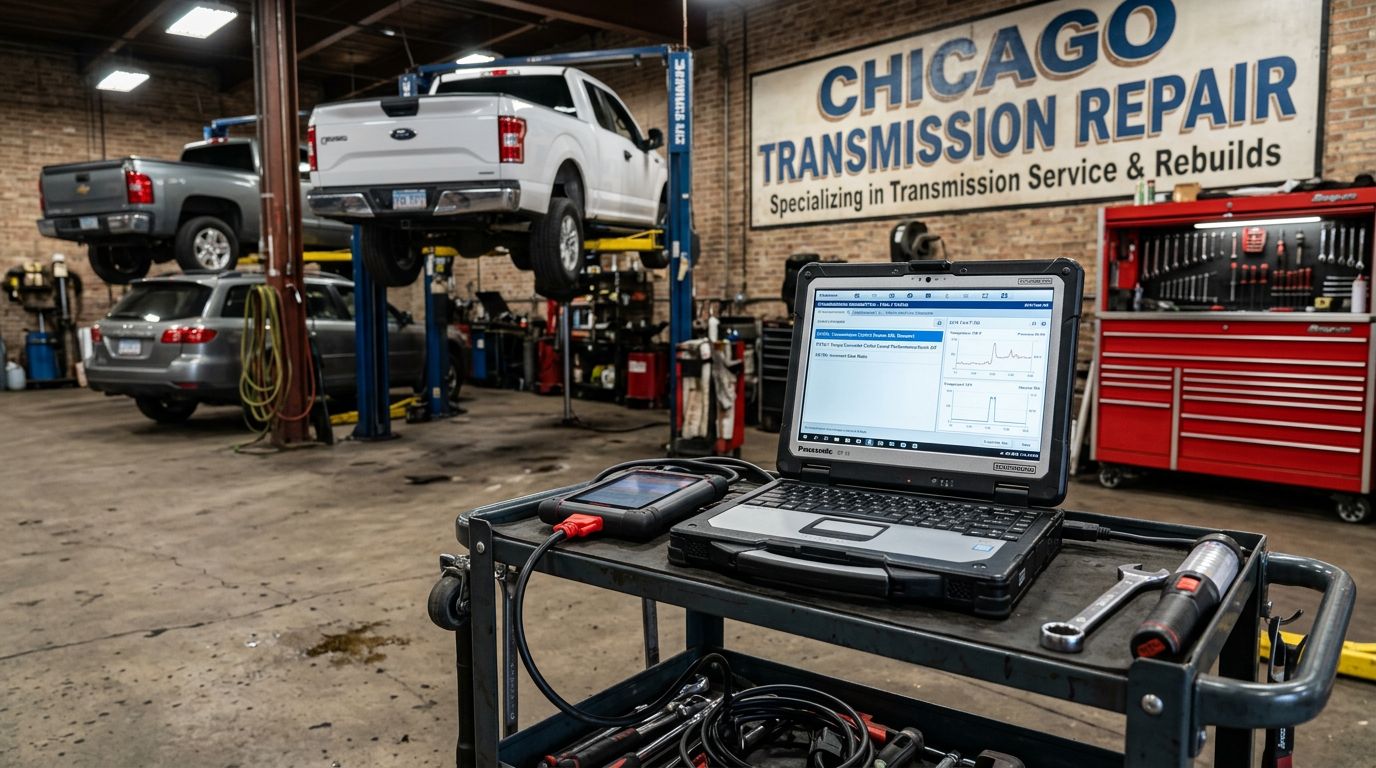
Our recommendation: start with a free diagnostic. A scan plus road test will show whether the codes and symptoms point to an isolated converter failure or a broader internal issue.
Does a Fluid Change Ever Fix TCC Shudder?
Sometimes. Ford's TSB for the 10R80 recommends a Mercon ULV fluid exchange as the first step for TCC shudder - and it works in about 60% of cases. GM's TSB for the 8L90 similarly recommends a Dexron HP fluid exchange before converter replacement.
If shudder started recently and your fluid hasn't been changed in 40,000+ miles, a fluid change is the right first step. If shudder persists after a fluid change, or the fluid was recently changed, torque converter replacement is likely needed.
Get a Quote at Arlington Heights Transmission
We're at Arlington Heights in Arlington Heights. Free computer diagnostic - no charge, no obligation. If you need a torque converter, we'll give you a written quote with parts, labor, and warranty before any work begins. Call 847-393-0191 - Monday - Friday 7:30am - 6pm, Saturday 8am - 2pm.