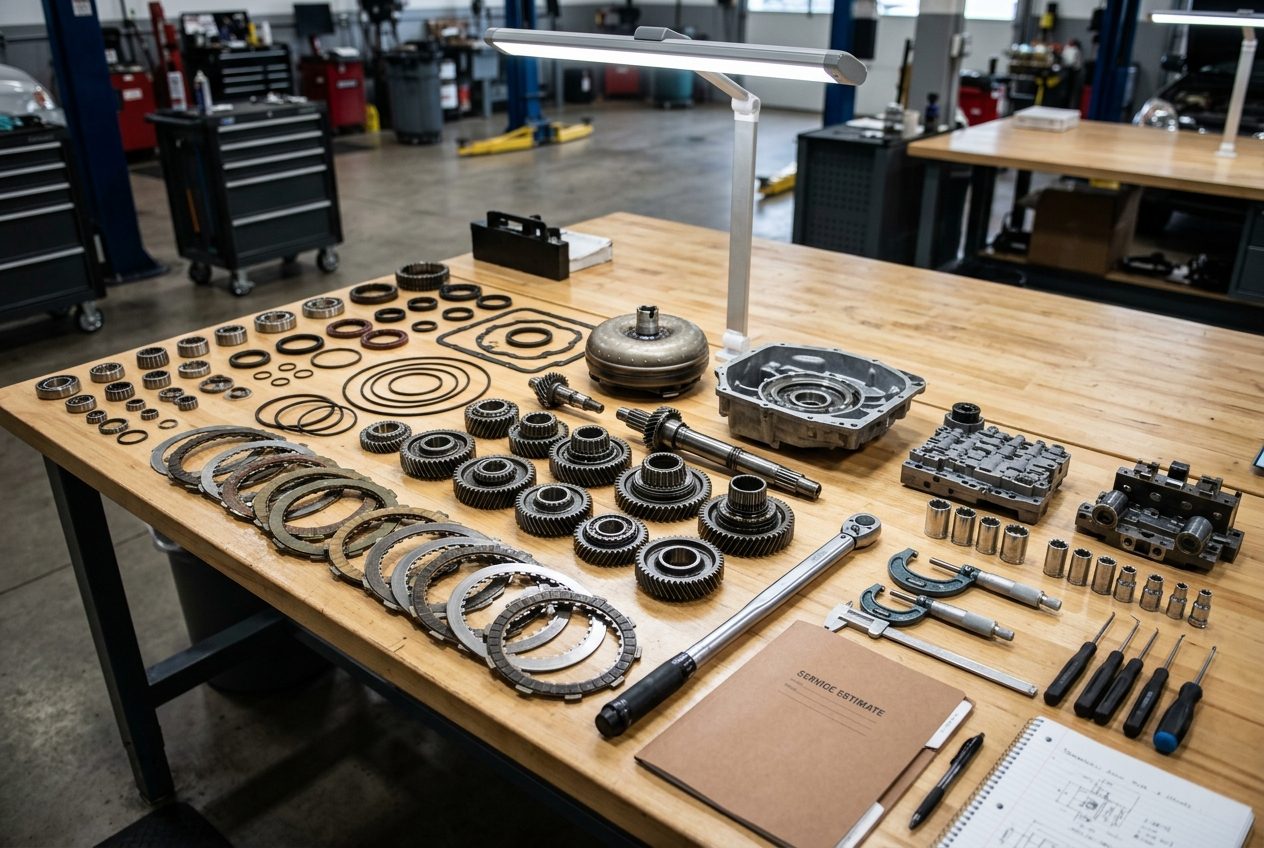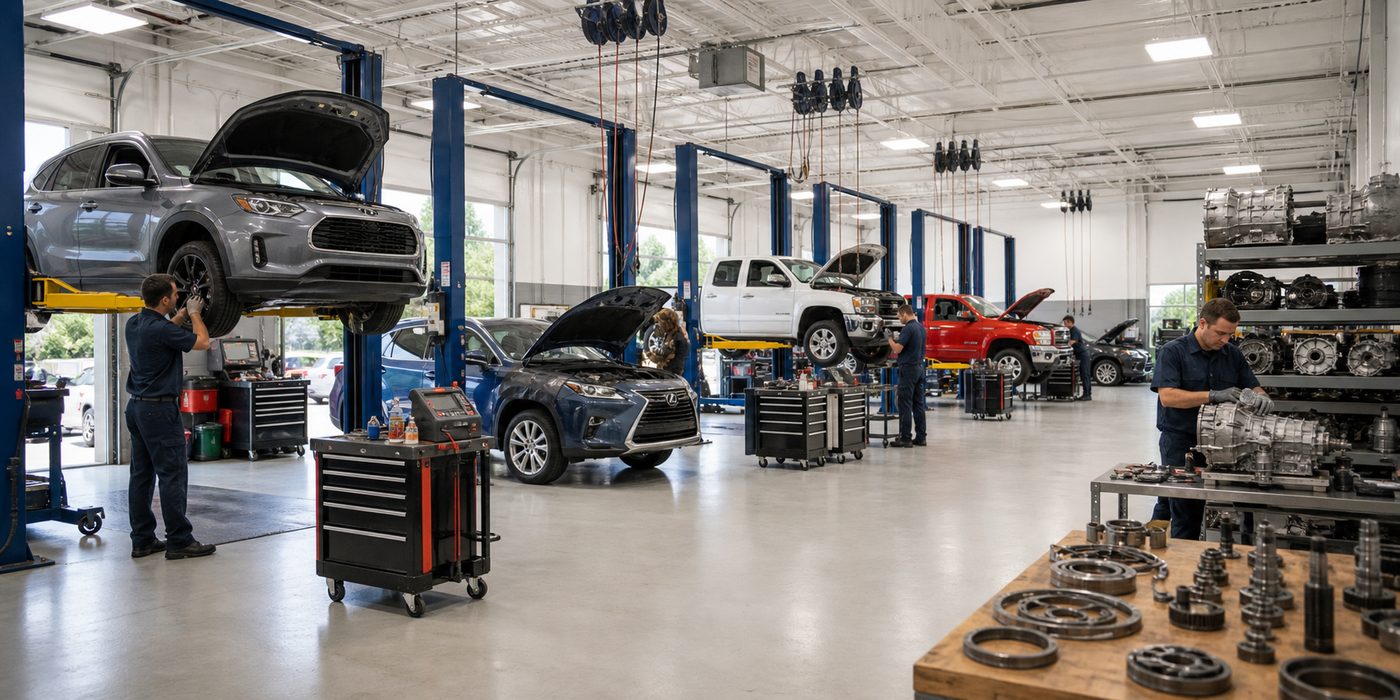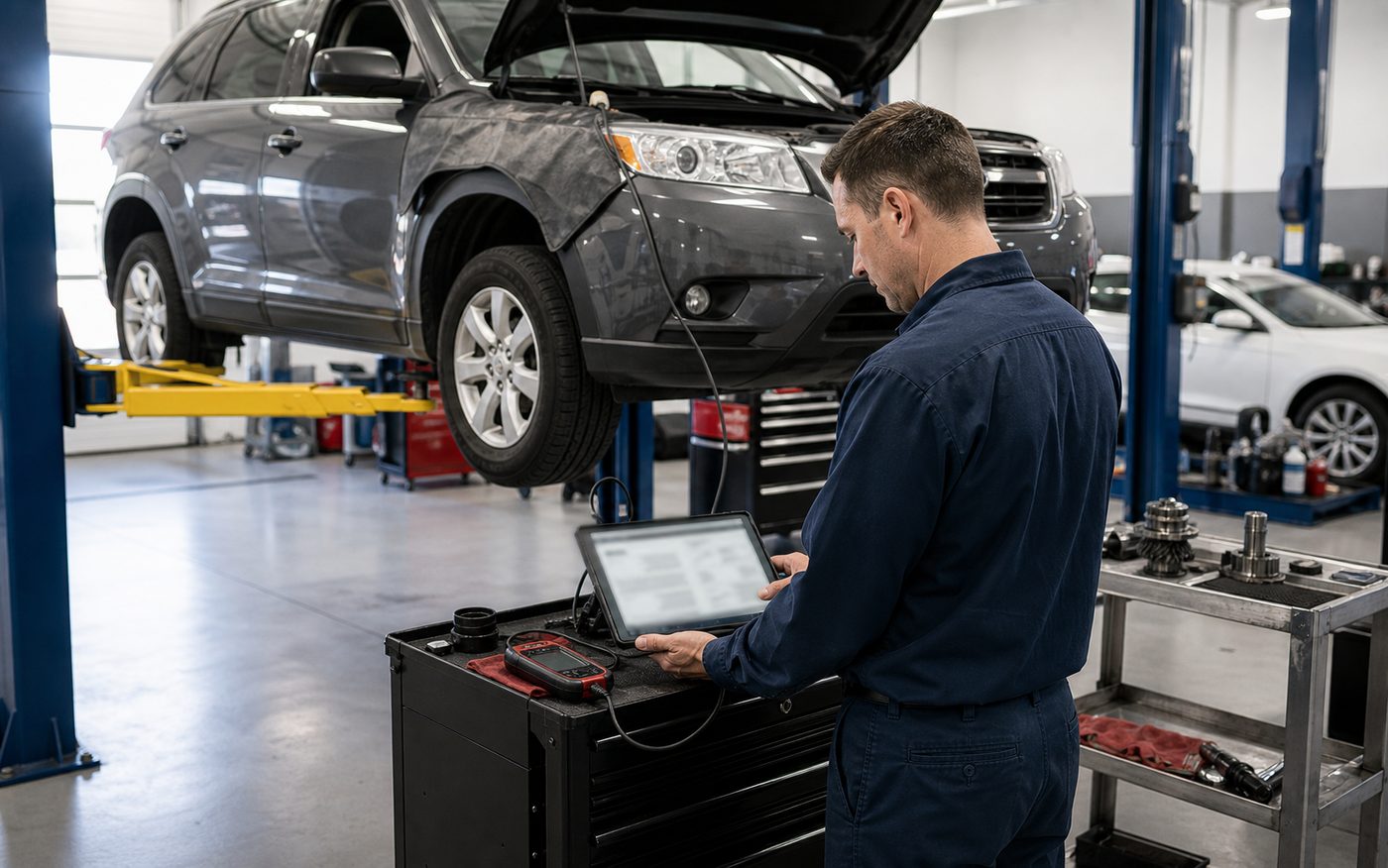
What to Expect
Financing starts after diagnosis, not before it. We first identify whether you are looking at a fluid service, targeted repair, rebuild, remanufactured unit, or related drivetrain work.
When the repair is bigger than the cash on hand, start with the diagnostic and written estimate. Then review financing options against the actual repair amount.
Transmission repair can become expensive fast, especially when the vehicle is needed for work, school, commuting, or family schedules. Financing gives Arlington Heights and northwest suburban drivers a way to review payment options after the written estimate is clear.
Financing starts after diagnosis, not before it. We first identify whether you are looking at a fluid service, targeted repair, rebuild, remanufactured unit, or related drivetrain work.

A transmission problem is rarely budgeted for. Route 53 and I-90 commuters, rideshare drivers, tradespeople, and parents sharing one family vehicle often need the repair handled without draining cash all at once.

Call or ask during your estimate review and we can point you toward the financing option that fits the repair. The application is short, many decisions come back quickly, and there is no separate application fee from the shop.
To start before your appointment, call 847-393-0191 and ask which application link matches your situation.


Many pre-qualification steps use a soft credit pull. If a hard inquiry is part of final approval, that should be clear before you accept the offer. Ask up front so financing does not create a surprise.

Some programs are built for customers who may not qualify through a traditional lender. Lease-to-own and installment options can look beyond a single credit score, which helps when a transmission repair cannot wait for months.

Yes. Our offers - free diagnostic, $89 fluid change, $100 referral bonus, seasonal coupons - apply regardless of how the repair is paid for. The financed amount reflects the post-discount price.

Payment options also include cash, major credit cards, business checks, common fleet cards, and ACH transfer. Commercial accounts can ask about terms after a credit application is reviewed and approved.
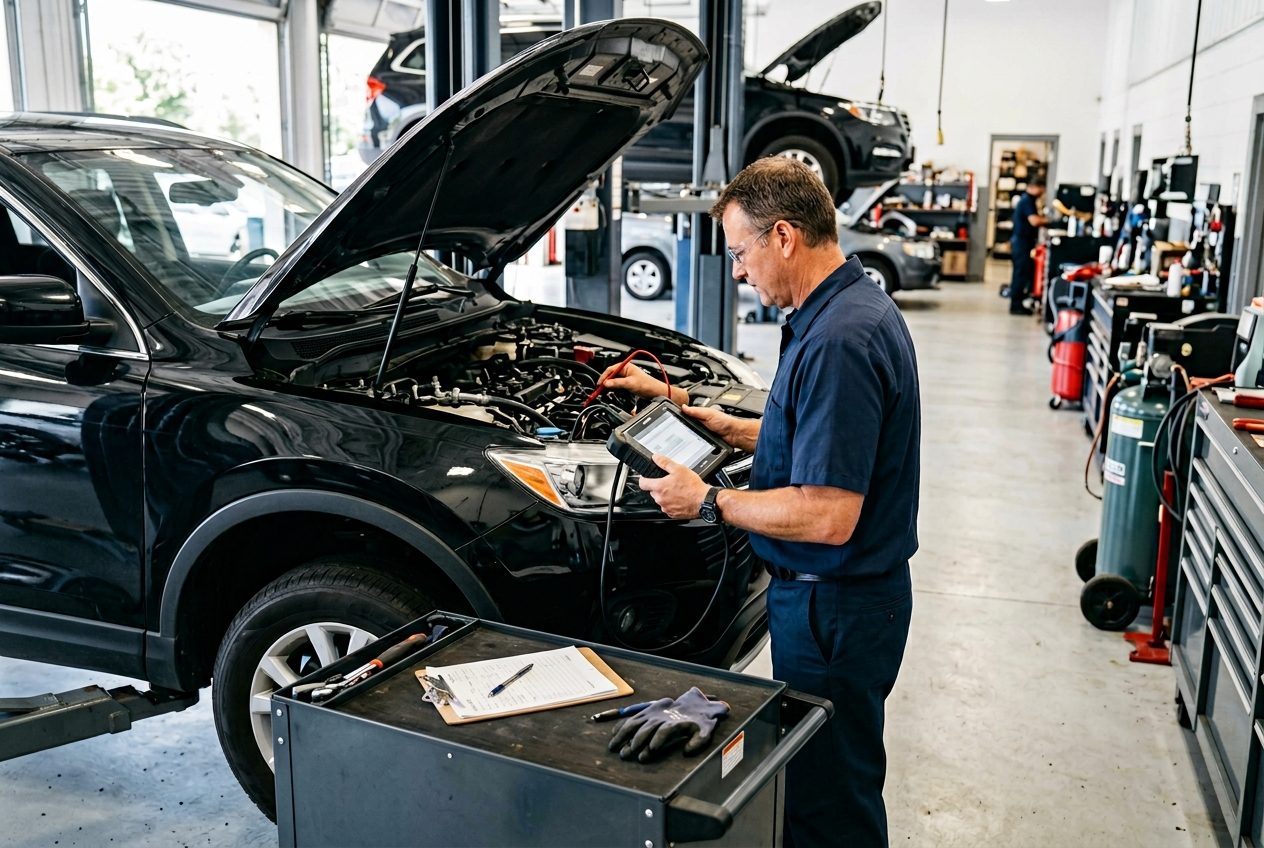
Always start with our free computer diagnostic. We will give you an accurate written estimate so you know exactly how much to finance - no rounding up, no surprise add-ons. Call 847-393-0191 or schedule online via our free diagnostic page.
The most useful financing conversation starts after the diagnostic, not before it. A sensor repair, valve-body job, converter repair, rebuild, remanufactured unit, or drivetrain repair can all carry different costs, downtime, and warranty terms.
We explain what failed, what is included, and what can wait. That keeps you from financing a larger number than the vehicle actually needs.
If the transmission is slipping badly or leaking, waiting for payday can make damage worse. Financing may be useful when the vehicle is needed for work, school, family, or fleet use.
Monthly payment, approval type, fees, payoff rules, and credit impact matter. We want the repair and payment plan to be clear before work starts.
Northwest suburban drivers often cannot park a vehicle for weeks while they compare options. A Route 53 commuter, rideshare driver, tradesperson, or parent sharing one household car may need a practical way to get the repair handled once the scope is proven.
Bring any dealer quote, prior diagnosis, warranty information, and the vehicle details. We can compare the repair path first, then talk through payment options against the written estimate.
A transmission complaint can be a $200 sensor issue, a fluid and leak problem, a valve-body repair, a torque converter failure, a full rebuild, or a remanufactured replacement. Those are not the same financial decision. The estimate has to identify the repair before financing is useful.
We also talk about the rest of the vehicle. A clean daily driver with solid brakes, tires, body condition, and engine health is different from a high-mileage vehicle with several major repairs due. Financing should make sense against the vehicle you are keeping, not just the transmission bill.
Drivers from Arlington Heights and nearby suburbs often need the car for work, school, medical appointments, and family schedules. If the vehicle is worth saving but the repair lands at a bad time, financing may be a practical bridge.
Bring any quote you already have. We can compare whether it includes converter, cooler, programming, seals, mounts, warranty, and post-repair road testing. A cheaper quote is not always cheaper if important parts of the repair are missing.
When terms are reviewed, ask about approval type, total amount financed, payment timing, early payoff, fees, and whether the application creates a hard inquiry. Those details matter as much as the monthly payment.
The goal is simple: diagnose the vehicle, put the repair in writing, then decide whether cash, card, financing, fleet billing, or another payment option is the right fit.
The first number to understand is not the monthly payment. It is the repair amount and what that amount includes. A rebuild with converter, cooler decisions, seals, programming, and warranty is not the same as a used unit swap or a partial repair.
Ask whether the vehicle is worth keeping. If the engine, frame, suspension, brakes, tires, and body are in good shape, financing a major drivetrain repair can make sense. If several major problems are waiting behind the transmission, the decision needs more caution.
Downtime also matters. Some drivers can wait for parts. Others need the vehicle for work, medical appointments, school pickup, or fleet routes. Financing may help when the cost is not planned but the vehicle has to return to service quickly.
Do not finance uncertainty. If a shop has not explained what failed, what was tested, and what the repair includes, slow down. A written estimate should give you enough information to compare repair, rebuild, replacement, or second-opinion options.
Ask about the total cost, not just the approval. Fees, payoff rules, payment timing, and credit impact should be clear. A slightly higher monthly payment with cleaner terms may be better than a low number with confusing conditions.
If the vehicle is used for business, ask whether business payment methods, fleet cards, ACH, or account terms make more sense than consumer financing. The payment method should fit how the vehicle earns or supports income.
Financing should never pressure the diagnostic. If the right repair is a smaller targeted fix, that is the number to review. If the evidence supports a rebuild, the financing conversation should match the rebuild scope and warranty.
Call or text 847-393-0191 with the vehicle details and symptom. We will help you get to the written estimate first, then talk payment options from a real number.
We can also help you decide whether the repair should happen immediately or whether there is room to wait. A vehicle with light maintenance needs gives you more time. A vehicle that is slipping, overheating, or leaking heavily can become more expensive if it is driven while payment decisions are still being made.
For households with one working vehicle, the financial question often includes rental cars, missed work, towing, and scheduling. A payment plan may be less expensive than letting the vehicle sit until the transmission damage spreads.
For business vehicles, downtime can cost more than the repair. If a van or truck supports service calls, deliveries, or job sites, the estimate should be reviewed against lost revenue and replacement transportation, not just the shop invoice.
We keep the financing conversation separate from the diagnosis. The vehicle gets the same inspection either way. The payment method should never decide whether the repair is targeted, rebuilt, or replaced.
Once the repair path is clear, you can compare payment options with a real scope, real warranty terms, and a clear timeline for getting the vehicle back.
Ask whether the estimate is final or whether teardown could change it. Some repairs can be quoted after external diagnosis. Others need internal inspection before every part is known. The financing amount should match the level of certainty.
Ask what warranty applies to the repair being financed. A small targeted repair, used transmission, remanufactured unit, and complete rebuild may carry different coverage. Warranty terms affect the value of the payment plan.
Ask how quickly the vehicle can return to service. A lower price does not help if the unit is unavailable for weeks and the vehicle is needed daily. Parts availability, programming, road testing, and schedule all matter.
Ask whether the vehicle is safe to keep driving while you decide. If continuing to drive can add damage, the payment decision has a deadline. We will tell you when a tow or immediate stop is the smarter financial move.
Ask whether a smaller repair could reasonably solve the problem. If scan data and fluid condition point to a solenoid, valve body, leak, or converter issue, financing a full replacement before confirming that path may not be the right move.
Ask what is included after the repair. Programming, relearn, road testing, fluid level recheck, and warranty paperwork are part of a complete handoff. Those details help you compare more than the headline price.
Ask how the payment option handles early payoff. Some customers only need short-term breathing room until a paycheck, tax refund, insurance payment, or business receivable arrives. The terms should fit that plan.
Ask whether the quote includes taxes, fluids, shop supplies, programming, towing, or diagnostic credit. Small missing items can change the amount you actually need to finance.
Ask whether the repair can be staged. Sometimes a leak or external issue can be handled first. Other times staging the work would be false economy because the transmission has to come out once and be repaired correctly.
Ask whether the warranty term matches how long you plan to keep the vehicle. A strong warranty has more value when the car will remain in daily service for years.
Ask whether the approval amount leaves room for related parts found during repair. If the estimate is firm, that is simple. If teardown may reveal hard-part damage, understand how that would be handled before signing.
Financing is a tool, not the repair itself. The repair still has to be mechanically justified, explained clearly, and backed by terms you can understand.
Start with the diagnostic and written estimate. Once the repair scope is clear, we can talk through payment options without guessing.