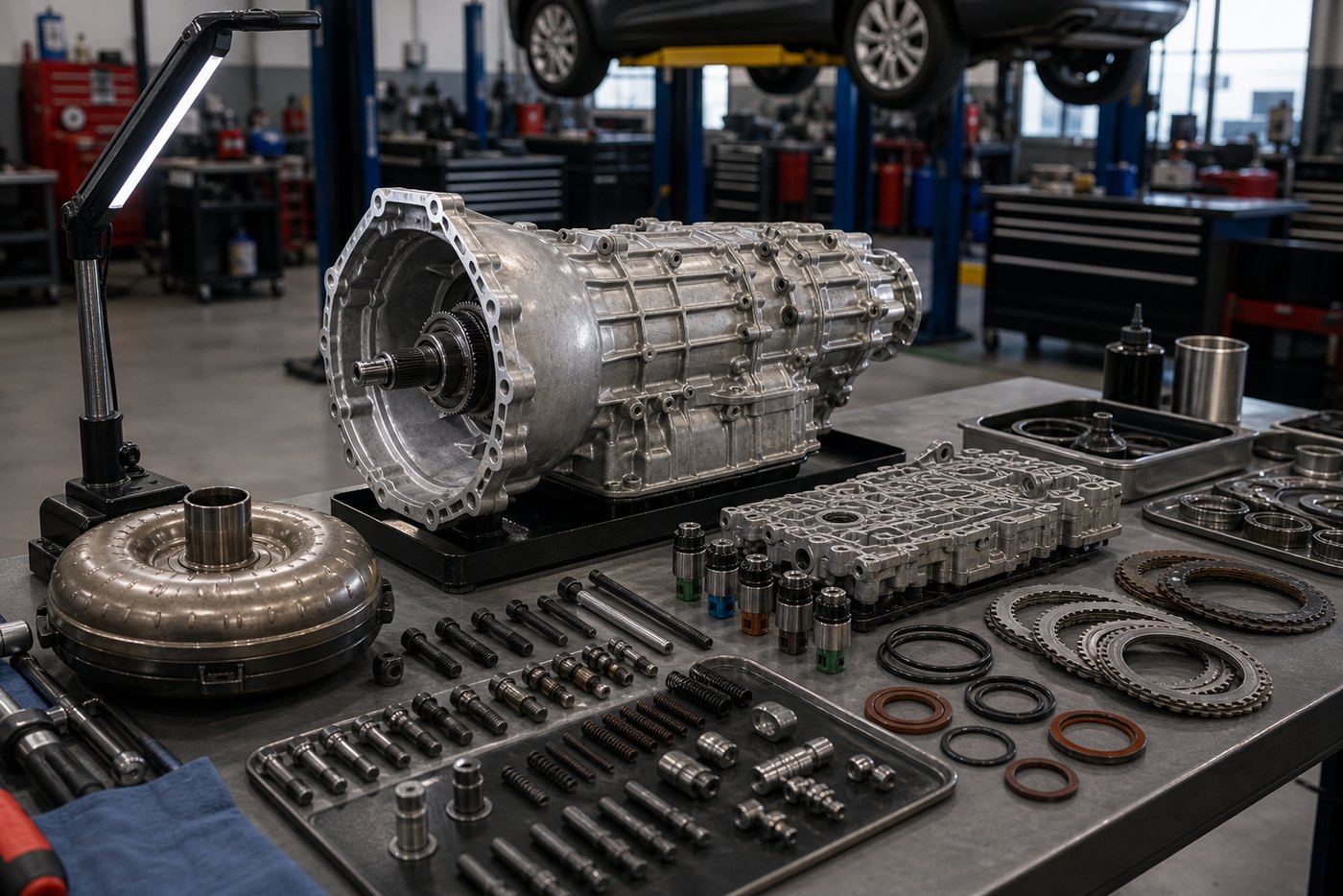
A rebuild warranty should be easy to understand before the vehicle is repaired. Here is what the 2-year / 24,000-mile rebuild warranty means, what it covers, and where the limits are.
Our rebuild warranty is written for drivers who plan to keep using the vehicle in real northwest suburban conditions: commuting, family driving, winter roads, and daily stop-and-go traffic.
Before a rebuild is approved, we explain why the unit needs to come out, what failed, and what parts are included in the warranty-backed repair.
The written estimate and warranty terms should match. You should know the mileage limit, time limit, coverage boundaries, and what to do if a concern shows up later.
Heat, salt, short trips, and repeated stop-and-go driving are hard on rebuilt units if the surrounding systems are ignored. That is why the repair has to include the pieces that support the transmission, not just the internal clutches.
Like any warranty, ours has reasonable boundaries. Coverage does not extend to:
If you think a warranty concern is showing up, call 847-393-0191 before continuing to drive. Have the invoice, VIN, mileage, and current symptom ready if possible. We check the repair file, inspect the vehicle, and handle covered work according to the written terms.
A rebuild is a major repair, especially for a daily driver used around Arlington Heights, Route 53, and I-90. A clear 2-year / 24,000-mile written warranty gives you usable protection without vague promises.
The warranty starts with parts choices. Cheap friction materials, questionable solenoids, and shortcut rebuild kits create comeback risk, so qualifying rebuilds use OEM or OEM-equivalent components matched to the unit and the way the vehicle is used.
Our standard 2-year / 24,000-mile warranty is non-transferable - it covers the original purchaser of the rebuild. If you sell the vehicle, ask us about a one-time transfer fee that extends a 12 month / 12,000 mile warranty to the next owner. This is a great selling point when listing the vehicle.
Call 847-393-0191 during business hours and we can review the repair record, mileage, coverage dates, and next step for a warranty question.
A warranty only helps if the driver understands what was repaired, what is covered, what is excluded, and what to do if a concern shows up later. We review those details before the qualifying rebuild is approved.
The time and mileage limit should be clear on paper. So should the repair scope, parts used, and any conditions that affect coverage.
Coolers, mounts, lines, leaks, electronics, and driveline problems can affect a rebuilt unit. We explain related work that protects the repair instead of pretending the transmission lives alone.
If a post-repair concern appears, call before continuing to drive. Heat, low fluid, warning lights, or slipping can create damage that a quick inspection might prevent.
Arlington Heights drivers put rebuilt transmissions through real use: winter starts, salt, school runs, short trips, highway commuting, and stop-and-go traffic. A good warranty conversation should match that reality.
Keep your invoice, mileage, and repair record. If you sell the vehicle, ask about the current transfer rules before promising warranty coverage to the next owner.
A rebuild warranty is only as useful as the work behind it. Proper teardown, inspection, cleaning, parts selection, converter decisions, cooler protection, and road testing all affect whether the rebuilt unit has a fair chance to last.
That is why the estimate should explain what failed and what is being replaced. A warranty cannot make up for skipped cooler work, ignored leaks, contaminated fluid, weak mounts, or an electrical problem that was never corrected.
We want the warranty terms understood before the vehicle leaves. Know the time limit, mileage limit, covered repair, and the right phone call to make if a concern appears.
Northwest suburban use is not gentle: winter starts, salt spray, potholes, stop-and-go errands, expressway commuting, towing, and loaded family vehicles all put heat and load through the drivetrain. Related systems have to be considered during a rebuild.
If a driver notices delayed engagement, slipping, burnt smell, leaking fluid, or a warning light after a rebuild, the right move is to call early. Continuing to drive can turn a small warranty question into avoidable damage.
Keep your paperwork with the vehicle. If you have a warranty question, the invoice, mileage, VIN, and current symptom let us review the file quickly and give you the right next step.
The best time to understand warranty terms is before the vehicle is repaired. Know what work qualifies, what the time and mileage limits are, and what related systems must be kept in good condition.
After a rebuild, pay attention to leaks, temperature warnings, delayed engagement, harsh new shifts, slipping, unusual noise, or a burnt smell. Calling early gives the shop a chance to inspect the concern before a small issue becomes damage.
Keep the paperwork in the vehicle or in a folder where it can be found quickly. The invoice, mileage, VIN, repair date, and current symptom help us review coverage without guesswork.
Fluid leaks should never be ignored. A rebuilt transmission can be damaged by low fluid just like an old one. Cooler lines, pan gaskets, axle seals, case connectors, and related fittings need attention if they begin to seep.
Driving habits matter too. Heavy towing, oversized tires, overheated operation, ignored engine cooling problems, or continued driving after a warning light can affect coverage. We explain any relevant limits before the vehicle leaves.
If another shop services the vehicle later, make sure they use the correct fluid and procedure. Wrong fluid or improper fill level can create shift complaints that look like a transmission problem.
A clear written warranty is not a sales phrase. It is a repair record, a coverage boundary, and a plan for what to do if something feels wrong. That clarity is especially important when the vehicle is a daily driver.
For warranty questions, call 847-393-0191 with your invoice and mileage. If the vehicle is acting up, call before driving it hard or taking it onto the expressway.

Ignoring a leak is one of the fastest ways to create avoidable damage. If the fluid level drops, a rebuilt transmission can overheat and slip just like a worn-out unit. Call when you see fluid, smell burnt fluid, or notice a shift change.
Wrong fluid service can also create problems. If another shop services the vehicle after the rebuild, make sure the correct specification and fill procedure are used. Keep records for any outside maintenance.
Related failures matter. Engine misfires, overheating, damaged mounts, axle problems, transfer-case bind, cooler restrictions, or electrical issues can create symptoms that feel like transmission trouble. Warranty review starts by separating those systems.
The simple rule is to communicate early. A warranty question is easier to handle when the vehicle has not been driven for weeks with a warning sign. Call with the invoice, mileage, and symptom so we can tell you the right next step.
We also want customers to understand the difference between a warranty concern and a new unrelated problem. A rebuilt transmission can be healthy while a mount, axle, engine misfire, or transfer case creates a new feel. Inspection separates those possibilities.
Warranty paperwork should be kept with service records, not buried in a glovebox until there is a problem. Mileage, dates, and maintenance history make review faster and reduce confusion.
If the vehicle is used for towing, rideshare, delivery, or heavy commuting, mention that during the repair approval. Usage can affect cooler recommendations, service intervals, and what we tell you to watch after pickup.
Start with the Free Diagnostic, review the written estimate, and make sure the warranty terms are clear before approving qualifying repair work.