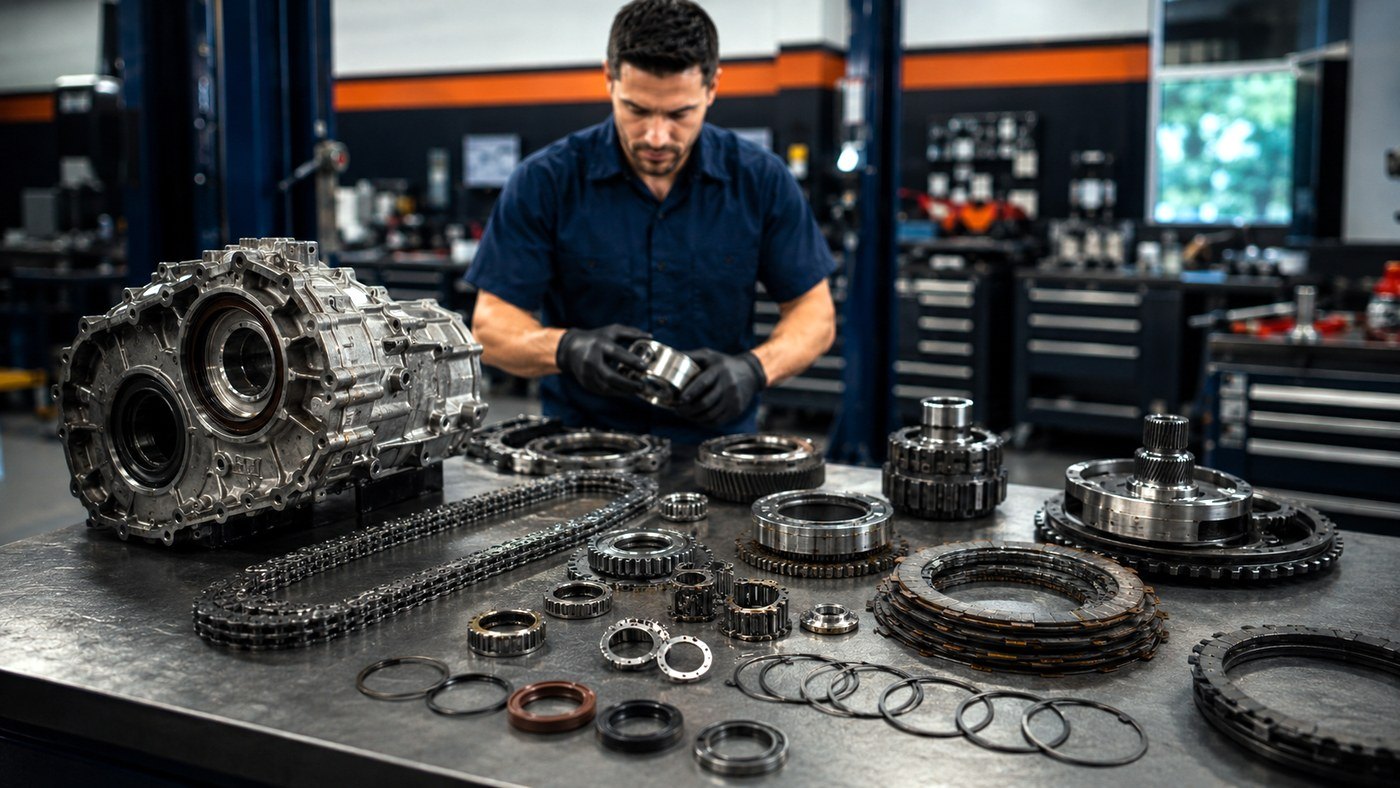
Transfer Case Repair Arlington Heights photos
Transfer case repair photos should support fluid leaks, actuator checks, chain wear, bearing noise, and range-system diagnosis.
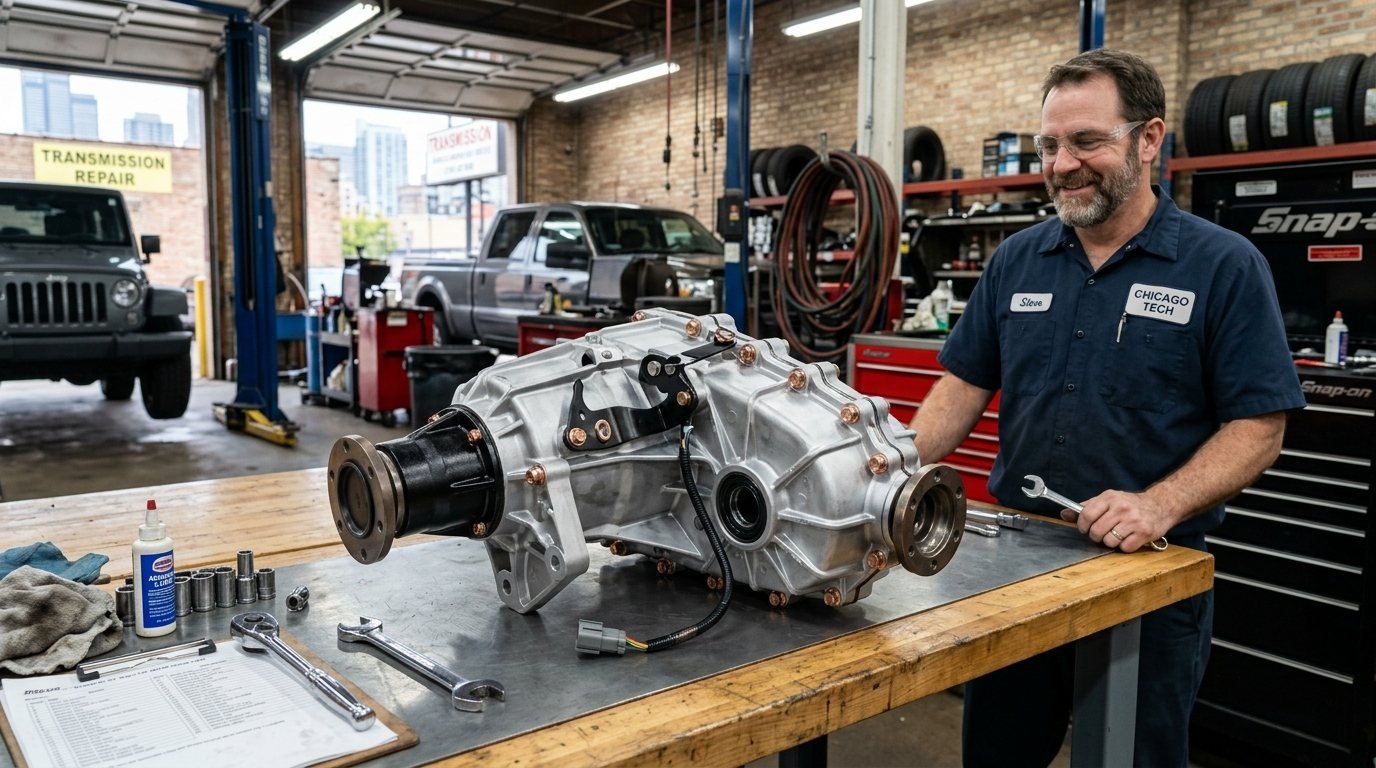
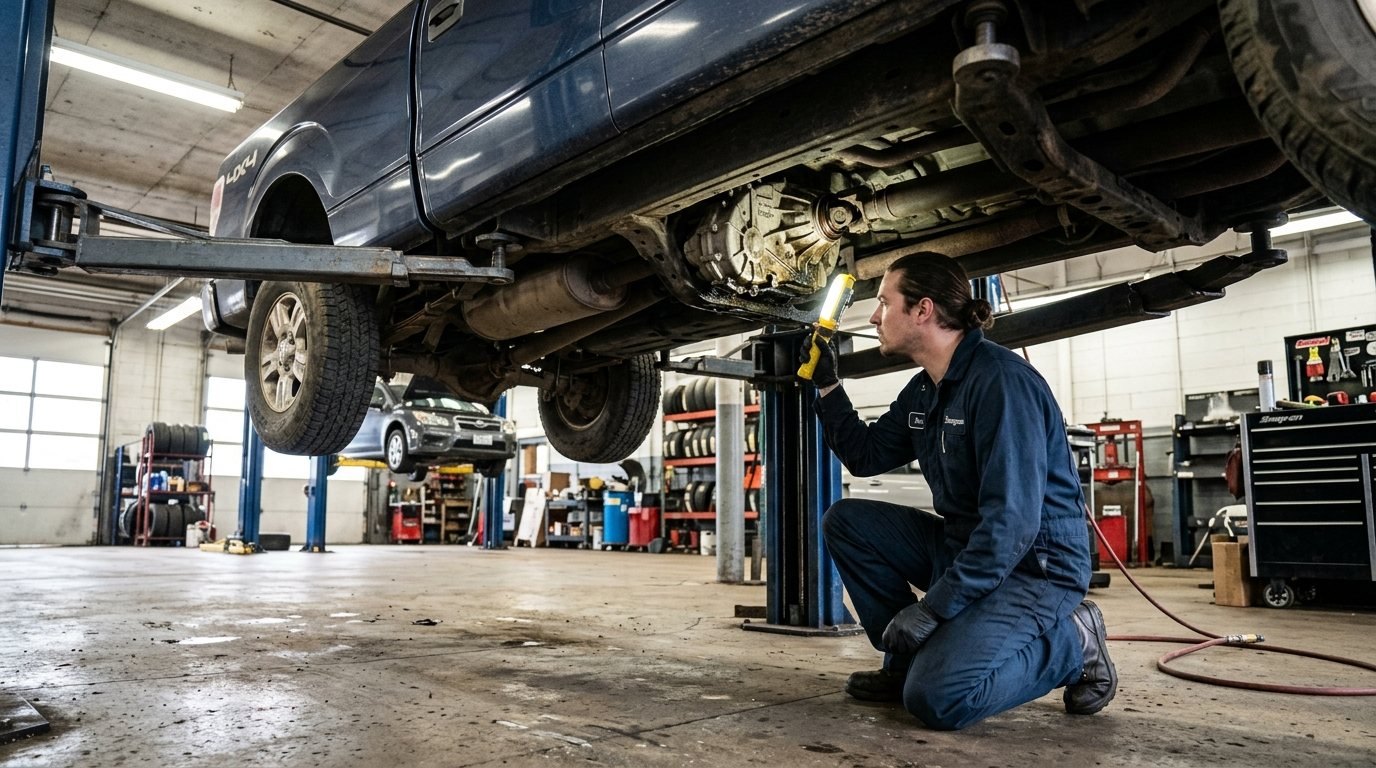
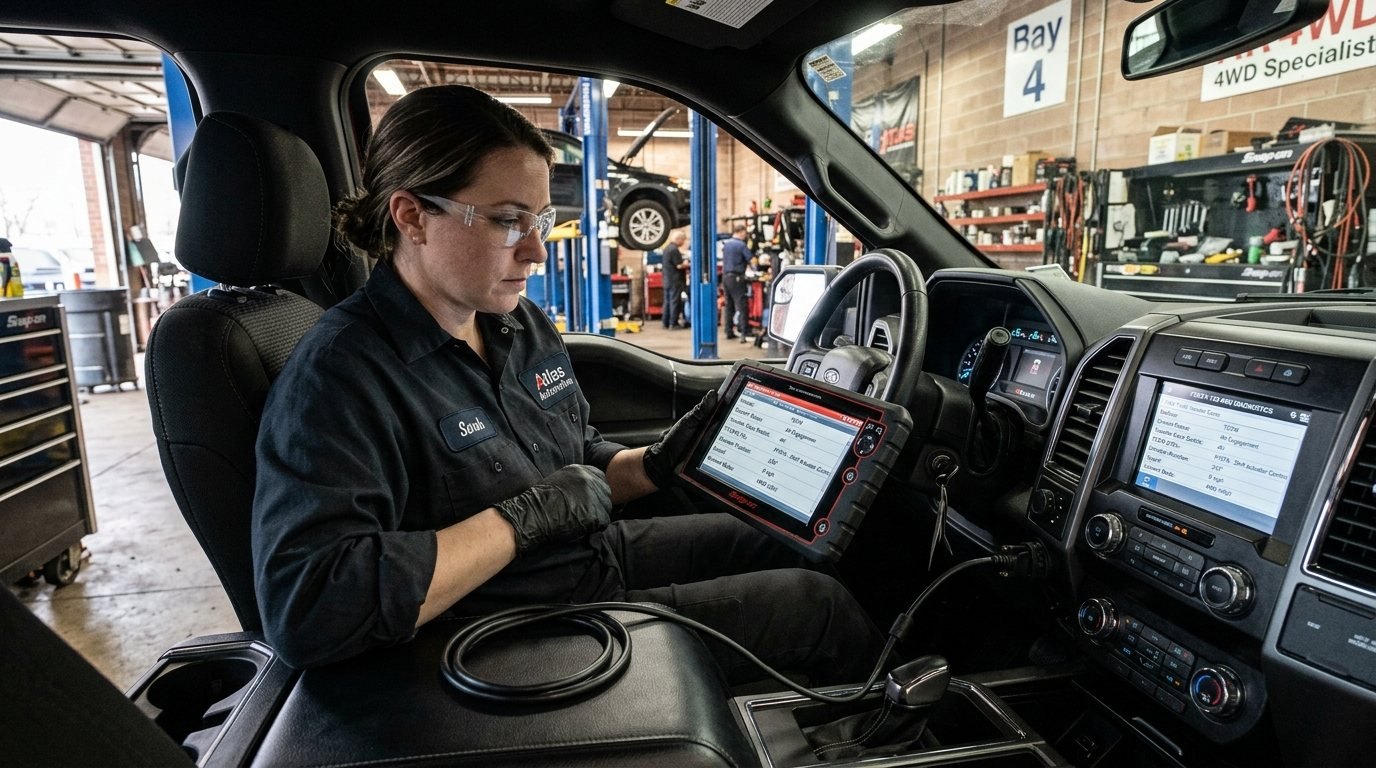
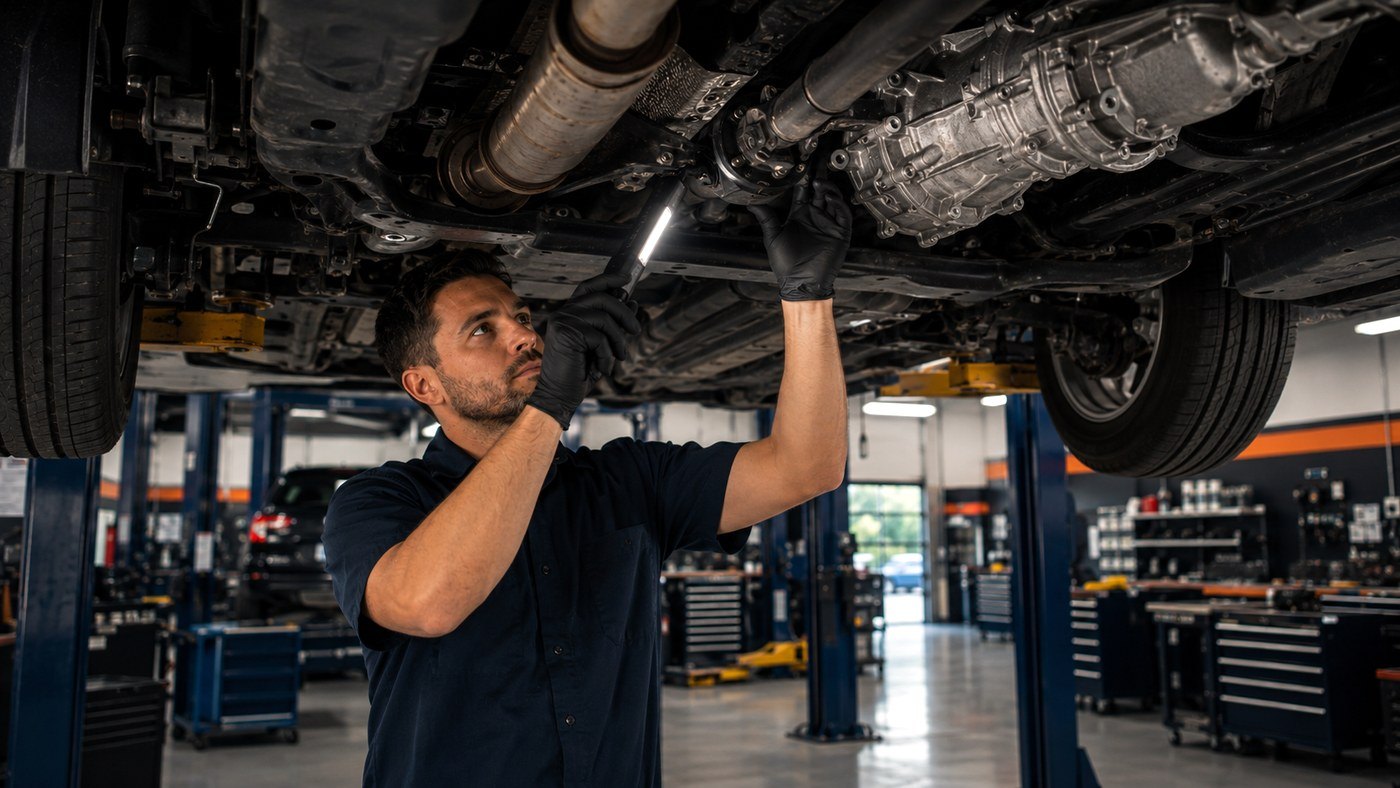
We diagnose transfer case and range system problems for Arlington Heights drivers with a road test, scan data, fluid checks, and a written estimate before repair work starts. Winter salt, tight parking-lot turns, and mixed AWD driving can make transfer case problems easier to feel.
Send the vehicle details and we will respond by call, text, or email.
A transfer case problem may show up as grinding, chain slap, stuck 4WD, AWD binding, fluid leak, actuator fault, bearing whine, or a warning message. The repair depends on whether the failure is mechanical, electrical, fluid-related, or caused by driveline bind.
We inspect fluid condition, leaks, case noise, encoder or shift motor behavior, range position data, wiring, front axle engagement, tire size match, driveshaft play, and whether the issue happens in 2WD, 4HI, 4LO, Auto, or AWD mode.
Grinding in low range is different from a button that flashes and never completes the shift. A leak at the output seal is different from chain stretch under load. The estimate should reflect that difference.
Winter use around Arlington Heights can expose a transfer case that has not been shifted or serviced in months. We ask when the system was last used successfully.
The fix may be fluid service, seal repair, actuator or encoder replacement, wiring repair, chain and bearing rebuild, or complete replacement. We do not quote all transfer case complaints as a rebuild.
If the vehicle has mismatched tires, a binding driveline, or a failing differential, the transfer case may be reacting to another problem. We check related systems before replacing expensive parts.
Bring any codes, warning messages, mode-light behavior, towing history, and whether the vehicle is safe to drive.
If the vehicle is grinding, stuck between ranges, binding hard, or leaking heavily, stop cycling the switch and call. Repeated attempts can damage forks, chain, gears, actuators, and driveline parts.
For trucks used for towing, snow, job sites, or plowing, tell us how the system is used. Shock load and infrequent service can change what we look for.
We write the repair path clearly so you know whether the quote is for control repair, reseal, rebuild, or replacement.
Call, text, or send the form. We will start with the complaint, inspect the transfer case and range system, and explain the practical repair path. Free diagnostic, written estimate, no obligation.
Transfer Case Repair Arlington Heights photos
Transfer case repair photos should support fluid leaks, actuator checks, chain wear, bearing noise, and range-system diagnosis.