
Shift pattern
The quote notes cold behavior, hot behavior, affected gear changes, converter lockup speed, tow use, warning lights, and limp-mode timing.
A Ford 10R80 can slam a 3-5 upshift, hunt through 7-10, shudder in converter lockup, or act worse after an adaptive relearn. We test scan data, fluid evidence, solenoid command, valve body response, CDF drum clues, and road-test behavior before recommending repairs.
Send the Ford model, mileage, affected shift range, temperature pattern, codes if available, and whether a relearn or prior repair changed the complaint.
The 10R80 appears in F-150, Mustang, Expedition, Navigator, Ranger, and related Ford or Lincoln applications, but the same code can mean different things depending on calibration and use.
A truck that bumps through neighborhood speeds in Arlington Heights is not the same case as a Mustang that flares on a hard 4-5 change or an SUV that shudders after a warm highway drive.
We compare the complaint against adaptive values, commanded gear, converter slip, fluid condition, pan debris, service history, and known Ford ten-speed failure points.
Get Free Diagnostic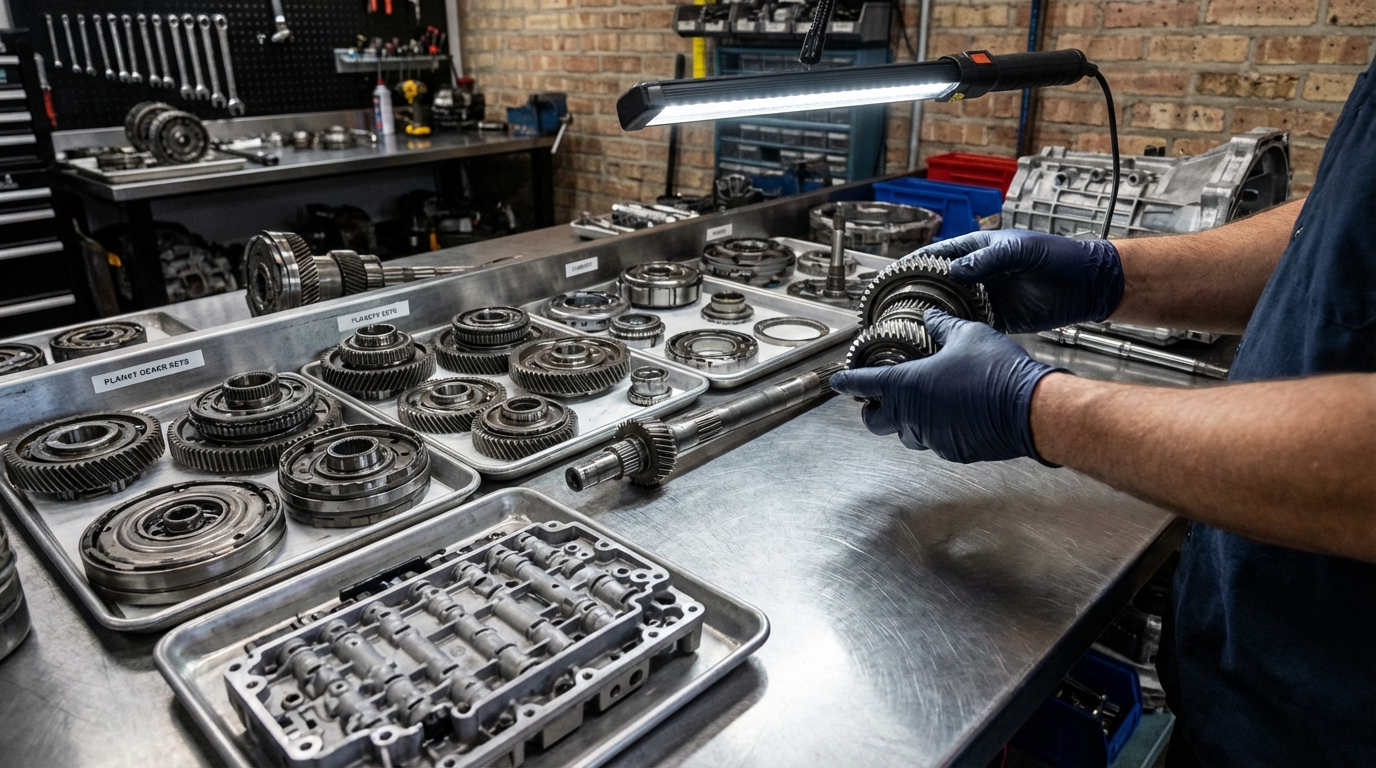
These symptoms do not automatically mean the transmission has to come out, but they do mean the diagnosis should go beyond clearing adaptive memory.
If the evidence supports programming, valve body control, solenoid service, converter repair, CDF-related internal work, or full rebuild, the estimate separates those options.
A strong 10R80 estimate connects the symptom to test evidence instead of treating every harsh shift as a guaranteed transmission replacement.
The quote notes cold behavior, hot behavior, affected gear changes, converter lockup speed, tow use, warning lights, and limp-mode timing.
Pan debris, clutch material, converter slip, CDF drum evidence, and pressure-control behavior help decide whether teardown is justified.
Solenoid command, valve body response, module strategy, relearn results, and road-test reproduction shape the recommendation before parts are ordered.
Pricing changes with calibration status, access, parts availability, internal evidence, and whether the complaint can be corrected without removing the transmission.
Call or text with the Ford model, mileage, affected shift range, symptoms, and any scan codes. We start with the free diagnostic and explain the written repair path before work begins.