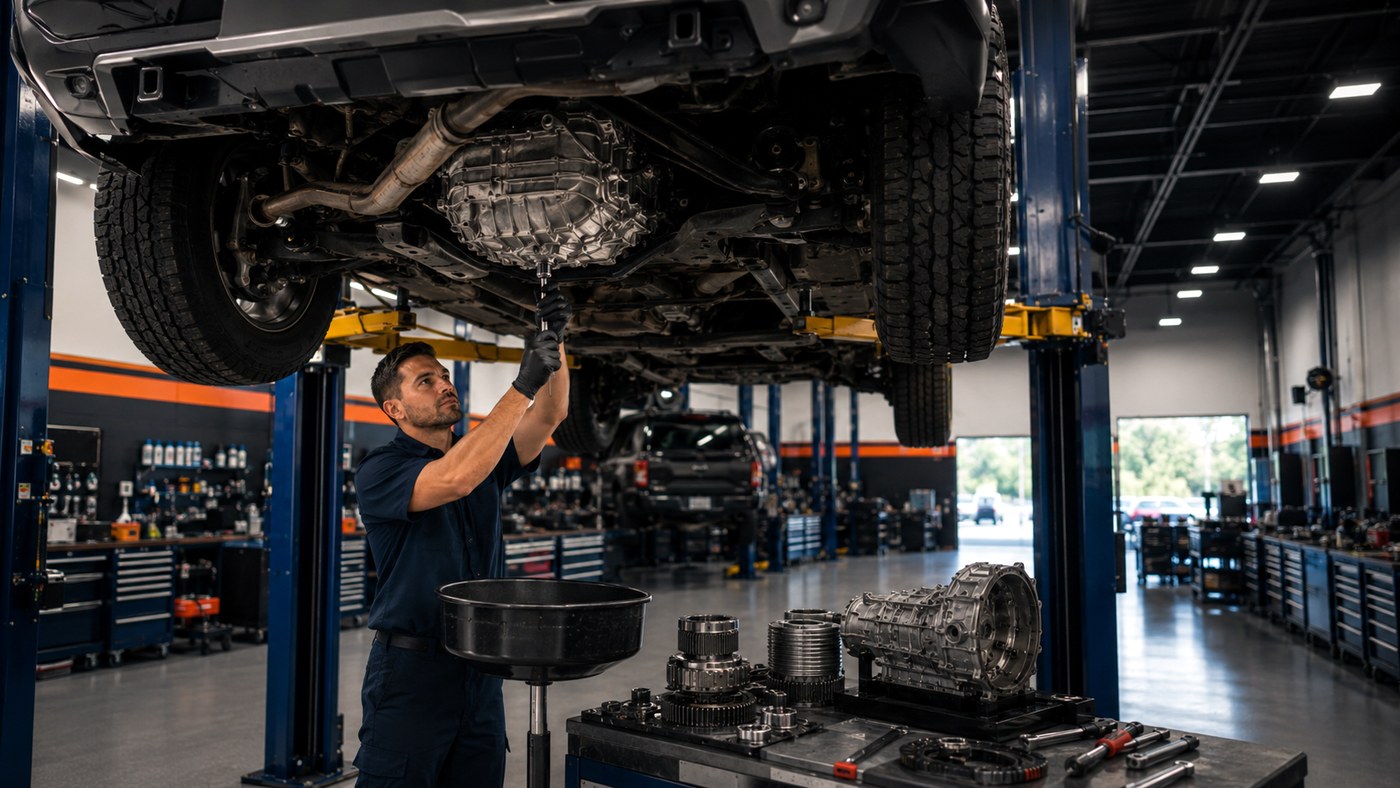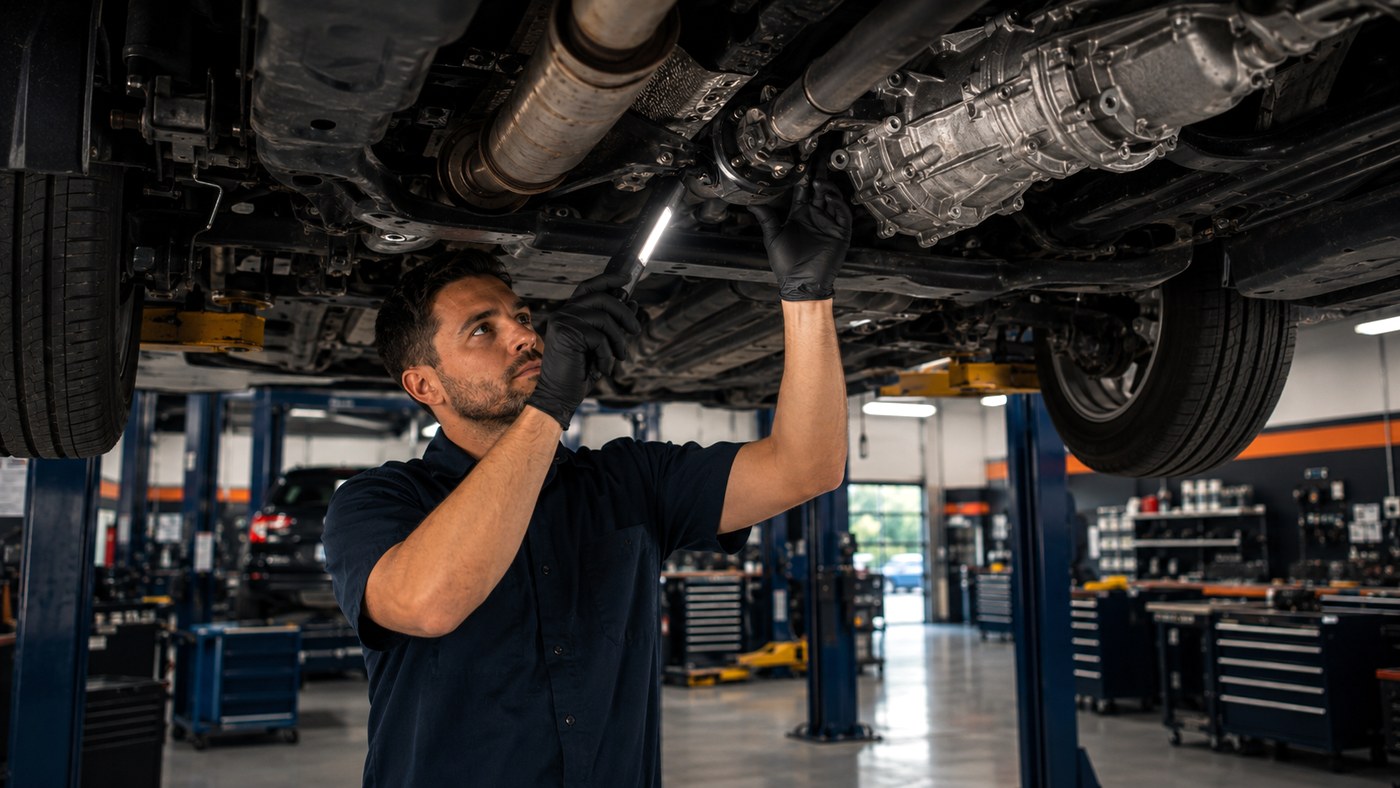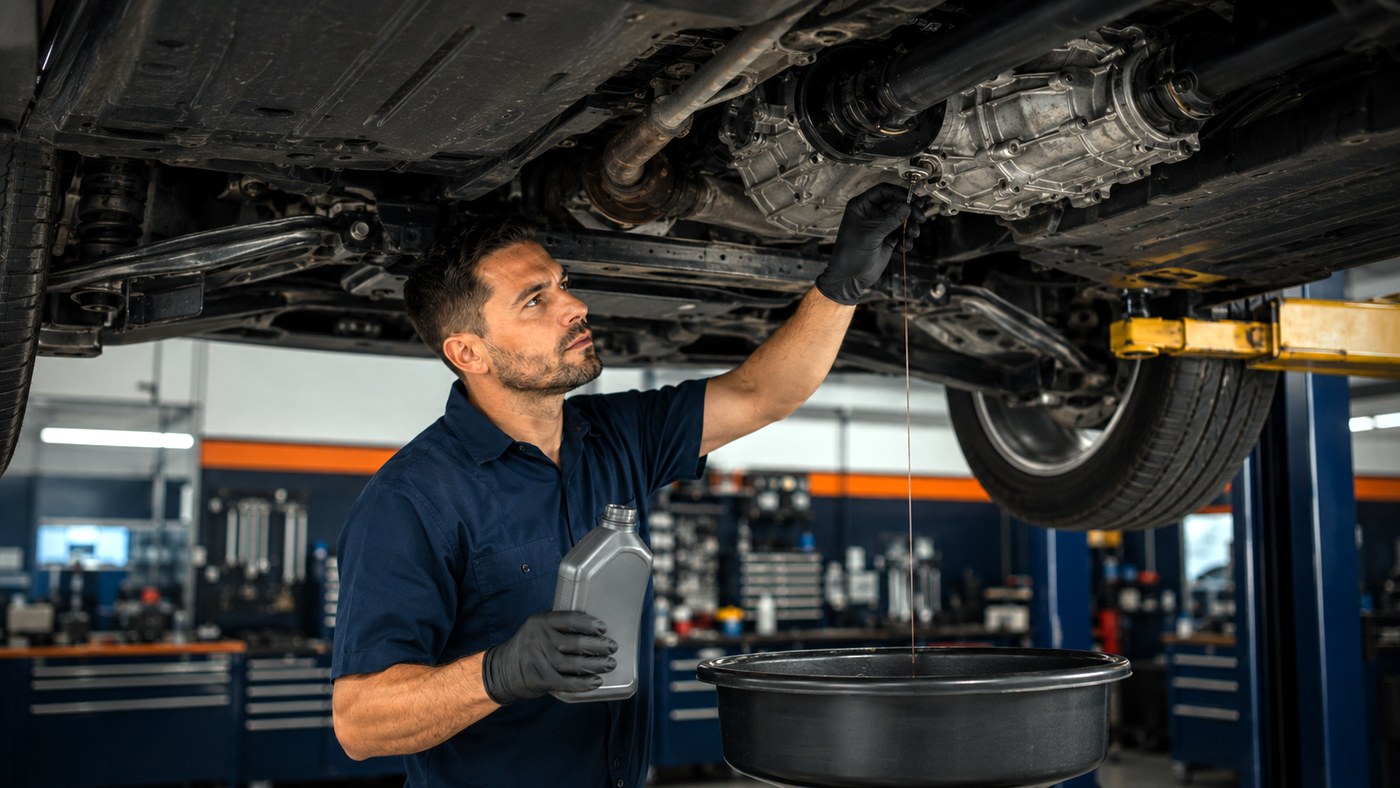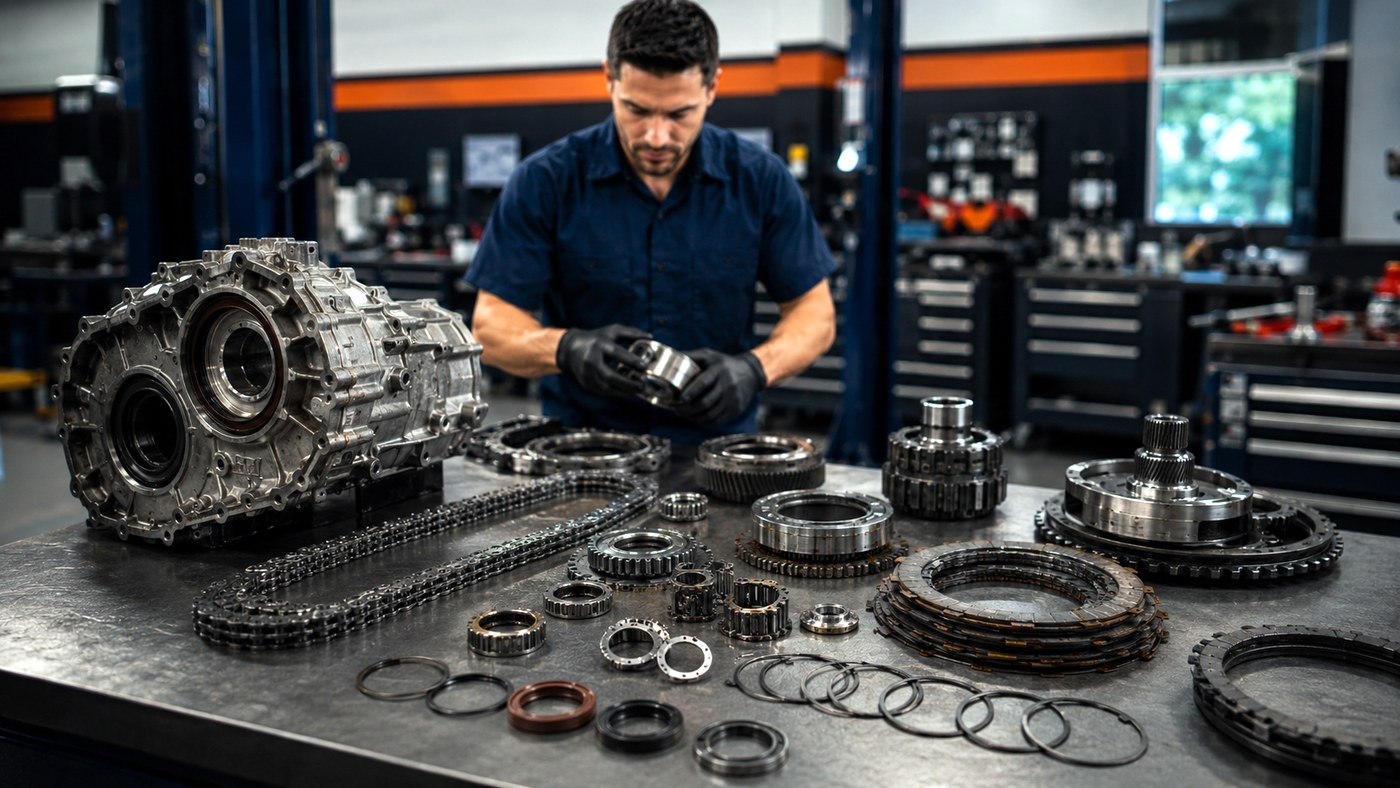
Symptoms
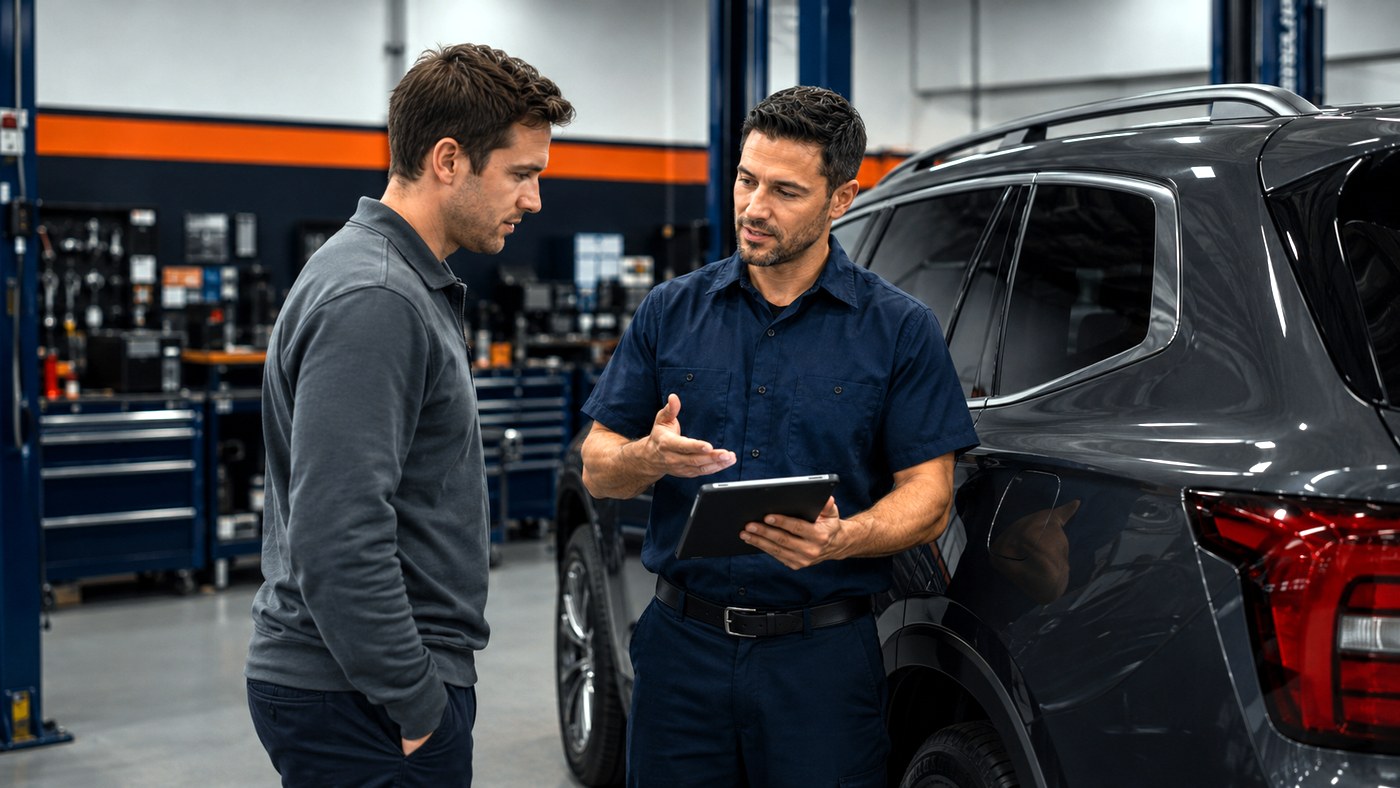
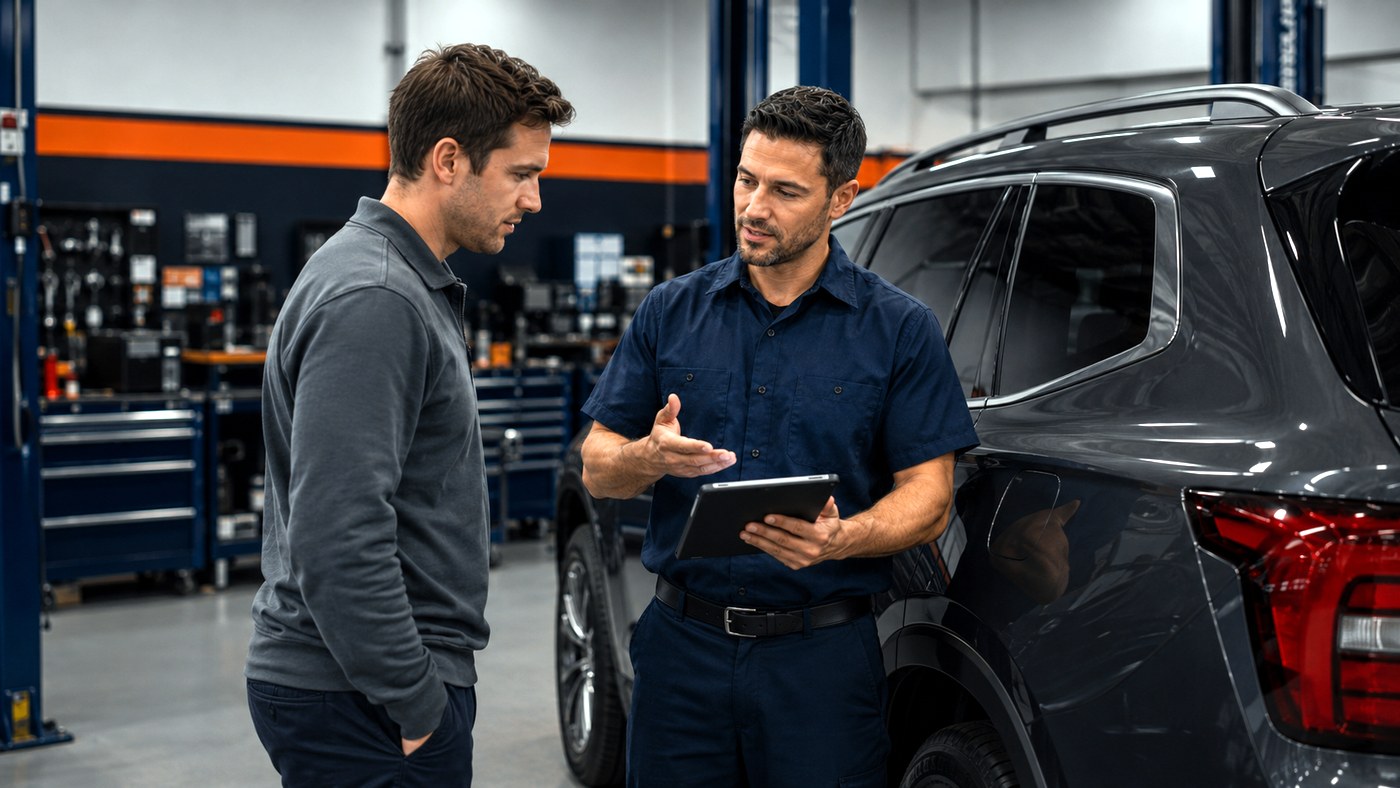
Tell us whether the noise happens on acceleration, deceleration, tight turns, 4WD engagement, or highway cruising. The pattern usually narrows the search quickly.
When a transfer case starts binding, grinding, leaking, or refusing to engage, the problem is usually in the chain, bearings, encoder motor, seals, fluid, or clutch pack. We start with the exact behavior you feel, then check the case and drivetrain before recommending parts.
AWD and 4WD vehicles around Arlington Heights take a beating from winter salt, tight parking-lot turns, Route 53 merges, and I-90 commuting. Those conditions can expose a weak transfer case before the transmission itself is the problem.
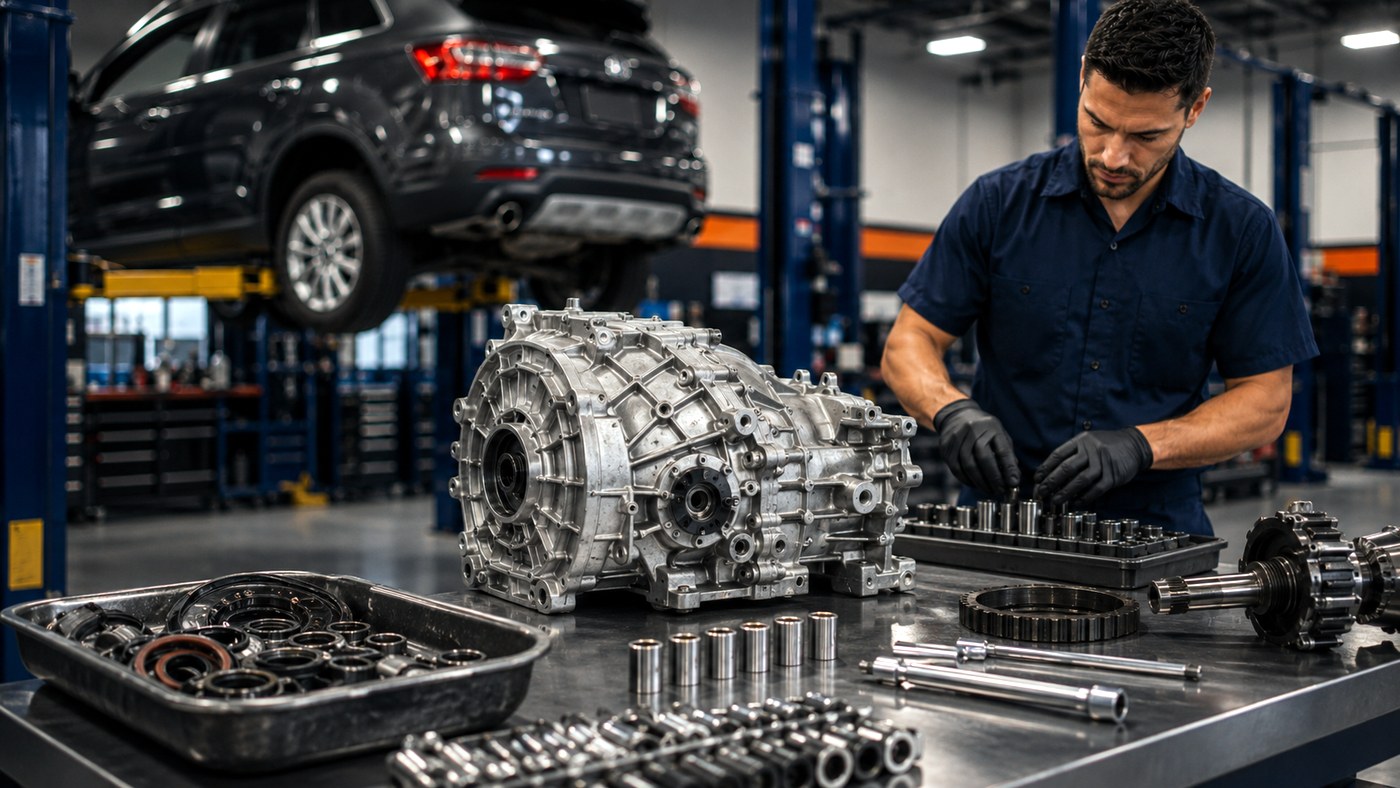
Transfer case problems usually show up as binding on turns, a clunk when shifting into 4WD, a grinding or chain-slap noise under load, fluid leaking from the case, or a warning light tied to the AWD/4WD system.
If you are coming from Palatine, Schaumburg, Hoffman Estates, Rolling Meadows, Mount Prospect, Wheeling, or Buffalo Grove, call 847-393-0191 before driving farther with a case that is noisy, low on fluid, or stuck between modes.
Some transfer case repairs are external - seals, sensors, motors, mounts, or fluid service. Others require opening the case to inspect the chain, bearings, pump, clutch pack, or shift fork. The diagnosis decides which path makes sense.
Get Free Diagnostic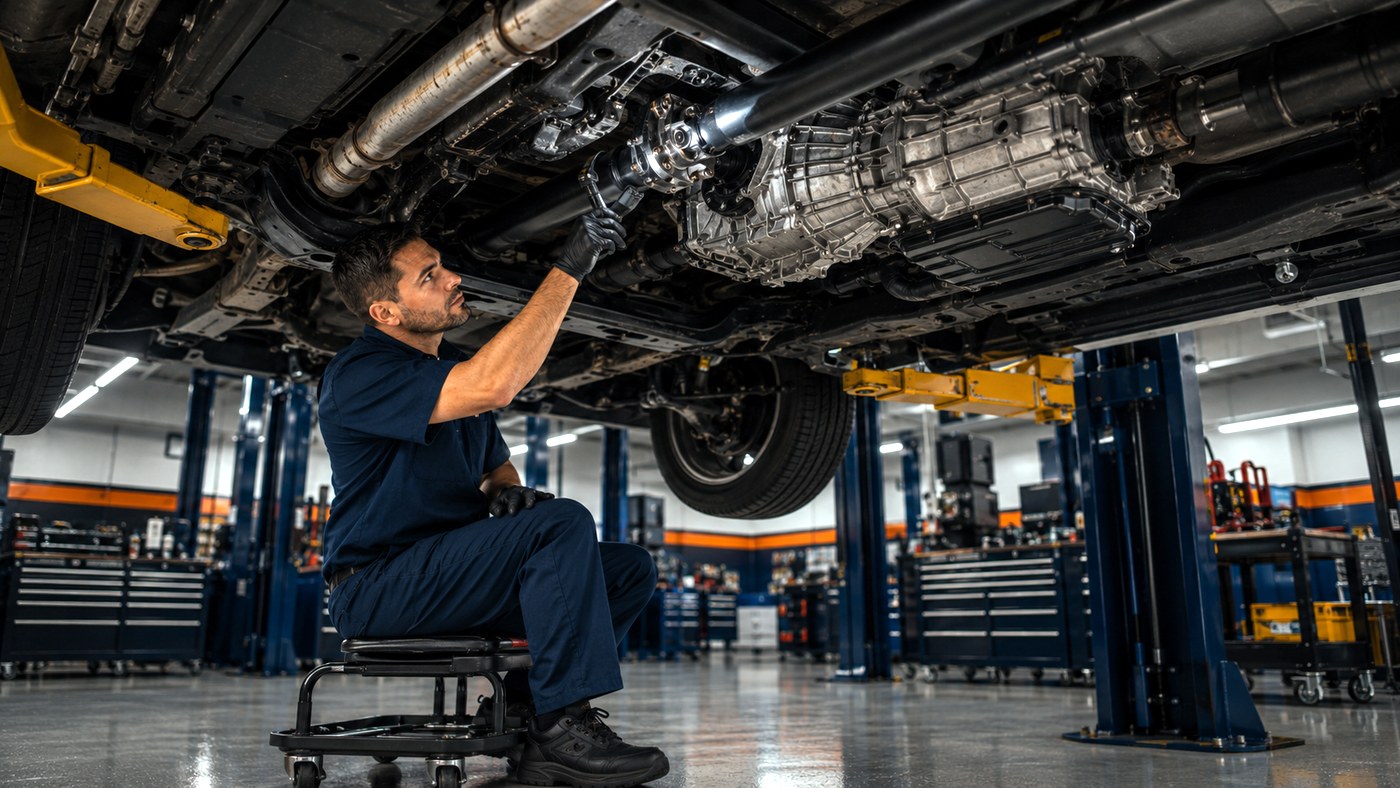
We check the fluid level and condition, look for case and output-seal leaks, inspect mounts and driveline angles, scan the transfer case control system when equipped, and road-test the vehicle if it can be driven without causing more damage.
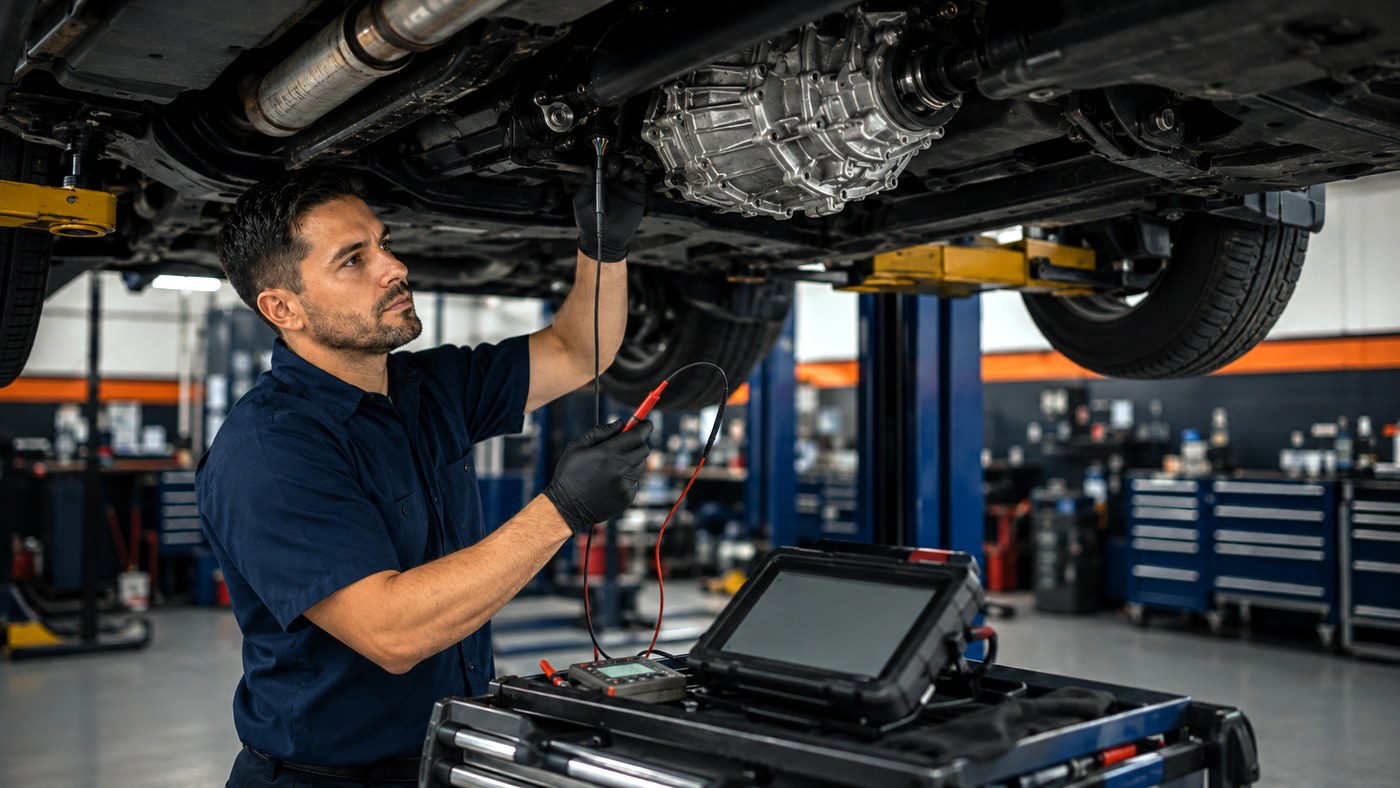
A transfer case estimate should be plain enough to follow: what failed, why it matters, what parts are being used, and what happens if the vehicle keeps being driven.
Transfer case pricing depends on whether the fix is a leak repair, encoder motor, fluid service, internal rebuild, or replacement unit. A 4WD truck and a compact AWD crossover can need very different labor and parts.
Tell us whether the noise happens on acceleration, deceleration, tight turns, 4WD engagement, or highway cruising. The pattern usually narrows the search quickly.
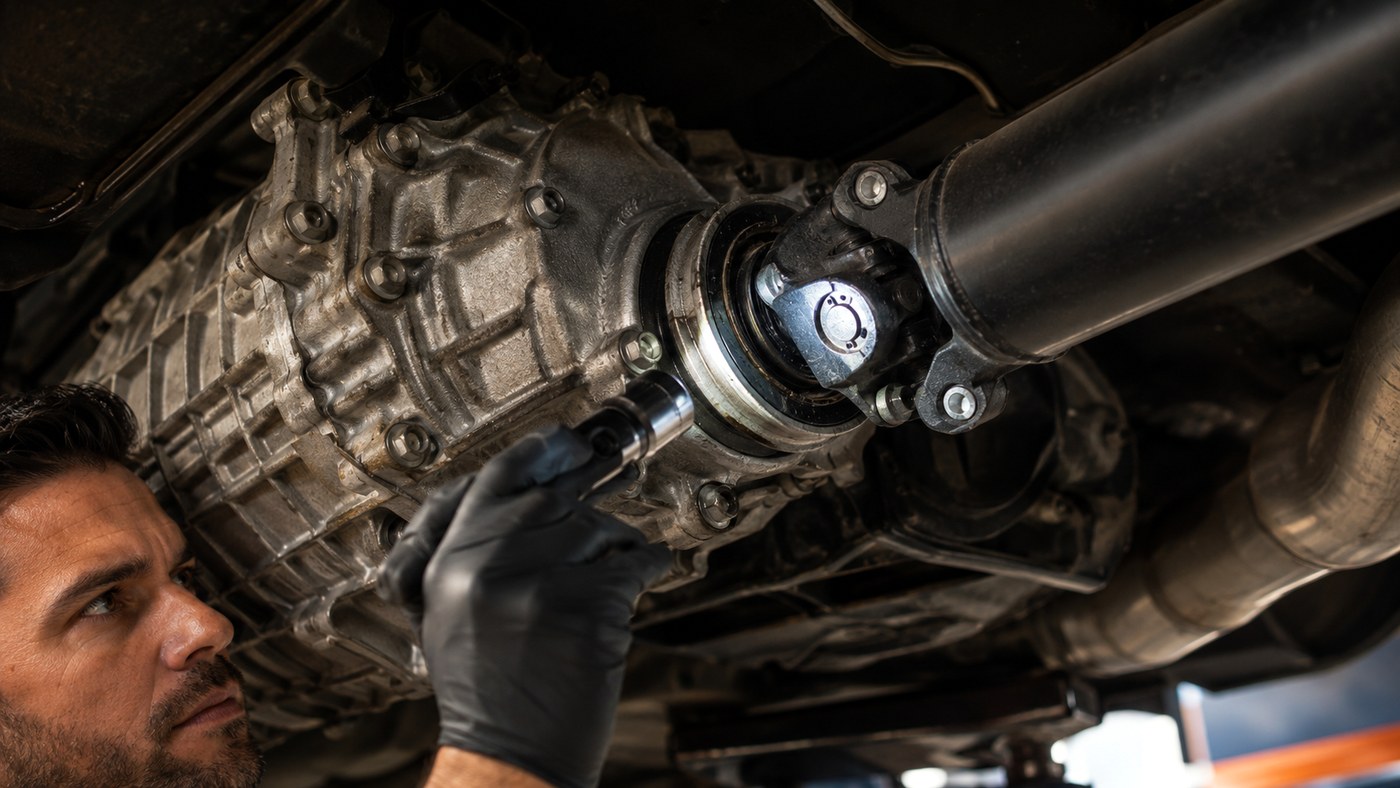
We look for leaks, fluid contamination, damaged mounts, tire-size mismatch, driveshaft play, control-motor faults, and internal case noise before pricing the job.
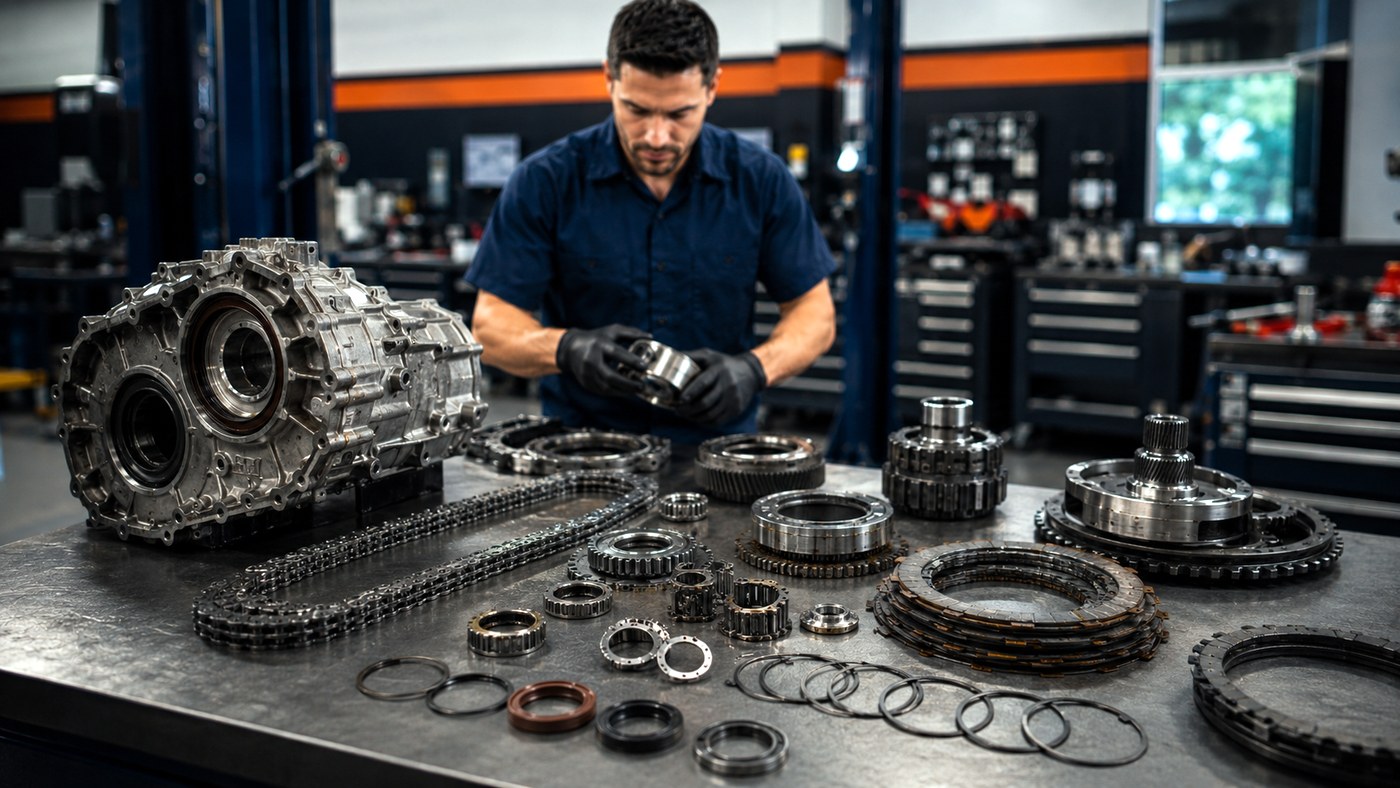
If a seal, sensor, motor, or fluid service solves it, we keep the repair there. If the chain, bearings, or clutch pack are worn, we explain the rebuild or replacement choice.
Call 847-393-0191 with the year, make, model, mileage, drivetrain type, and what happens when 4WD or AWD engages. If another shop already quoted a transfer case, bring the estimate with you.
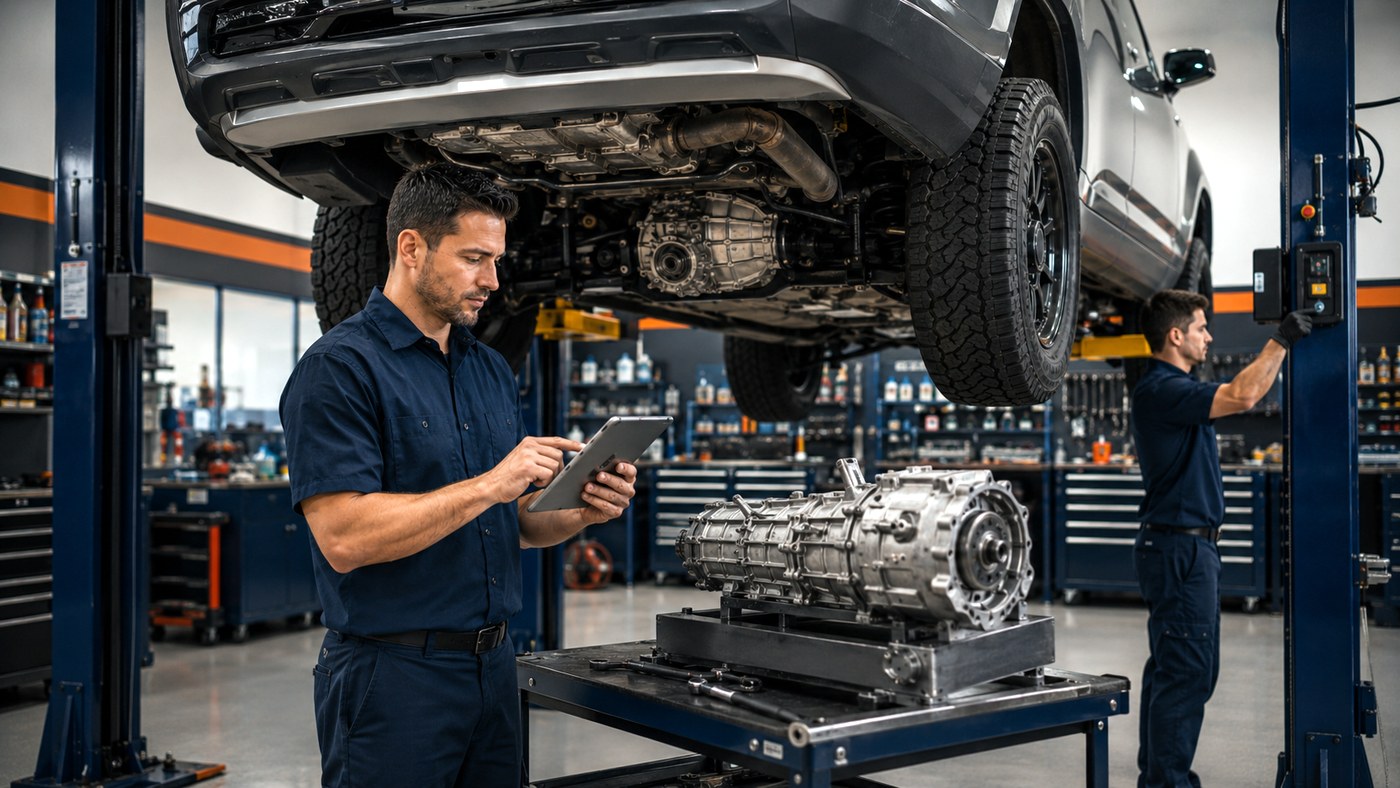
Call 847-393-0191 with the vehicle details and what you are noticing around 4WD engagement, AWD binding, chain noise, or case leaks. We will inspect it, explain the written estimate, and review warranty terms before work starts.
Transfer Case Repair Arlington Heights photos