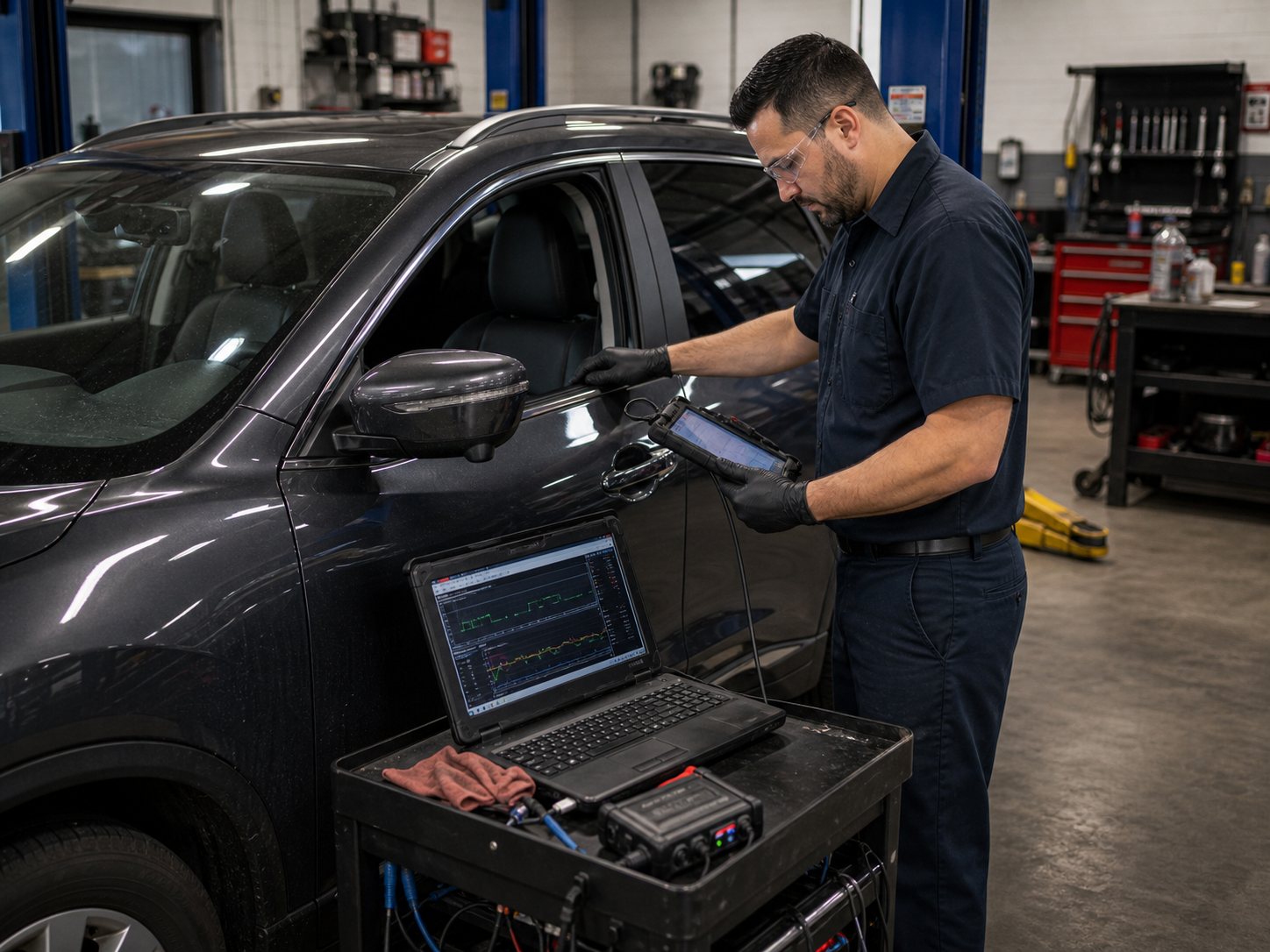
Teardown signs
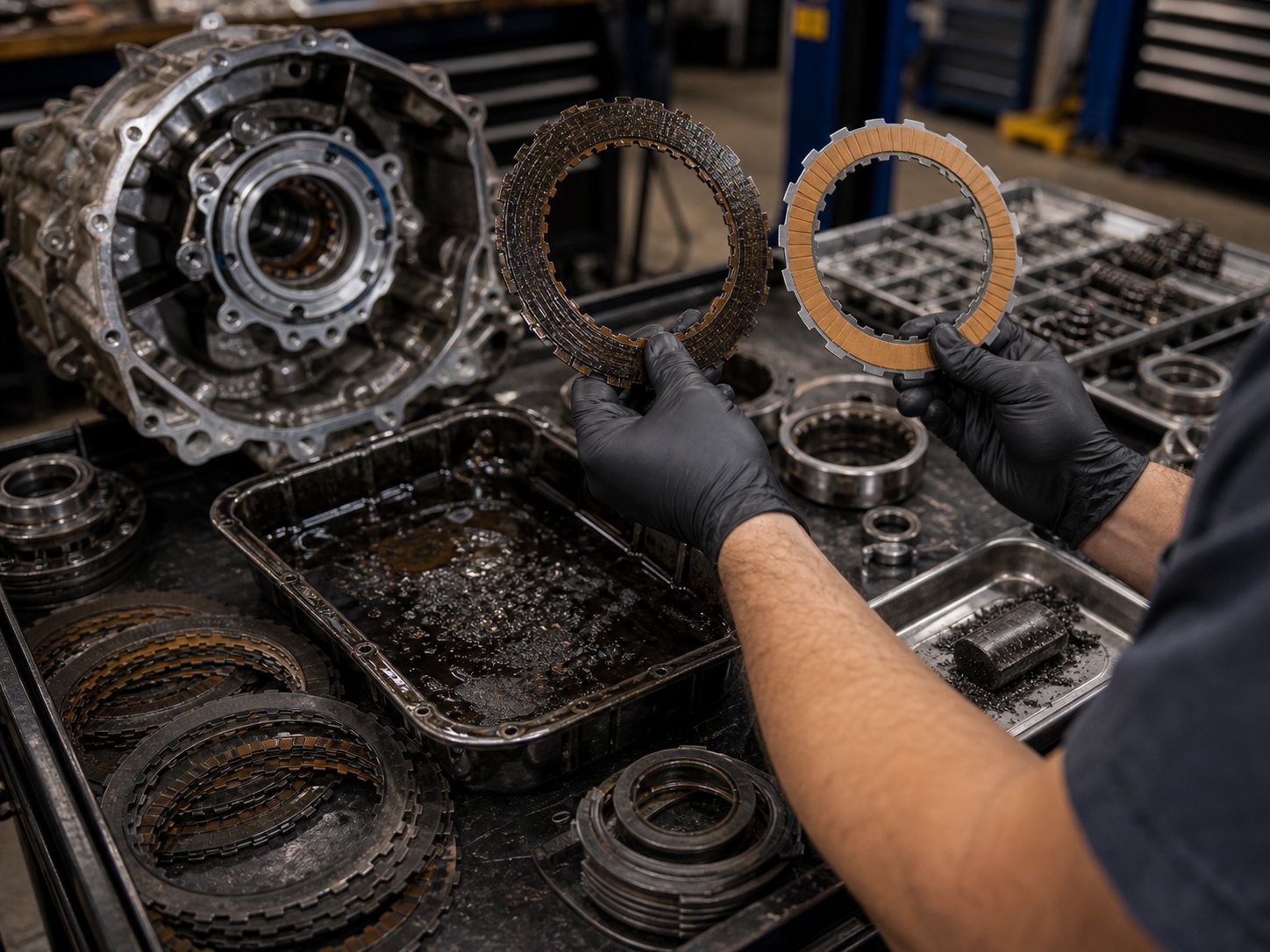
Burnt fluid, heavy clutch material, metal debris, repeated slipping, and no-move conditions are the signs that move the conversation toward internal work.
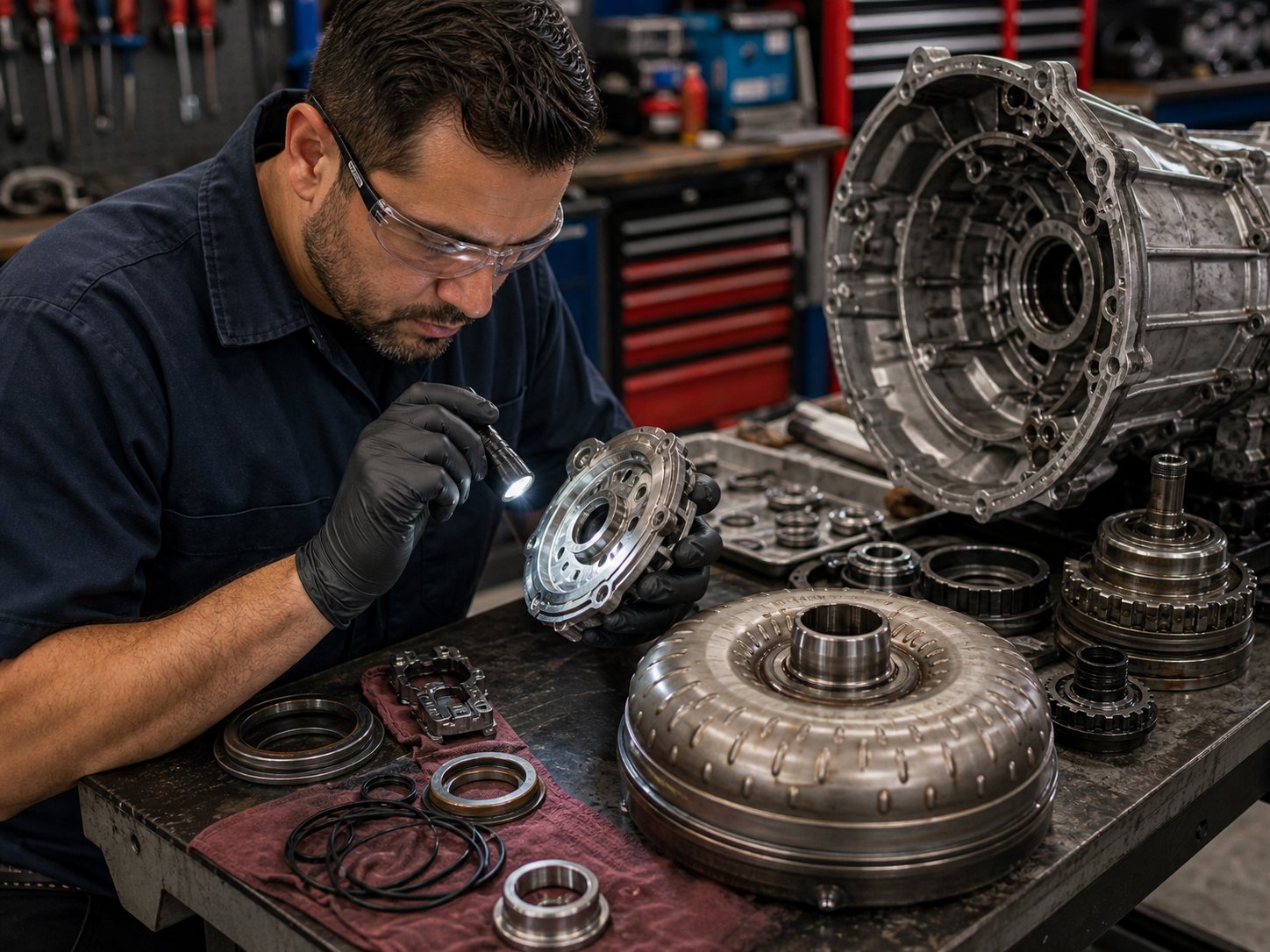
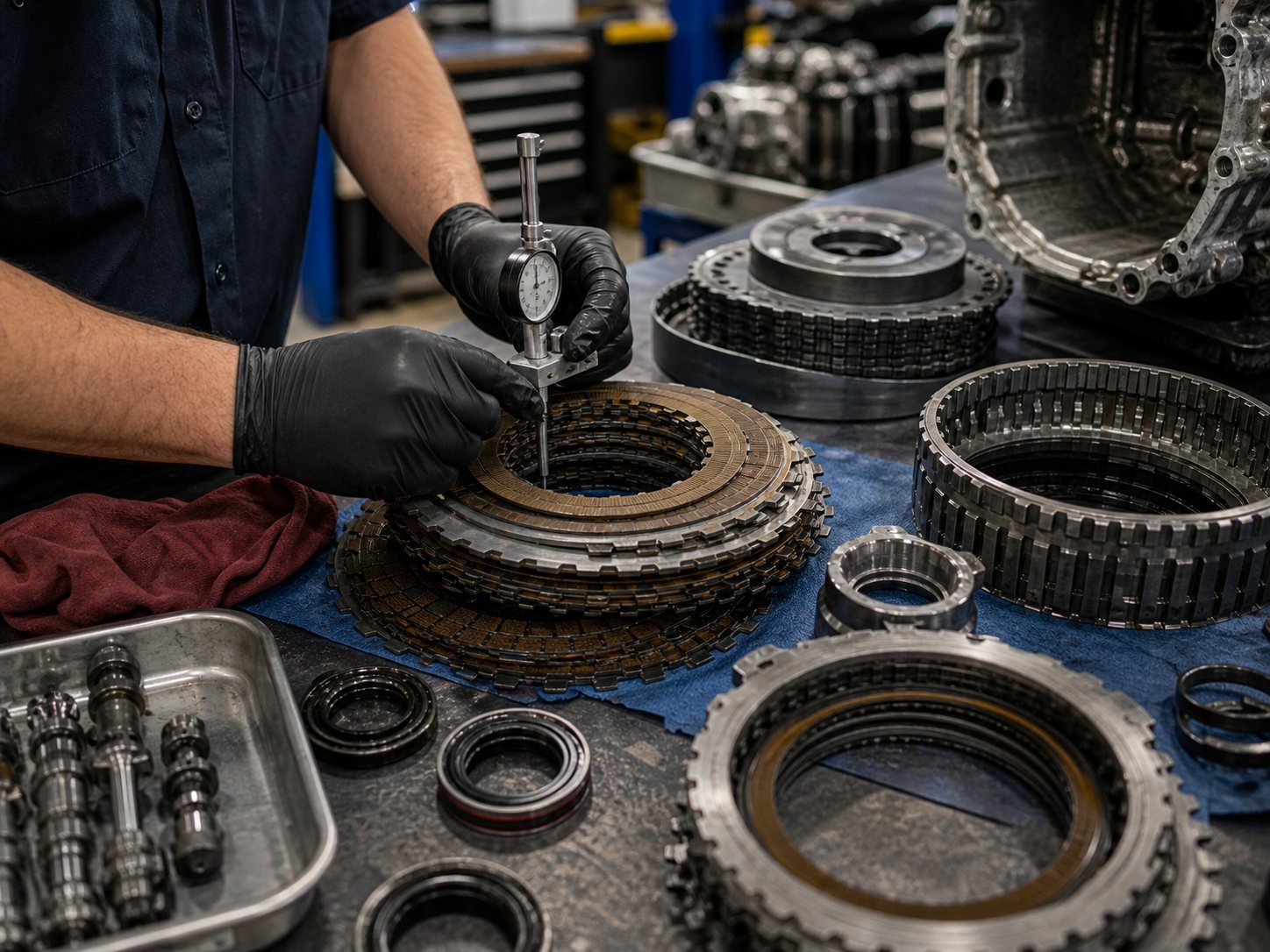
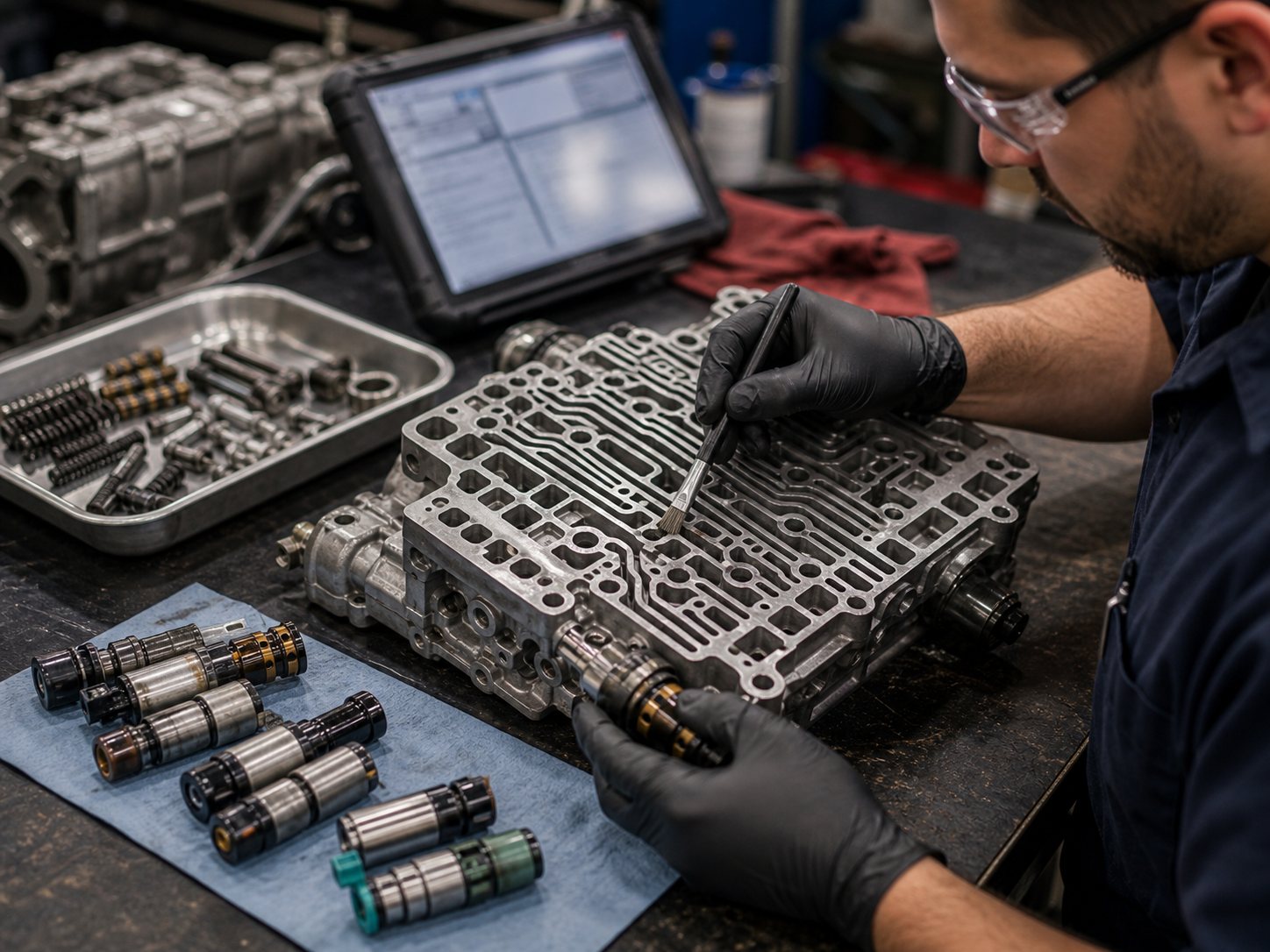
A transmission rebuild is the conversation for internal wear: burnt clutches, damaged seals, worn bushings, failed bands, pressure loss, metal in the pan, or a unit that has gone past a small external repair. We confirm that before the transmission comes out.
For drivers in Palatine, Schaumburg, Hoffman Estates, Rolling Meadows, Mount Prospect, Wheeling, and Buffalo Grove, a rebuild decision usually comes down to mileage, vehicle condition, parts availability, and whether the unit is worth repairing instead of replacing.
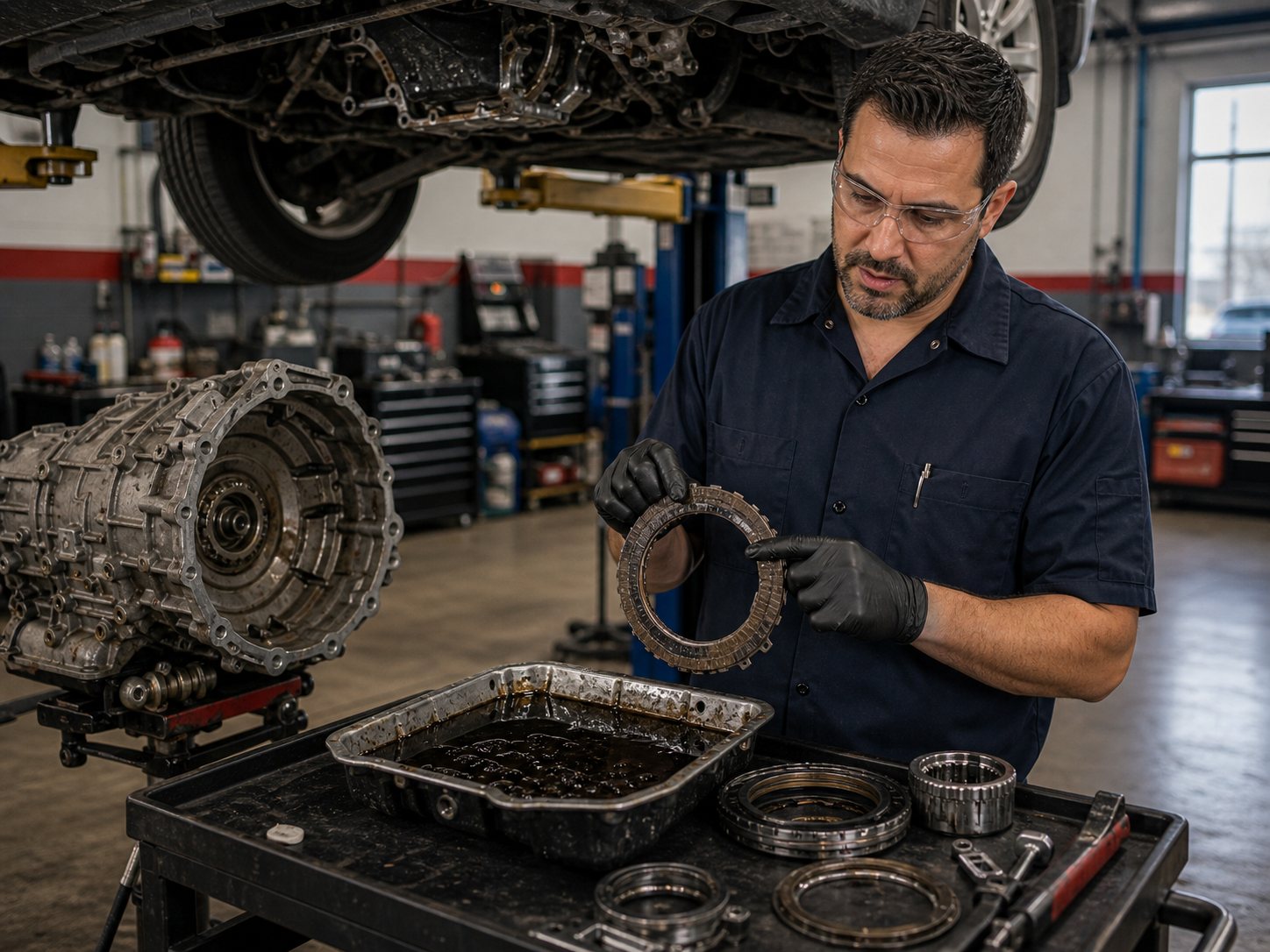
A rebuild makes sense when the failure is inside the unit and too widespread for a single solenoid, seal, valve body, or fluid service to solve. That usually means clutch material in the pan, repeated slipping, pressure loss, burnt fluid, no movement, or multiple gear-ratio faults.
We do not recommend pulling the transmission just because a code appeared. The evidence has to point to internal wear or damage that cannot be corrected from the outside.
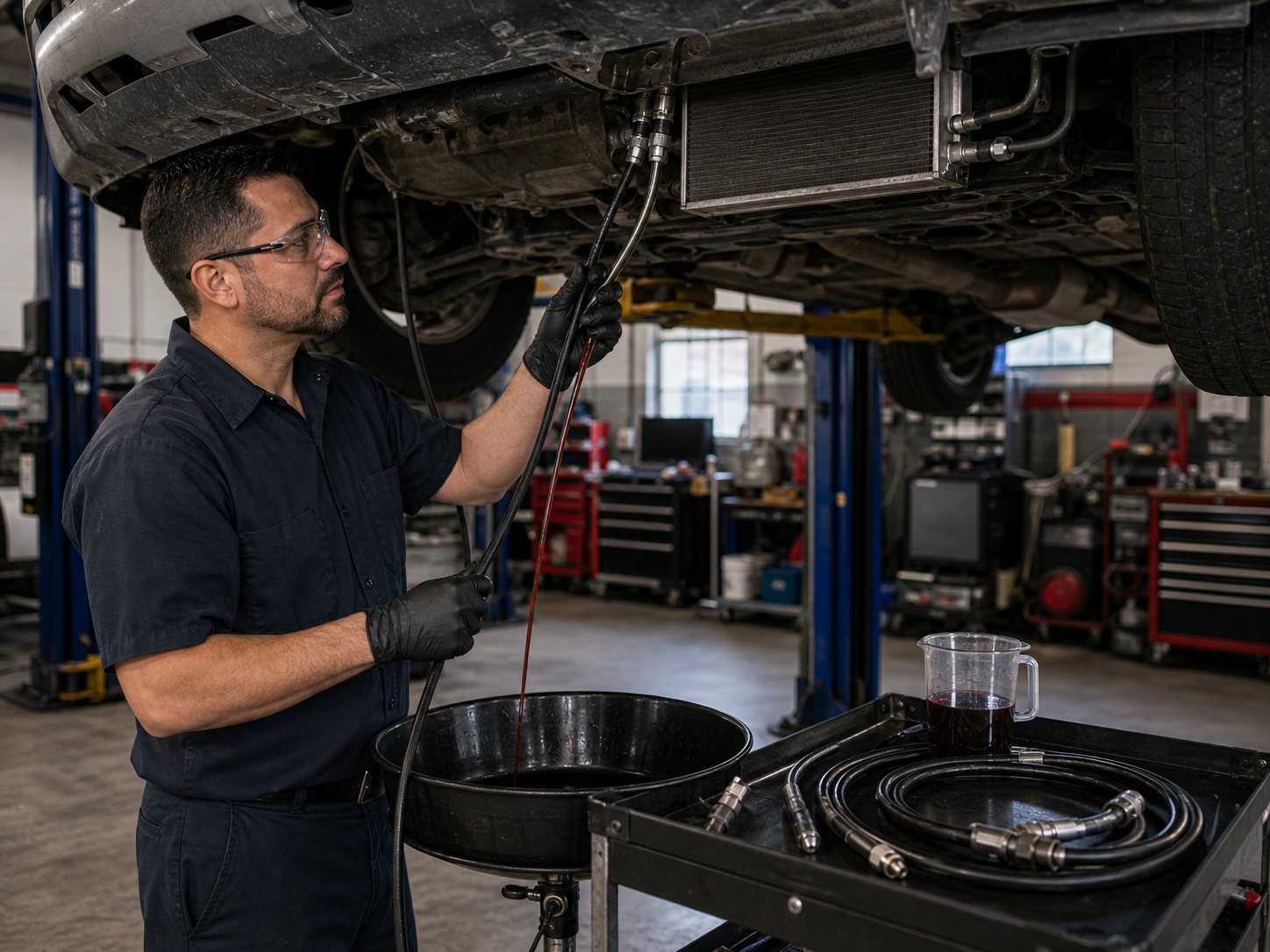
Northwest suburban driving can speed that wear along: winter salt attacks cooler lines, I-90 heat raises fluid temperature, and stop-and-go Route 53 traffic exposes weak clutches and converters.
Get Free Diagnostic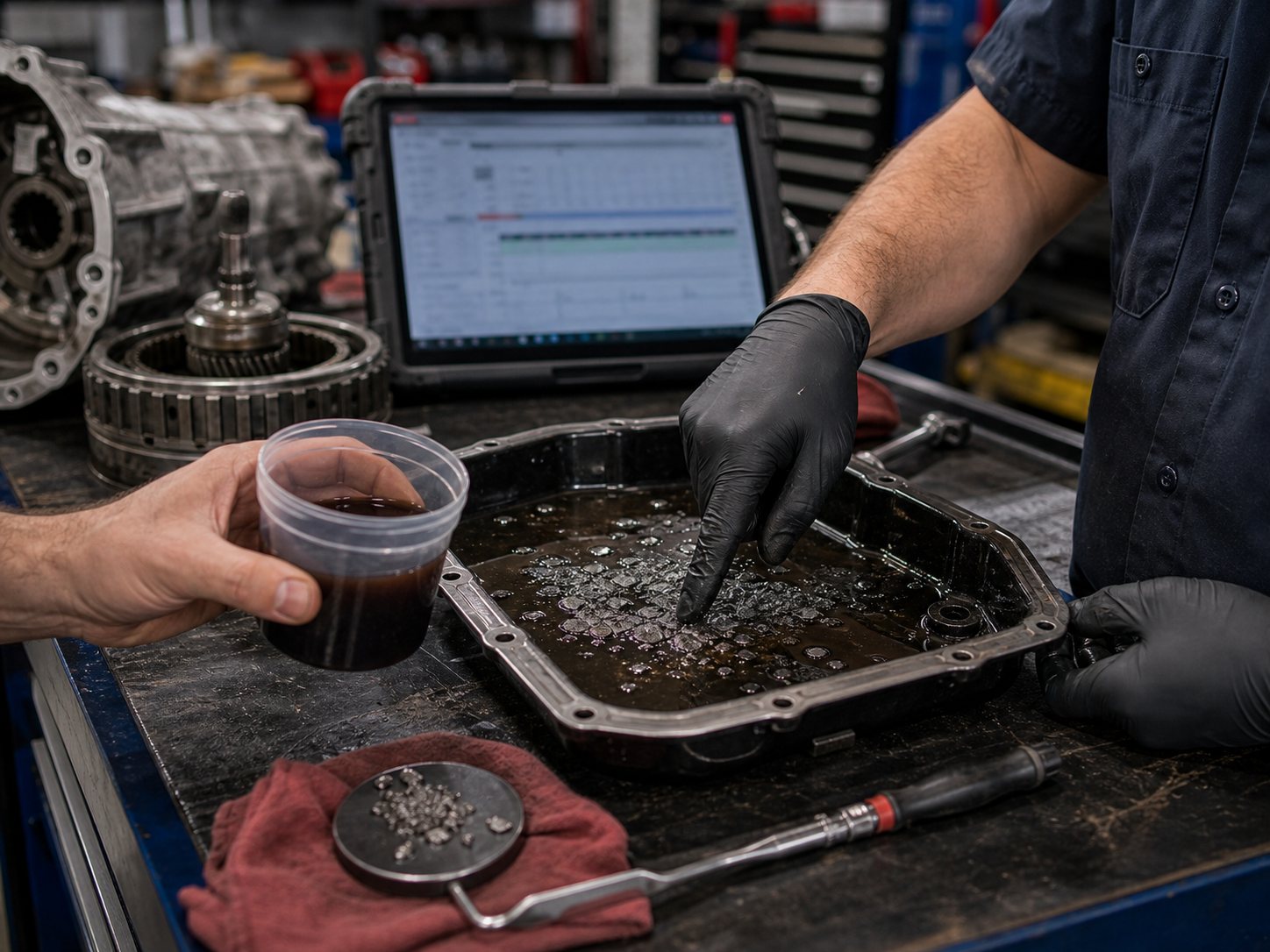
Before teardown, we look for evidence that the problem is inside the transmission: fluid burn, clutch material, metal, pressure faults, repeated ratio codes, converter failure, or a no-move condition that matches the scan data.
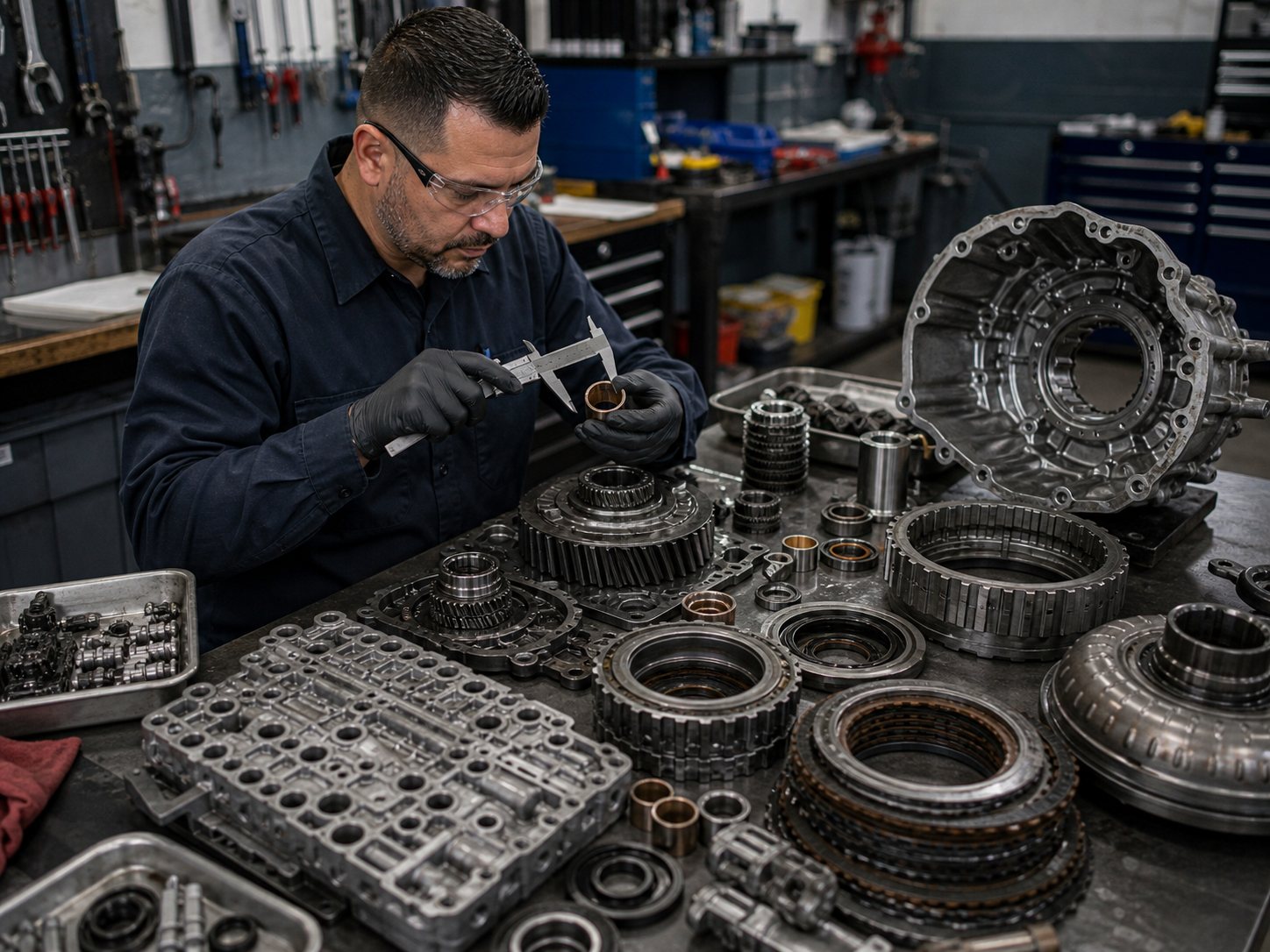
A rebuild estimate should make the scope clear: what is included, what might change after teardown, how long the job should take, and what warranty protects the finished work.
Rebuild pricing depends on the transmission model, vehicle layout, hard-part damage, converter condition, electronics, cooler contamination, and parts availability. The same symptom can price differently on a front-wheel-drive sedan, AWD SUV, work van, or pickup.
Burnt fluid, heavy clutch material, metal debris, repeated slipping, and no-move conditions are the signs that move the conversation toward internal work.
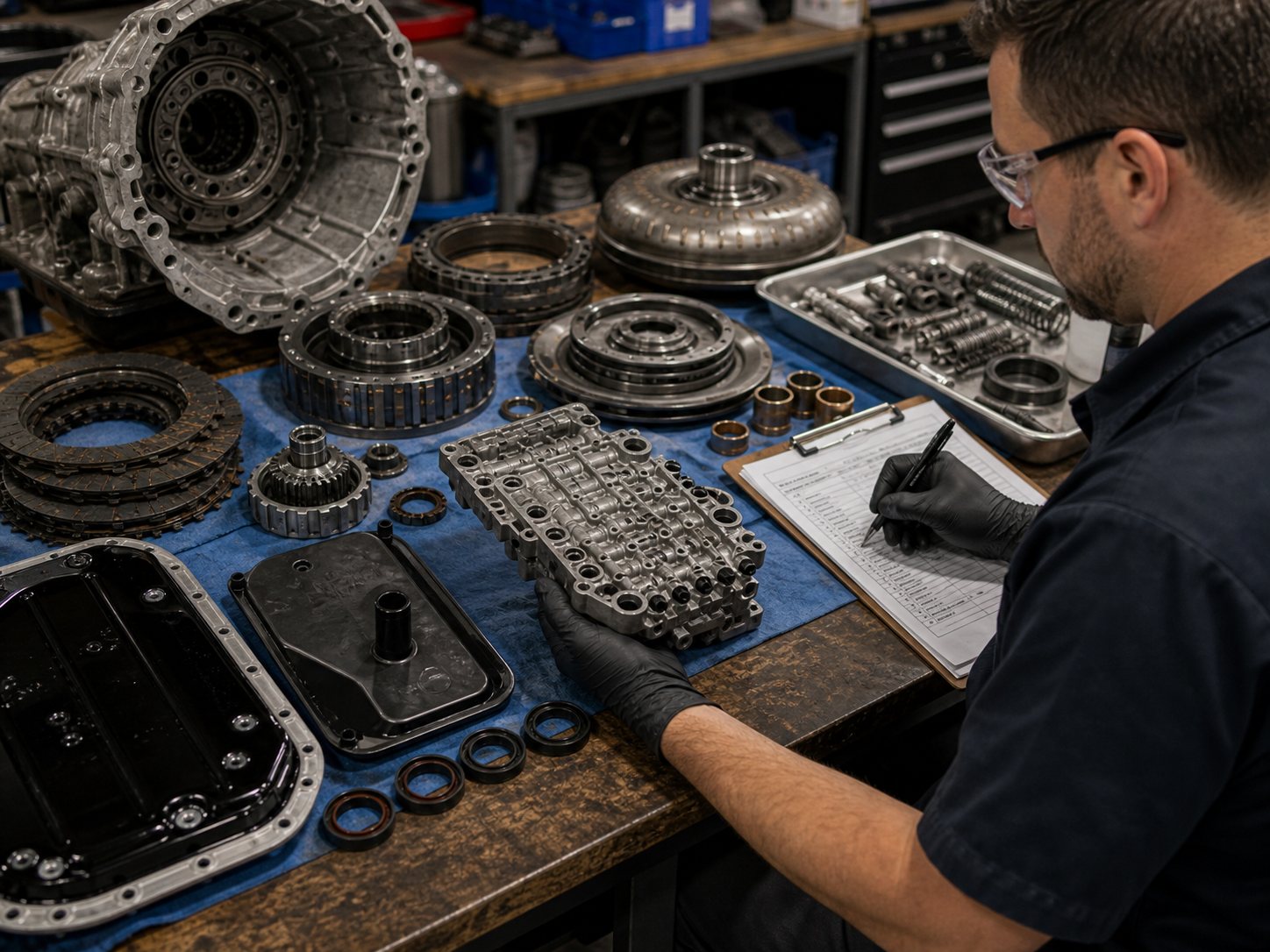
We review the transmission family, parts availability, converter condition, cooler risk, and whether the vehicle is worth rebuilding at its current mileage.
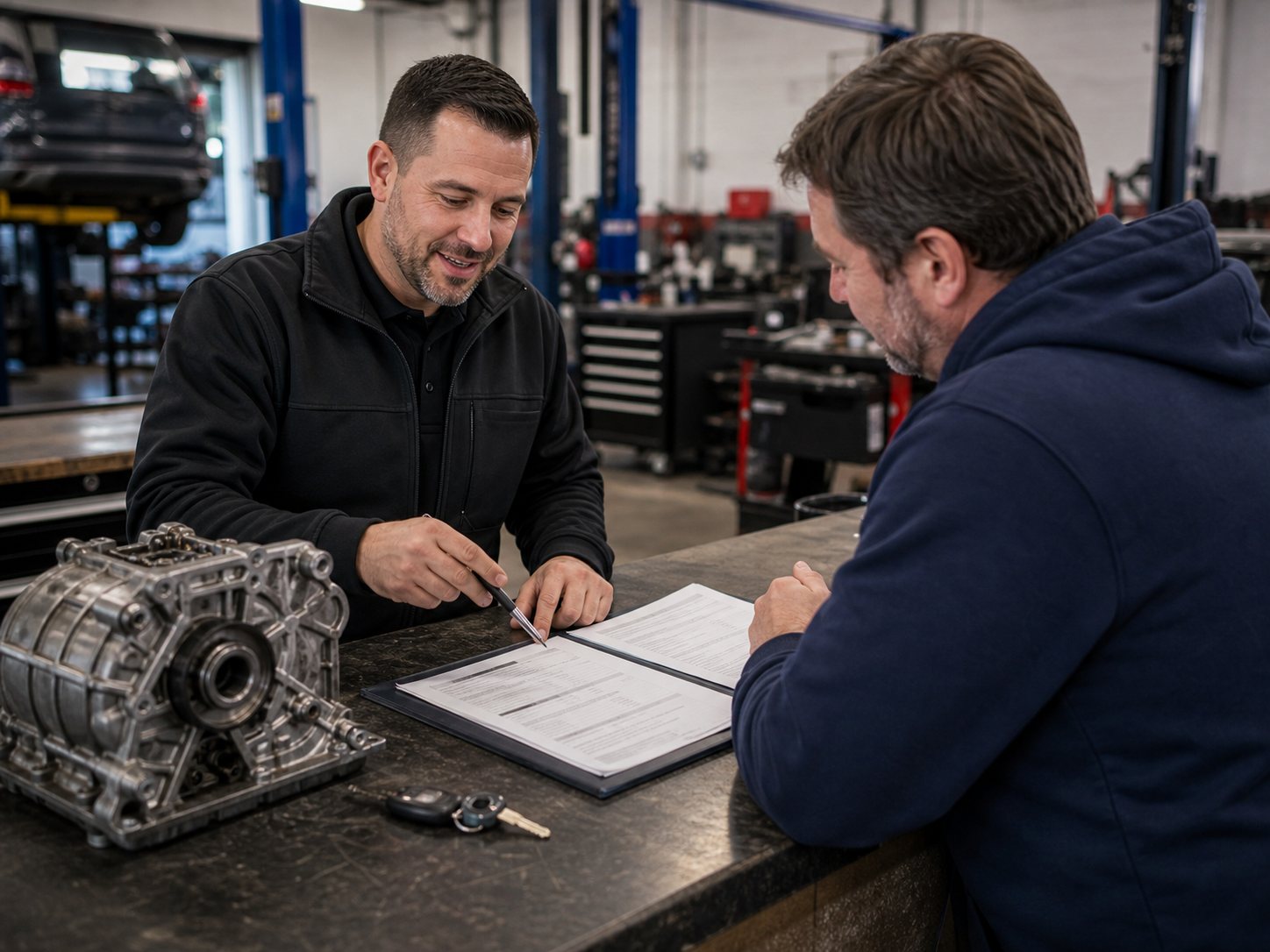
The 2-year / 24,000-mile Written Warranty applies to qualifying rebuilds, and the terms are reviewed before the rebuild is approved.
Bring the mileage, service history, any stored codes, prior estimates, and a clear description of how the failure started. Sudden failure, gradual slipping, overheating, and repeated warning lights each point to different rebuild risks.
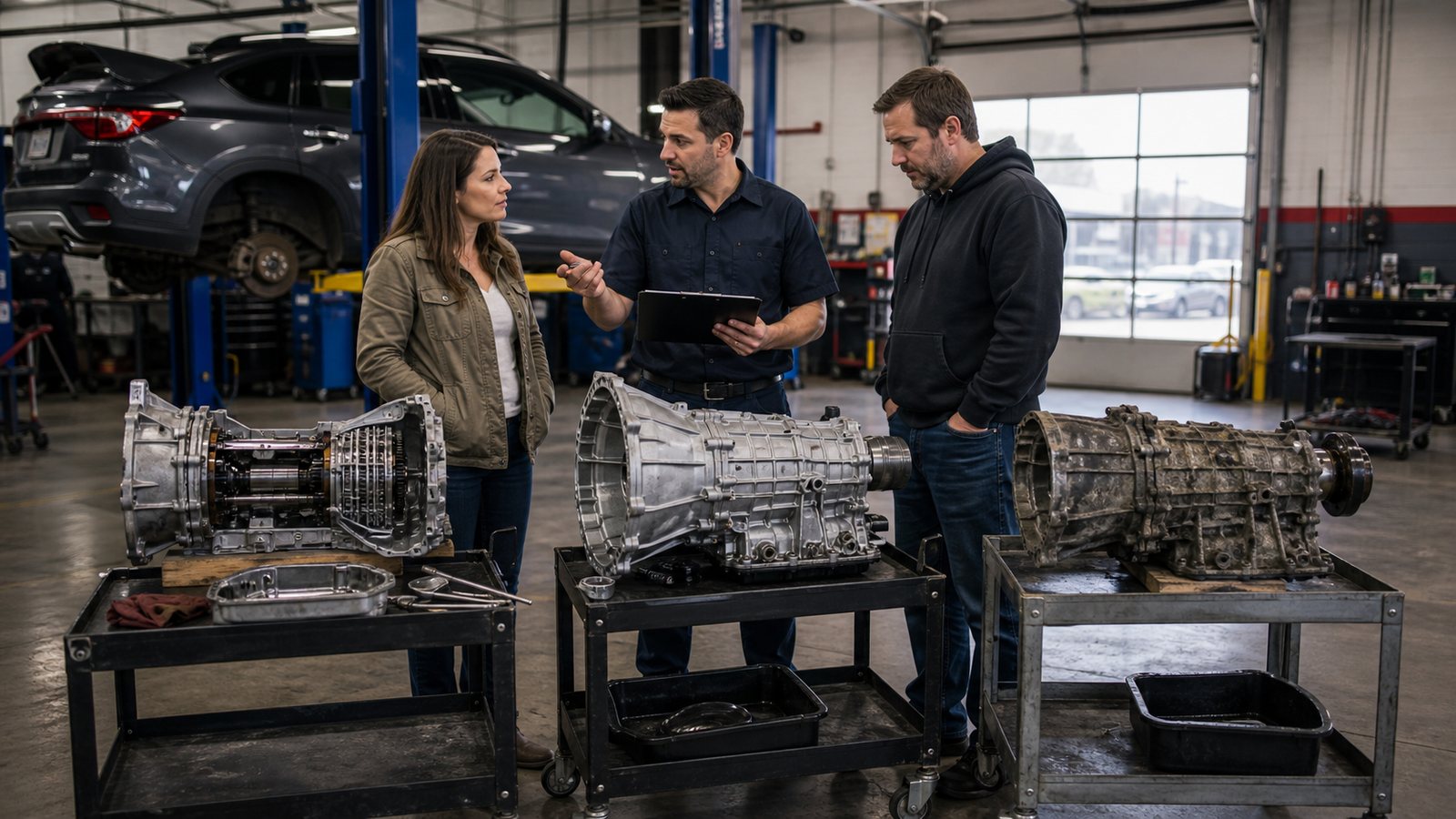
Call 847-393-0191 with the vehicle details, mileage, and any estimate you already received. We will confirm whether rebuild is actually justified, explain the written estimate, and review the warranty before work starts.
Transmission Rebuild Arlington Heights photos