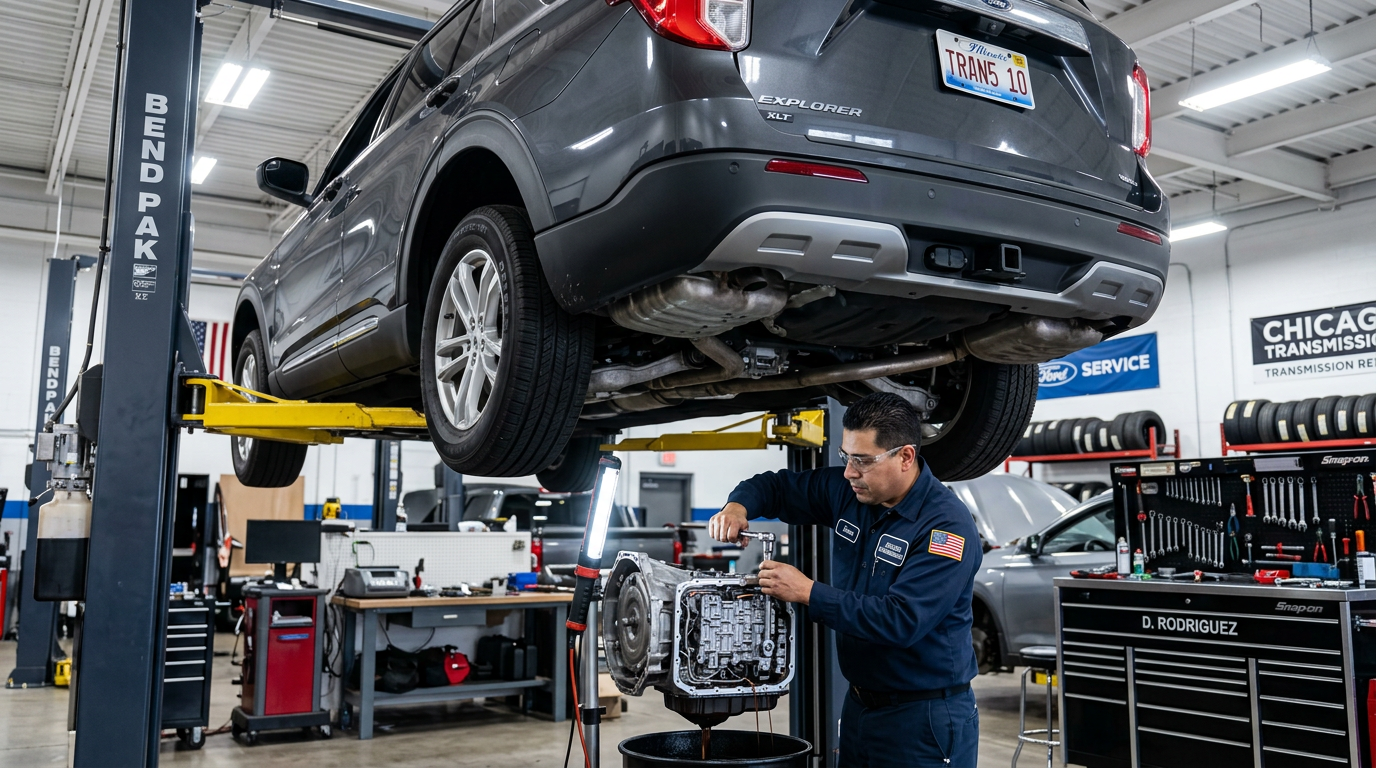
The Ford F-150 10R80 can show shudder, harsh shifts, delayed engagement, gear hunting, or limp mode. The ten-speed has several possible failure paths, so the repair should be based on codes, road-test data, fluid condition, and transmission build details.
Common Driver Complaints
F-150 owners often describe light-throttle shudder, harsh 3-5 or 7-8 shifts, delayed Drive engagement, clunks, or a transmission that feels confused in traffic. Some symptoms are software/adaptation related; others are mechanical.
What We Check
- Year, mileage, engine, towing use, and tire size.
- Transmission codes and adaptive shift data.
- Converter slip and pressure behavior.
- Fluid condition and pan evidence.
- Whether the symptom is cold, hot, loaded, or highway-speed.
When It Is Not A Full Rebuild
Some complaints may be handled with service, programming, adaptation, valve-body repair, or converter work. That only makes sense if the internal evidence is clean.
When It Is Serious
Repeated slip, burnt fluid, harsh engagement with codes, or debris in the pan can point toward internal repair. Continuing to drive can make a repair more expensive.
Second Opinion
If you have a dealer quote for a 10R80, bring it in. We will compare it to the actual data and explain the realistic repair path.
Why 10 Speeds Feel Different
A ten-speed shifts often by design, so not every busy shift pattern is a failure. The concern starts when the shift becomes harsh, delayed, slipping, or inconsistent. We separate normal shift strategy from a real mechanical or hydraulic problem.
What Owners Should Track
Write down the speed, gear feel, load, and temperature when the symptom happens. A shudder between 35 and 50 mph tells us something different than a delayed Drive engagement after sitting overnight.
When Programming Is Part Of The Conversation
Some 10R80 complaints involve adaptive strategy, software, or relearn work. Programming will not fix burnt fluid or worn hard parts, but it can matter when the transmission is mechanically healthy and shift timing is the complaint.
When We Inspect Internals
If the data shows repeated slip, debris in the pan, pressure faults, or symptoms that return immediately after relearn, the conversation moves toward mechanical inspection. That is where a written explanation matters.