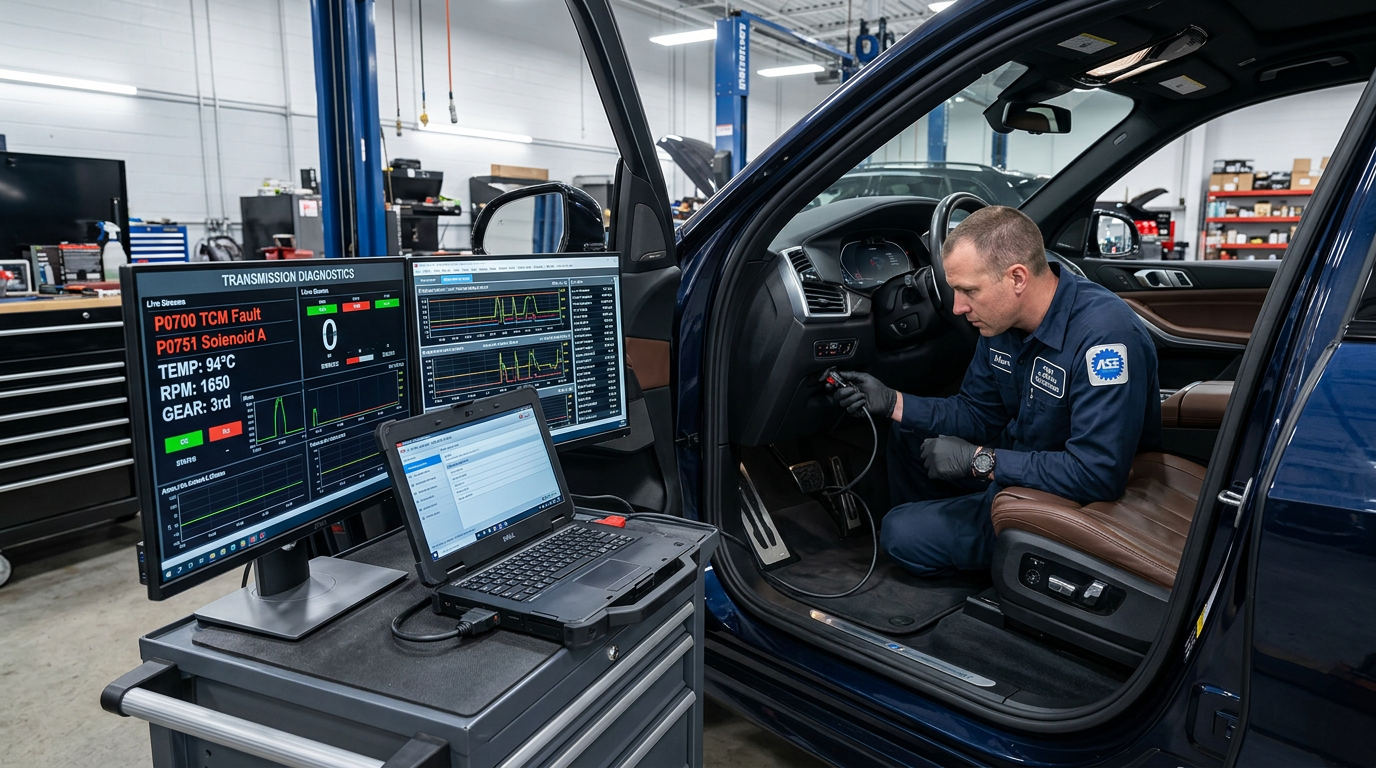
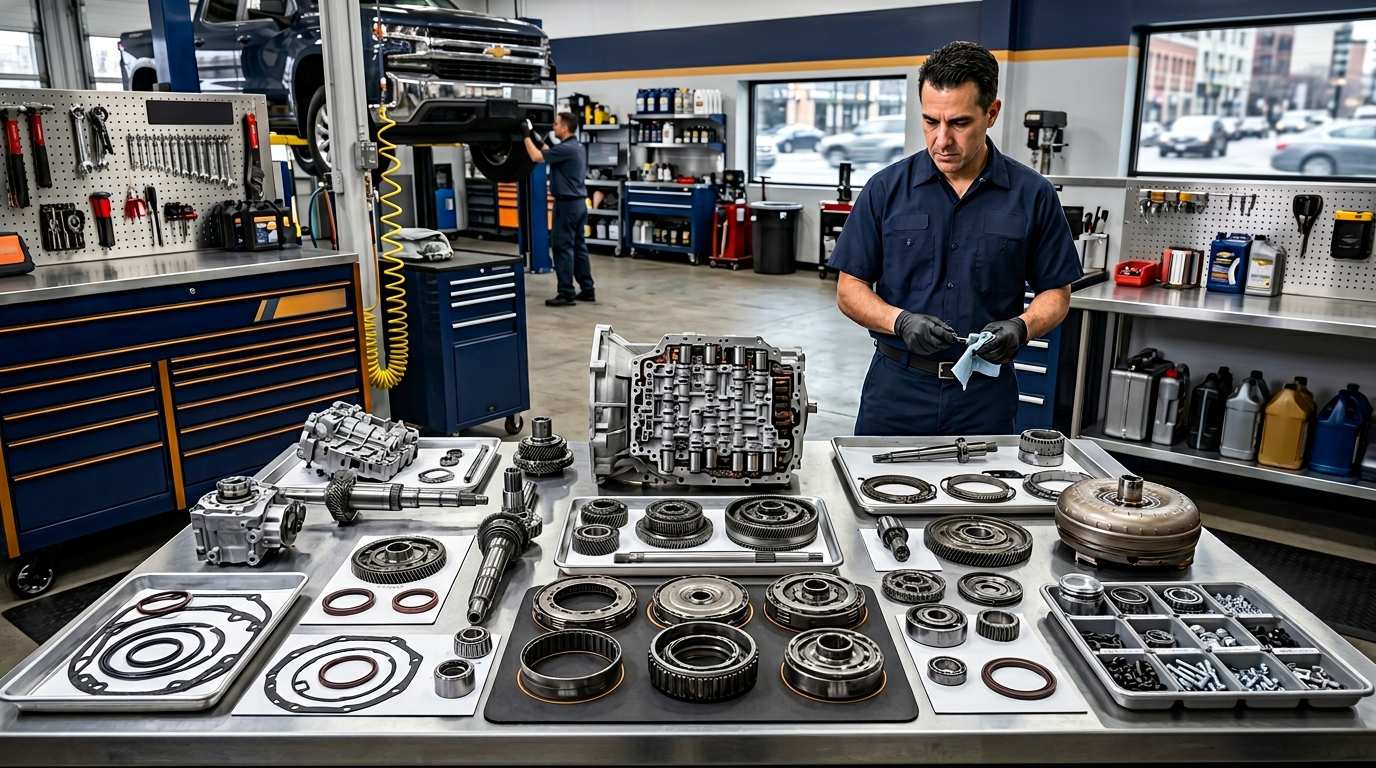
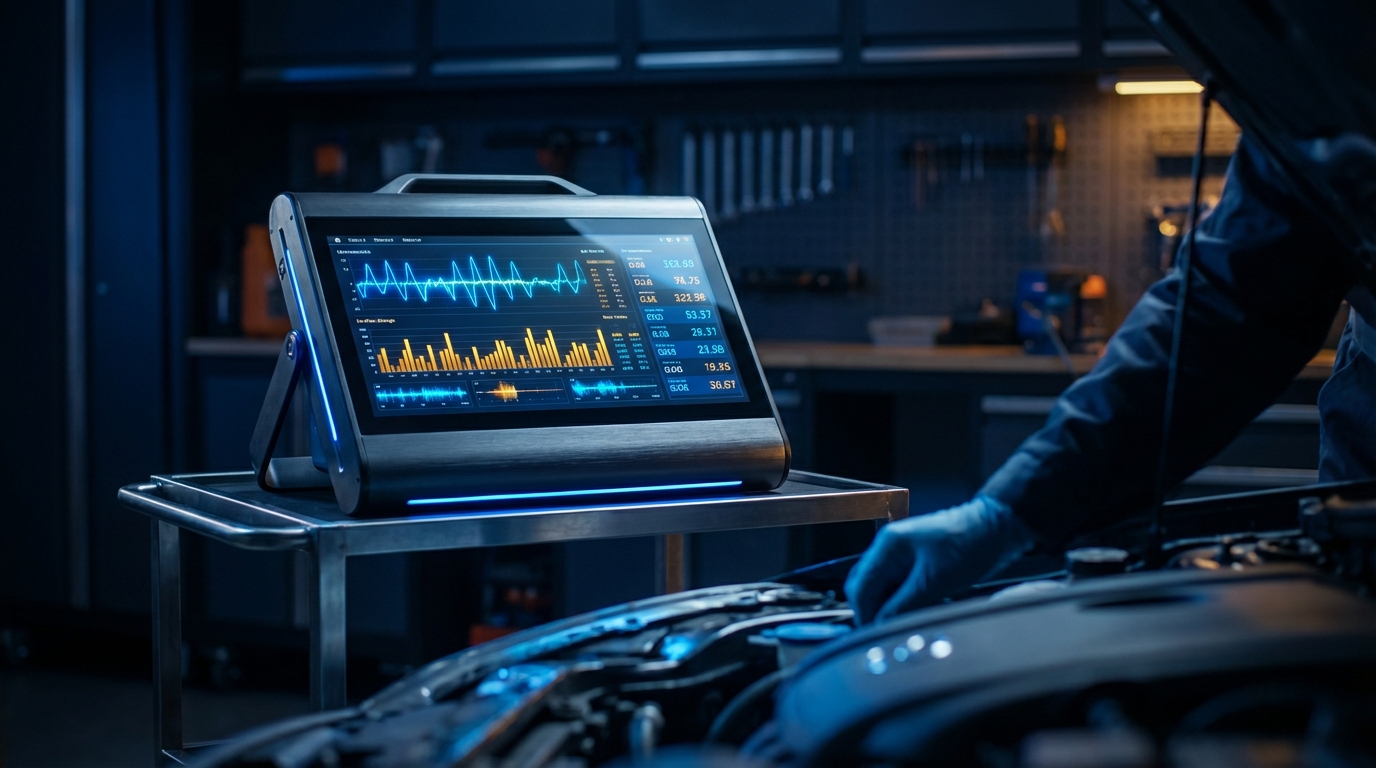
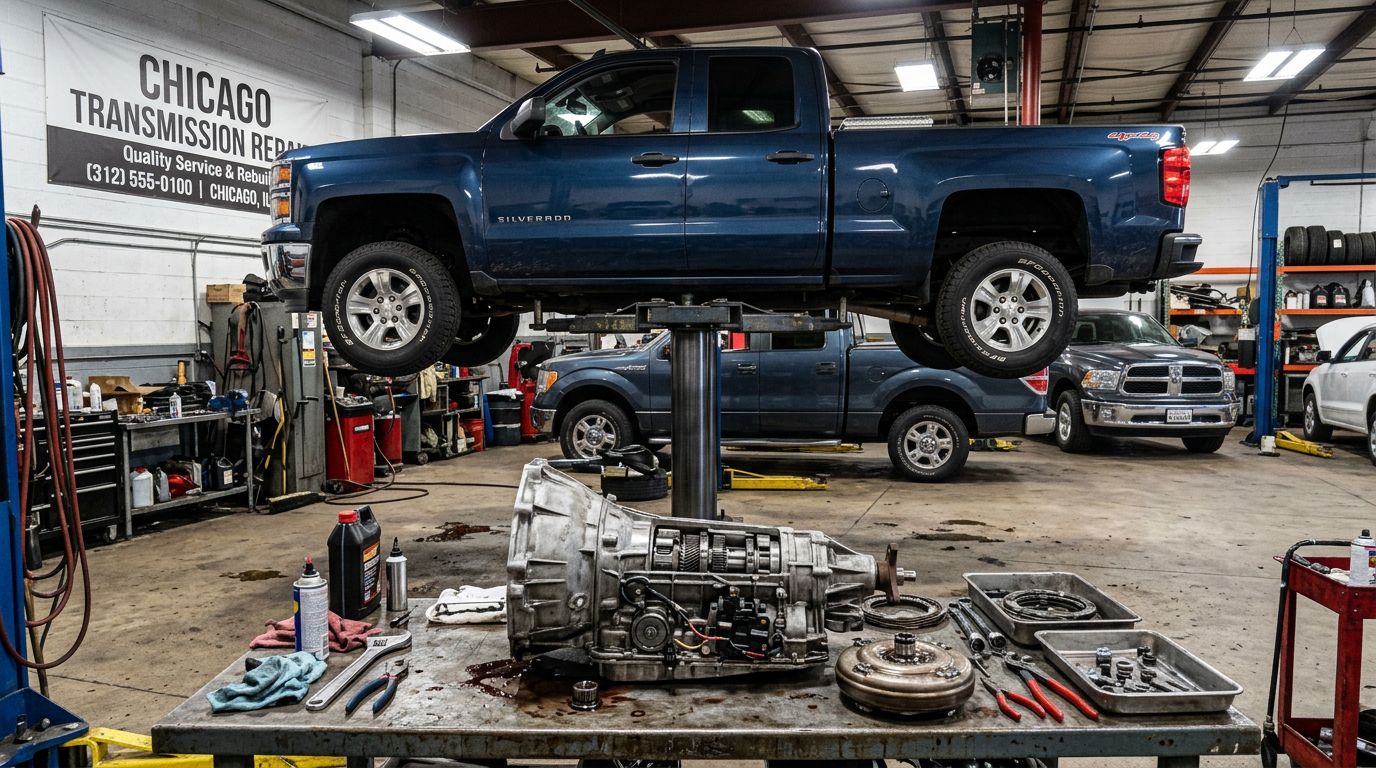
A Silverado 8L90 shudder often feels like driving over light rumble strips under steady throttle. It is commonly tied to torque converter clutch behavior, but fluid condition, codes, and pan evidence decide how far the repair needs to go.
What Drivers Usually Feel
The complaint often appears around light throttle, steady speed, or gentle acceleration. It may be worse hot and may disappear when you press the throttle harder. That pattern helps separate converter shudder from tire, axle, or engine misfire.
What We Check
- Truck year, mileage, engine, and 8-speed confirmation.
- Fluid condition and whether the updated fluid has been used.
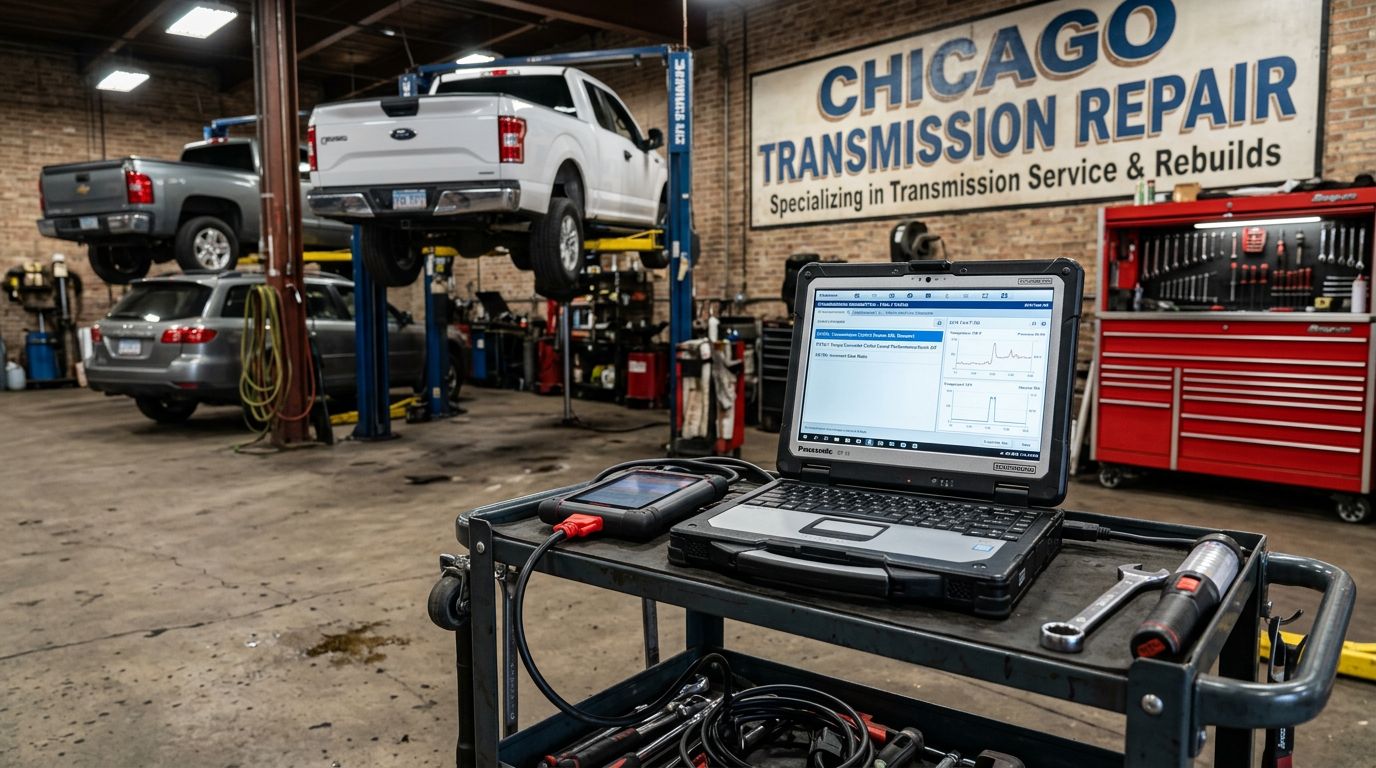
- Converter slip data during the shudder.
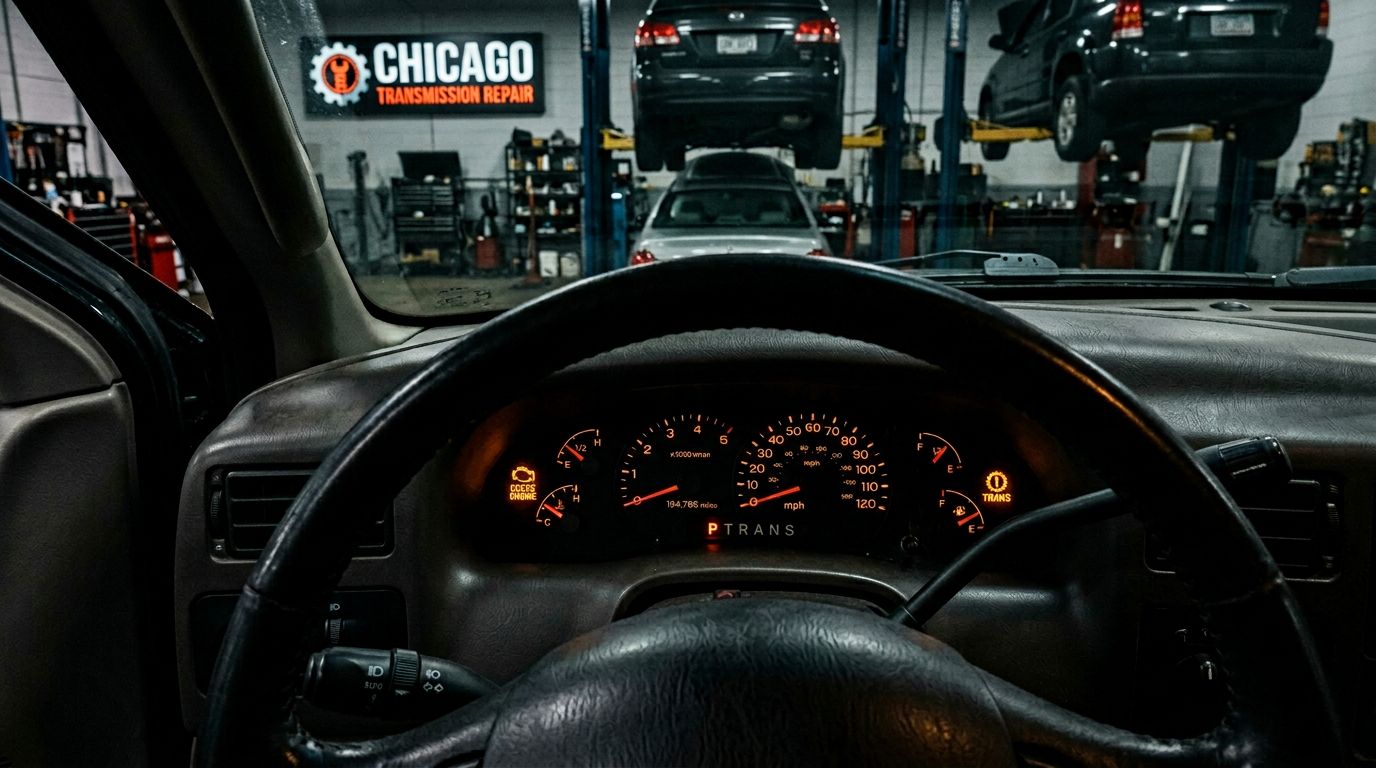
- Codes for converter, pressure, or ratio problems.
- Pan evidence if contamination is suspected.
When Fluid Service May Help
If the shudder is early and the fluid is not badly contaminated, the correct service may improve it. If the converter clutch is already damaged or debris is present, fluid alone is not enough.
When It Gets Bigger
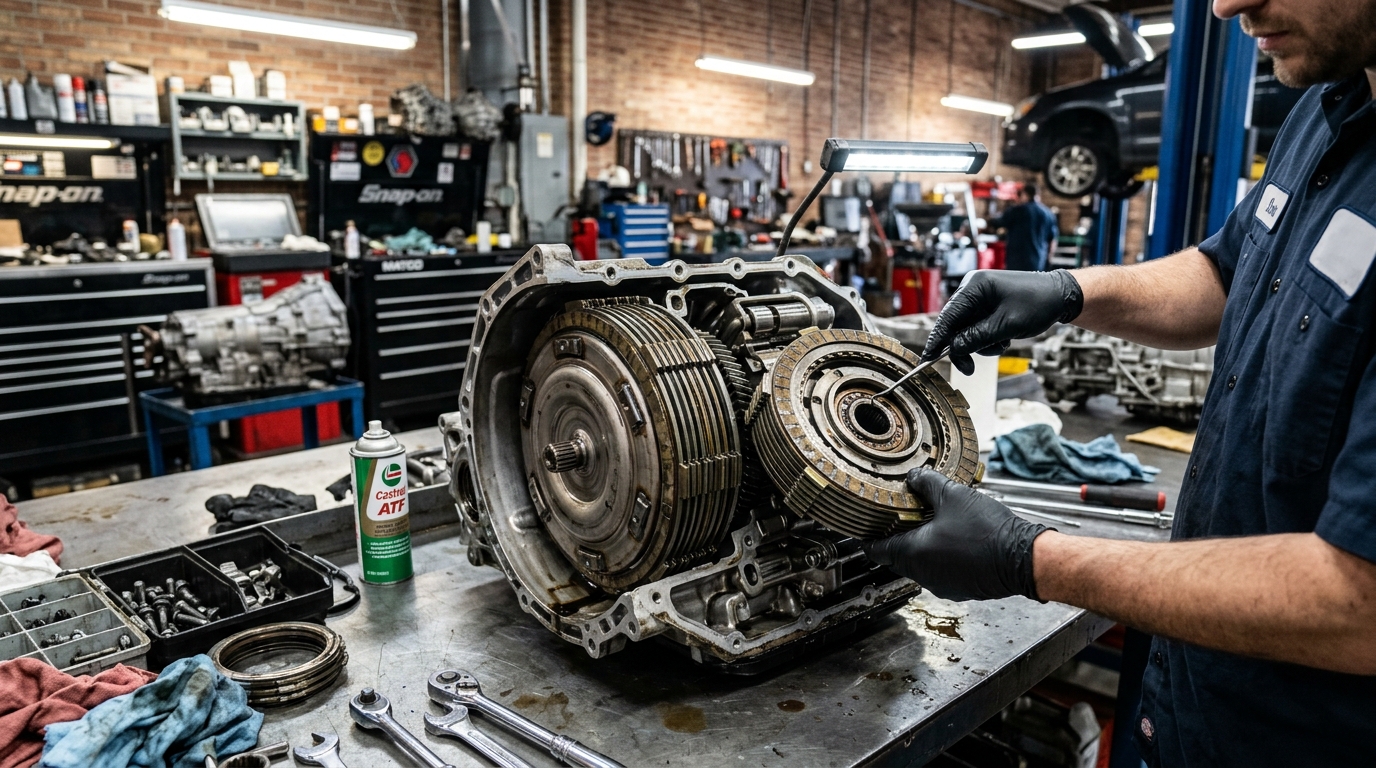
A failed converter can send material through the transmission. At that point the repair may need converter, cooler, valve-body, and internal inspection decisions. We explain that before quoting.
Second Opinion
Bring any dealer or general-shop estimate. We will verify whether the truck needs service, converter work, or a larger transmission repair.
Truck Use Changes The Answer
A Silverado used for commuting is not the same as one towing, hauling tools, running oversized tires, or idling on job sites. Load and heat change how quickly converter shudder becomes contamination. Tell us how the truck is used before comparing repair options.
What A Good 8L90 Estimate Should Say
The estimate should state whether the shudder was duplicated, whether converter slip was measured, what the fluid looked like, and whether debris was found. If those points are missing, the quote is incomplete.
Symptoms That Change The Repair
A light shudder at cruise is different from delayed engagement, no movement, burnt smell, or metal in the pan. If the truck has started slipping or banging after the shudder appeared, the converter may no longer be the only concern.
Arlington Heights Truck Context
Silverados around the northwest suburbs often see mixed use: commuting, weekend hauling, snow, job sites, and expressway heat. That mixed load can make a marginal converter or fluid problem show up sooner than a lightly used truck.
When We Road Test It
We try to reproduce the shudder at the same speed, throttle, and temperature the owner reports. If the vibration disappears when converter lockup is disabled or commanded differently, that supports a converter-clutch diagnosis. If it remains, we keep looking at tires, driveline, engine, and mounts.
Questions For Silverado Owners
Has the truck had fluid service already? Did the symptom improve briefly and return? Is there a trailer brake controller, lift, larger tires, or heavy payload use? Those details help explain why one 8L90 needs service while another needs converter or internal work.
When We Tell You To Pause Driving
If the Silverado starts slipping, flares between gears, smells burnt, or sets pressure codes with the shudder, we usually recommend limiting driving until inspection. At that point the truck may be moving from a converter-clutch complaint into a transmission-damage complaint.
How We Separate Shudder From Vibration
Silverado owners often describe any shake as shudder. We check whether the feel changes with converter lockup, tire speed, engine load, or road surface. A bent wheel, axle issue, misfire, or mount problem can imitate transmission shudder, so we prove the converter is involved before quoting converter work.
What Happens If You Wait
A mild shudder may stay mild for a while, but once converter material starts moving through the fluid, the repair can expand. The valve body, cooler, and clutches can all be affected by contamination. That is why early inspection is worth it.