Your transmission just let go. Maybe it's making a grinding noise you've never heard before. Maybe the car won't move at all. Maybe a warning light lit up on the expressway and now you're pulled over on the shoulder of the Kennedy. Whatever happened, here's exactly what to do - and what to expect from a transmission shop in Arlington Heights that handles these situations every week.
Step 1: Don't Drive It
The single most expensive mistake people make after a transmission problem starts is continuing to drive. A slipping transmission, a grinding noise when shifting, or a car that's slow to move from a stop can quickly become a completely failed transmission if you push through it. Driving on a failing transmission can turn a solenoid repair into a rebuild.
Pull over somewhere safe. Turn the car off. Call a tow.
Step 2: Call for a Tow - We'll Cover It
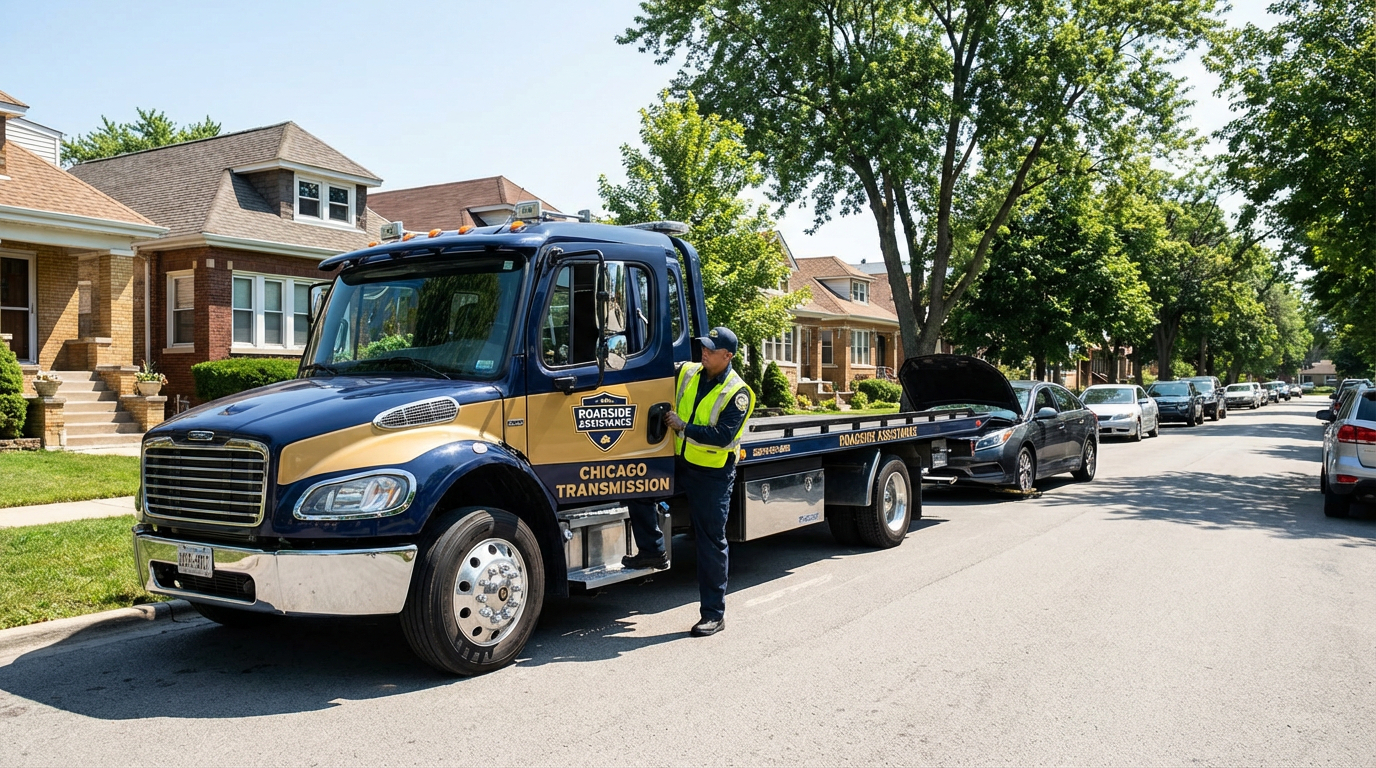
Arlington Heights Transmission offers free towing to our Arlington Heights shop at Arlington Heights for any vehicle that comes in for repair. If you're stranded in the city or the immediate suburbs, call us first at 847-393-0191 and we'll arrange the tow. You don't pay for it - it's included when we do the repair.
What Actually Happens When a Transmission "Fails"
Transmission failures aren't all equal. Some are dramatic - the car won't move, there's a loud clunk, fluid is leaking on the ground. Others start subtly: hesitation in second gear, a shudder at highway speed, a momentary loss of power during a cold start. Here's a quick breakdown of what different failures look like:
Complete Failure (Car Won't Move)
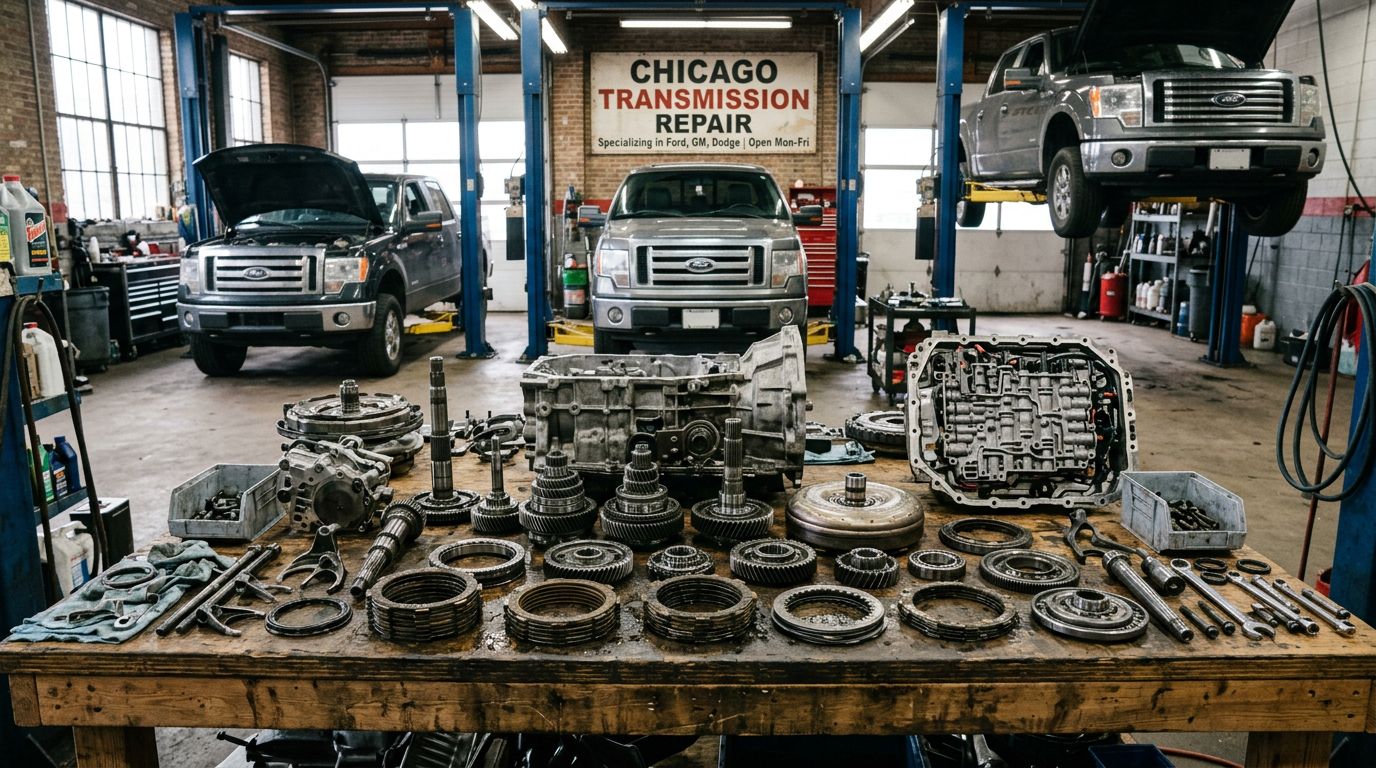
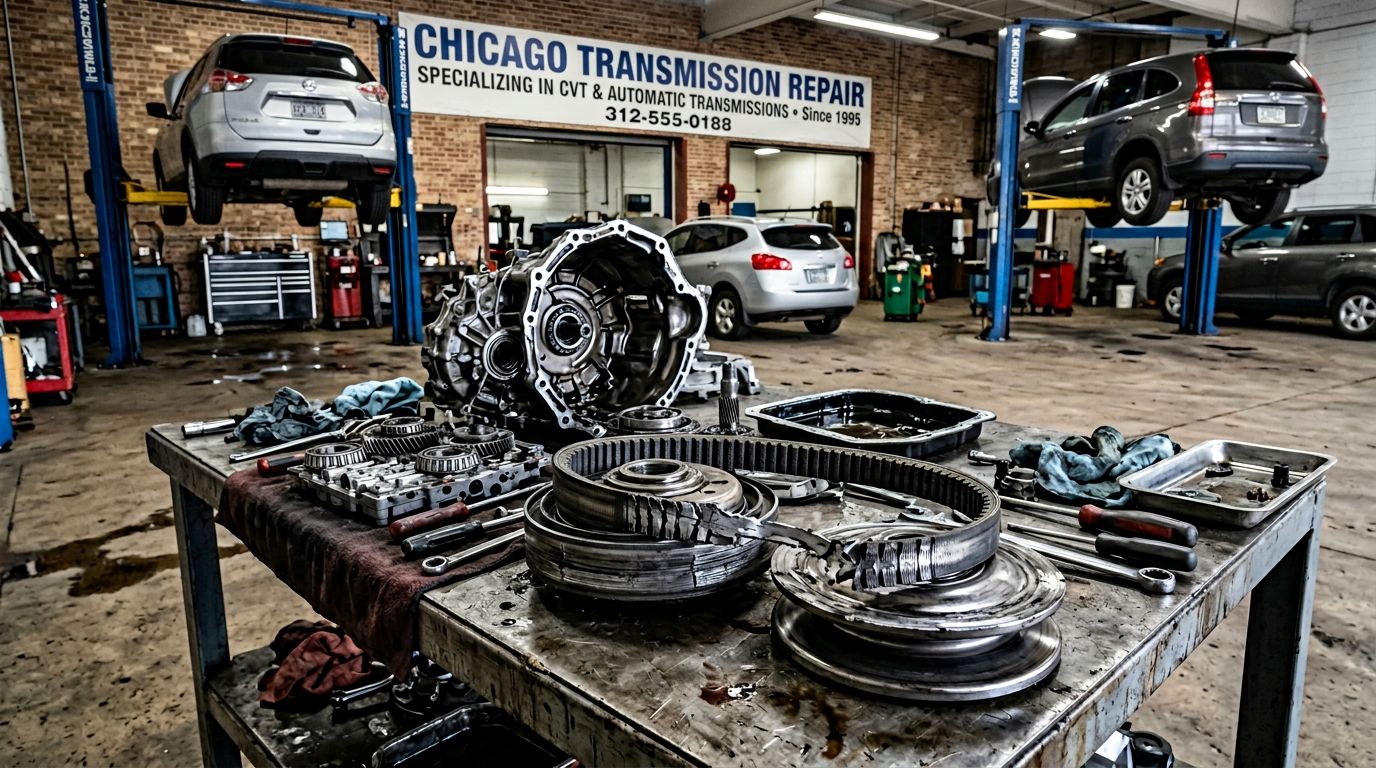
This usually means total mechanical failure inside the transmission - broken planetary gear set, failed pump, or complete clutch pack burnout. These require a full rebuild or replacement. Don't try to nurse it to the shop.
Electrical/Solenoid Failure
The car may move but shift incorrectly, get stuck in one gear, or throw a P0700-series code. These are often repairable without a full rebuild - a solenoid replacement or valve body service may be enough depending on the vehicle and diagnostic results.
Leak + Fluid Loss
A sudden major leak can starve the transmission of fluid within minutes. Transmission fluid is what lubricates and hydraulically actuates everything inside - running dry, even briefly, causes catastrophic damage. If you see red fluid under your car, stop driving immediately.
Overheating
Transmissions that overheat - from towing, stop-and-go traffic in summer, or a failing cooler - can suffer seal damage and clutch burnout. The fix depends on how long it ran hot and what components were damaged.
What Same-Day Service Actually Means
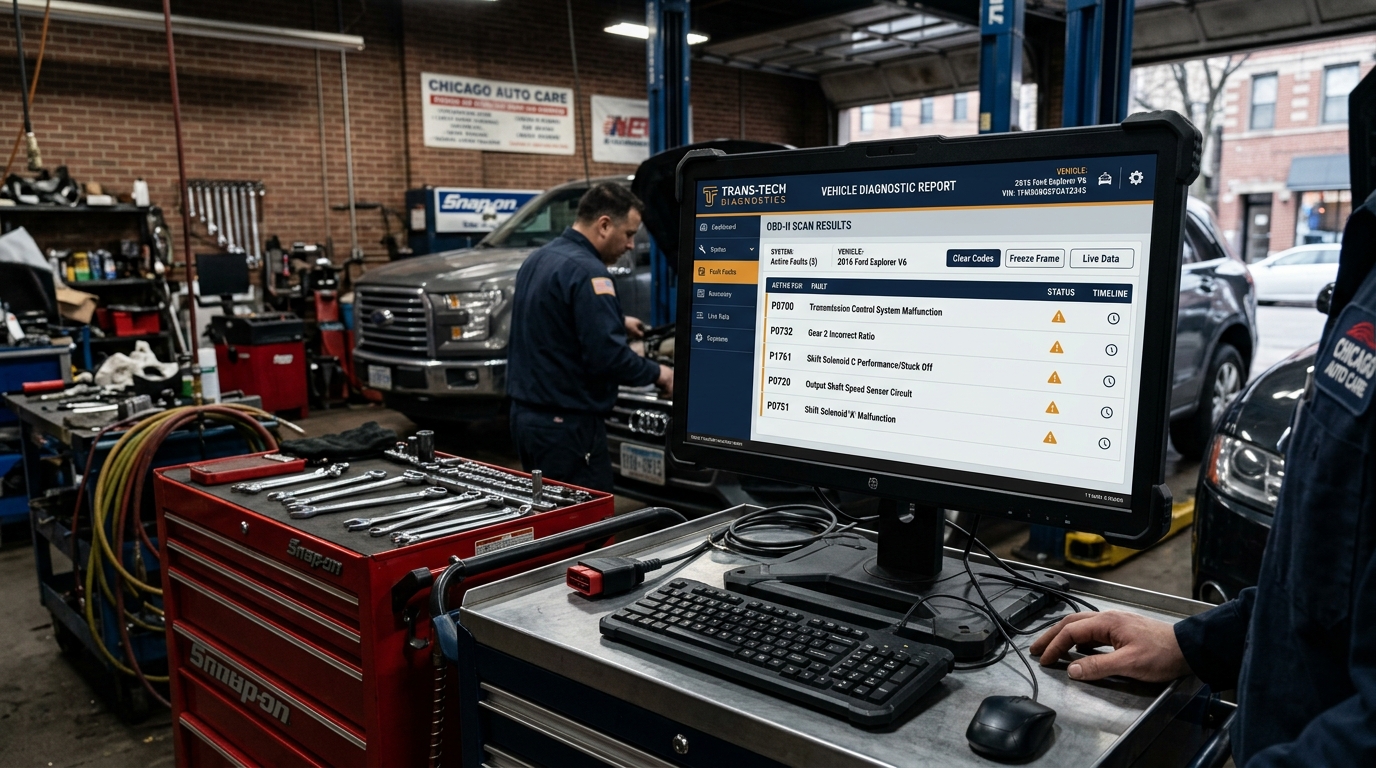
We can typically complete a full computer diagnostic the same day your car arrives. That diagnostic tells us exactly what's wrong - which codes are stored, what the line pressure looks like, whether it's electronic or mechanical. From there, we give you a written quote before any work begins.
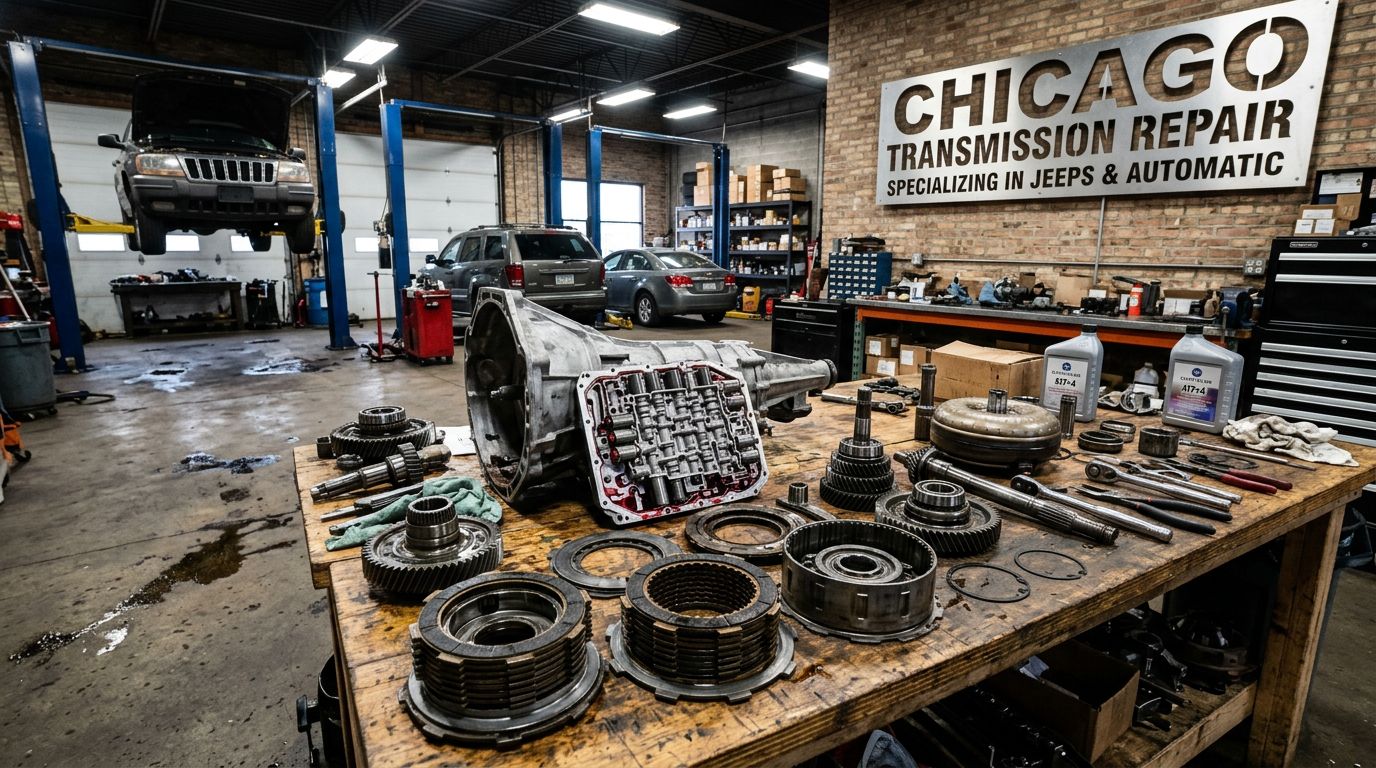
Minor repairs (solenoids, fluid services, valve body work) can often be completed the same day. Rebuilds typically take 3 - 5 business days because the transmission is fully disassembled, all wear components are replaced, and the unit is reassembled and road-tested before reinstallation.
What a Transmission Emergency Costs in Arlington Heights
This is the question everyone needs answered first. The honest answer: it depends entirely on what's wrong. Here's a realistic range:
- Solenoid replacement: quoted after diagnosis, access check, and parts availability.
- Valve body service or replacement: quoted after diagnosis, access check, and parts availability.
- Fluid service + inspection: quoted after diagnosis, access check, and parts availability.
- Full rebuild (most vehicles): quoted after diagnosis, access check, and parts availability.
- Remanufactured unit swap: quoted after diagnosis, access check, and parts availability.
We don't know the exact cost until we see what's wrong. That's why the free diagnostic exists - it tells us both. Nobody gets a surprise bill here. We call you with the quote, you approve it before we start.
Bringing a Car in From Outside Arlington Heights
We're at Arlington Heights in Arlington Heights, easily accessible from the Kennedy (I-90/94), Lake Shore Drive, and Lincoln Avenue itself. We handle vehicles from all over the northwest suburbs - Evanston, Oak Park, Skokie, the south suburbs. If you're coming from more than 20 miles away, call us first and we'll help coordinate logistics including towing if needed.
Don't Let a "Fast Fix" Place Near the Highway Upsell You
When your car breaks down on I-90, the first shop you can get a tow to isn't always the right shop. National franchise chains near expressways are convenient but routinely charge 40 - 60% more than specialist shops for the same work, and their rebuild warranties are often 12 months vs. the 2-year / 24,000-mile warranty we carry. Take the extra mile to get the car to a shop with transmission-specific expertise.
Call us at 847-393-0191. We'll get you sorted out.