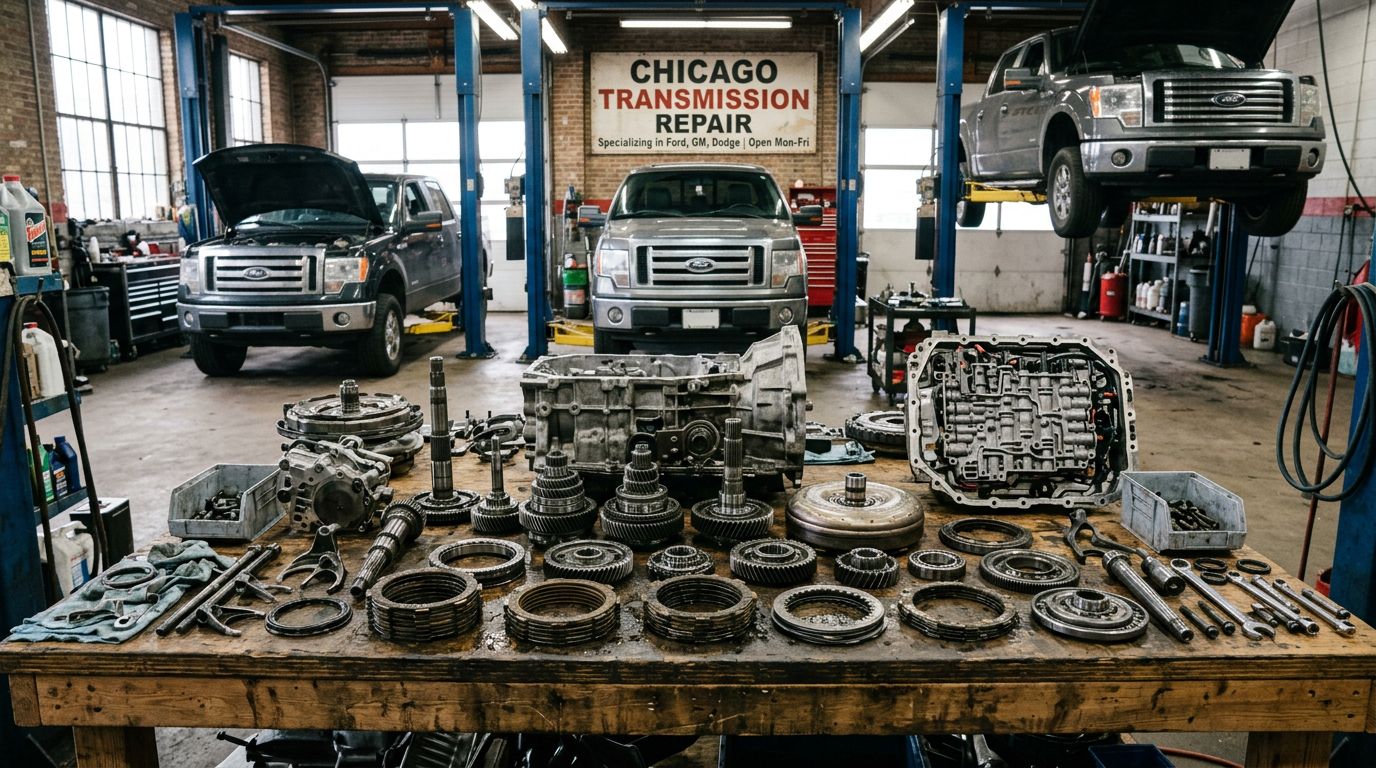
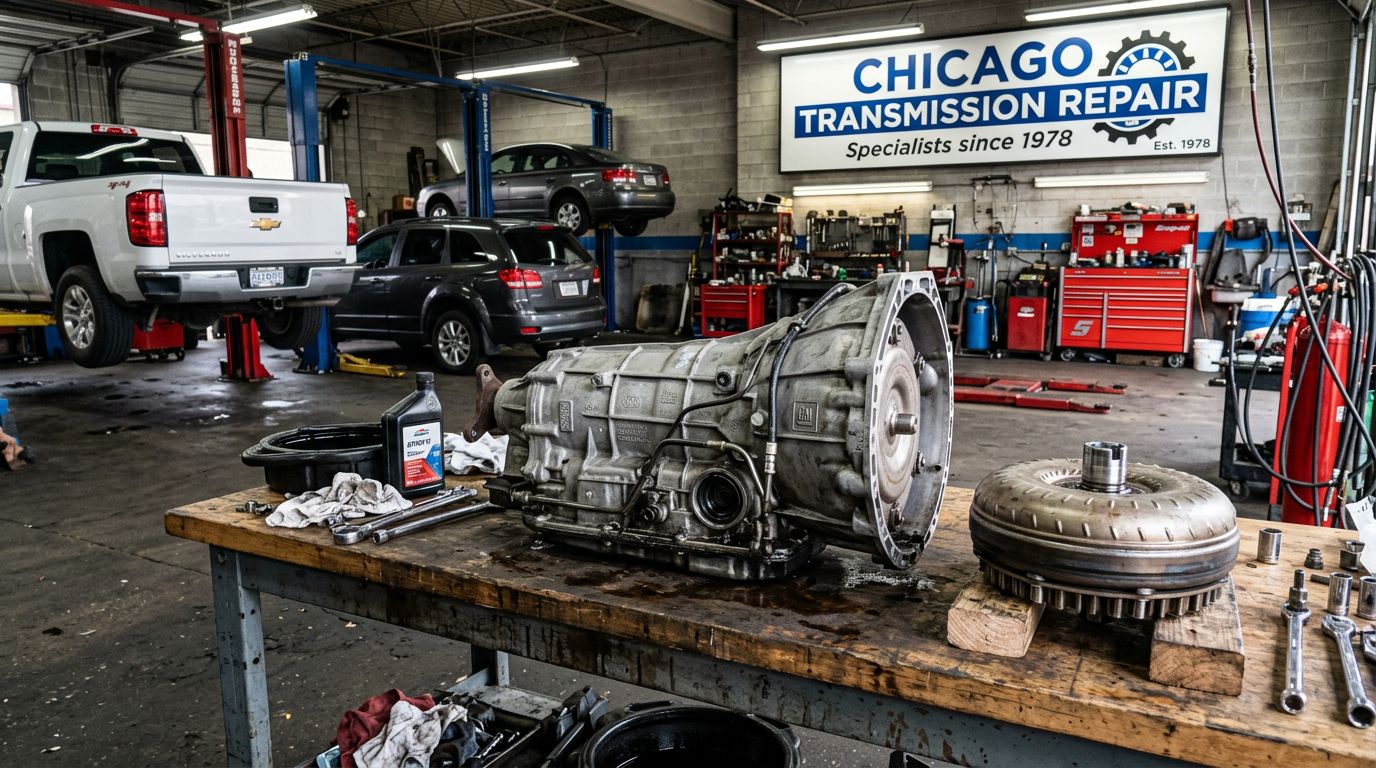
A transmission that slips only when it is cold can feel less scary than one that slips all the time. The car warms up, the shift gets better, and it is tempting to call it normal. Sometimes it is a fluid-temperature issue. Sometimes it is the first sign that the transmission is losing hydraulic pressure before seals, clutches, or the valve body fail more consistently.
Arlington Heights weather makes this complaint show up fast. Cold mornings thicken old transmission fluid, hardened seals do not seal as well, and a weak pump or worn valve body has less margin for error. The important question is not just whether it improves after five minutes. The question is whether it is getting worse, happening more often, or showing up with warning lights, delayed engagement, or a burnt-fluid smell.
What Cold Transmission Slipping Usually Feels Like
Drivers usually describe one of five patterns:
- The engine revs on the first few shifts, but the car feels lazy until it warms up.
- There is a delay when shifting from Park into Drive or Reverse on the first start of the day.
- The first 1-2 or 2-3 shift flares, then the rest of the drive feels normal.
- The car shudders lightly leaving a stop sign, then smooths out later.
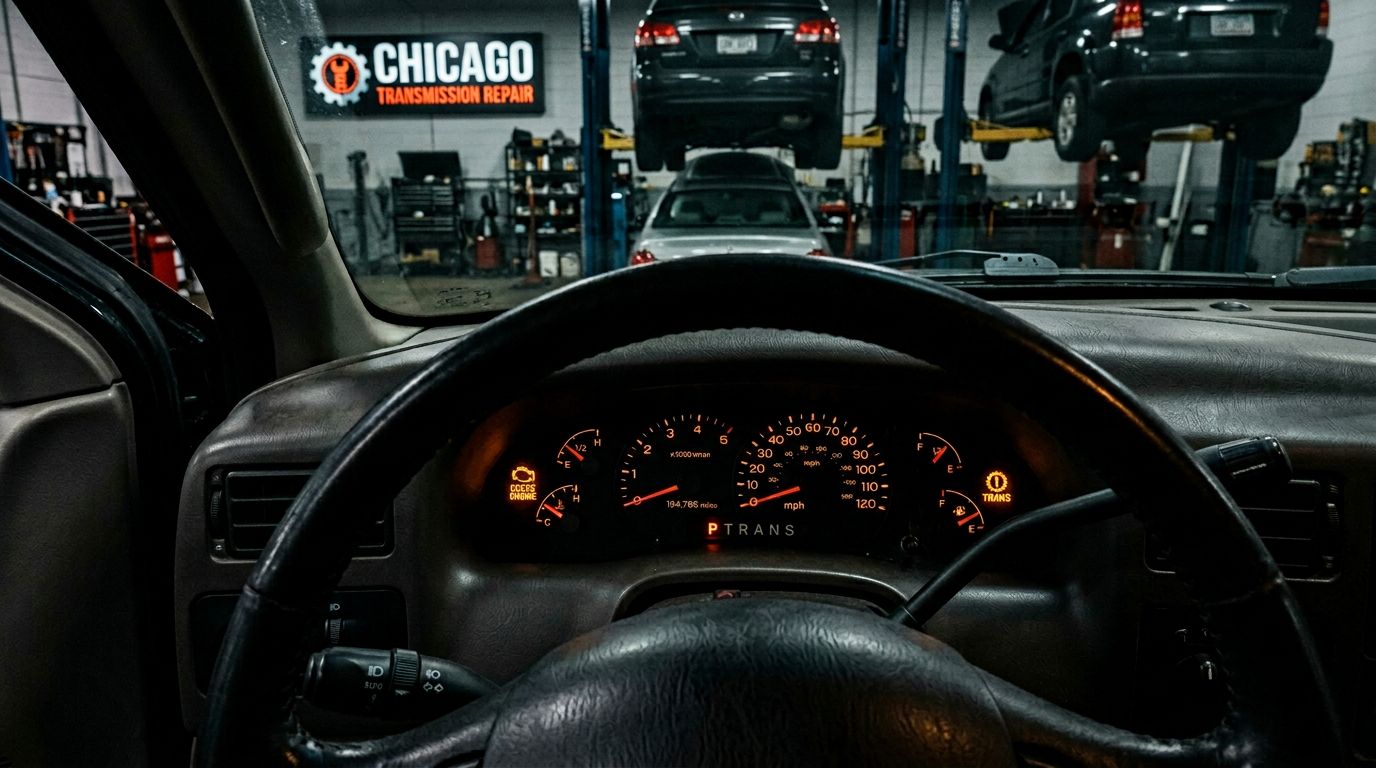
- A transmission or check-engine light comes on after a cold-start slip.
That pattern matters. A one-time hesitation after sitting overnight is different from a daily flare that is slowly taking longer to clear up.
Common Causes When It Slips Cold but Improves Warm
Low Transmission Fluid
Low fluid is the first thing to rule out. Automatic transmissions rely on hydraulic pressure. When the fluid level is low, the pump can pull air into the system, especially during cold starts or when the vehicle has been sitting. That creates delayed engagement, flare shifts, and slipping until the fluid expands and circulates.
If the fluid is low, there is a leak somewhere. Adding fluid may get the car moving, but it does not fix the reason it was low.
Old, Thick, or Contaminated Fluid
Transmission fluid changes viscosity with temperature. Fresh, correct-spec fluid can flow where it needs to flow on a cold morning. Old fluid that is dark, oxidized, or contaminated moves slower and may not build pressure quickly enough. If the problem appeared after a fluid service, read the related guide below before approving more work.
Hardened Internal Seals
Internal rubber seals get harder with age and heat cycles. When they are cold, they may not seal hydraulic circuits tightly. As the transmission warms up, the seals soften slightly and the symptom improves. That is why cold slipping can be an early warning sign rather than a random quirk.
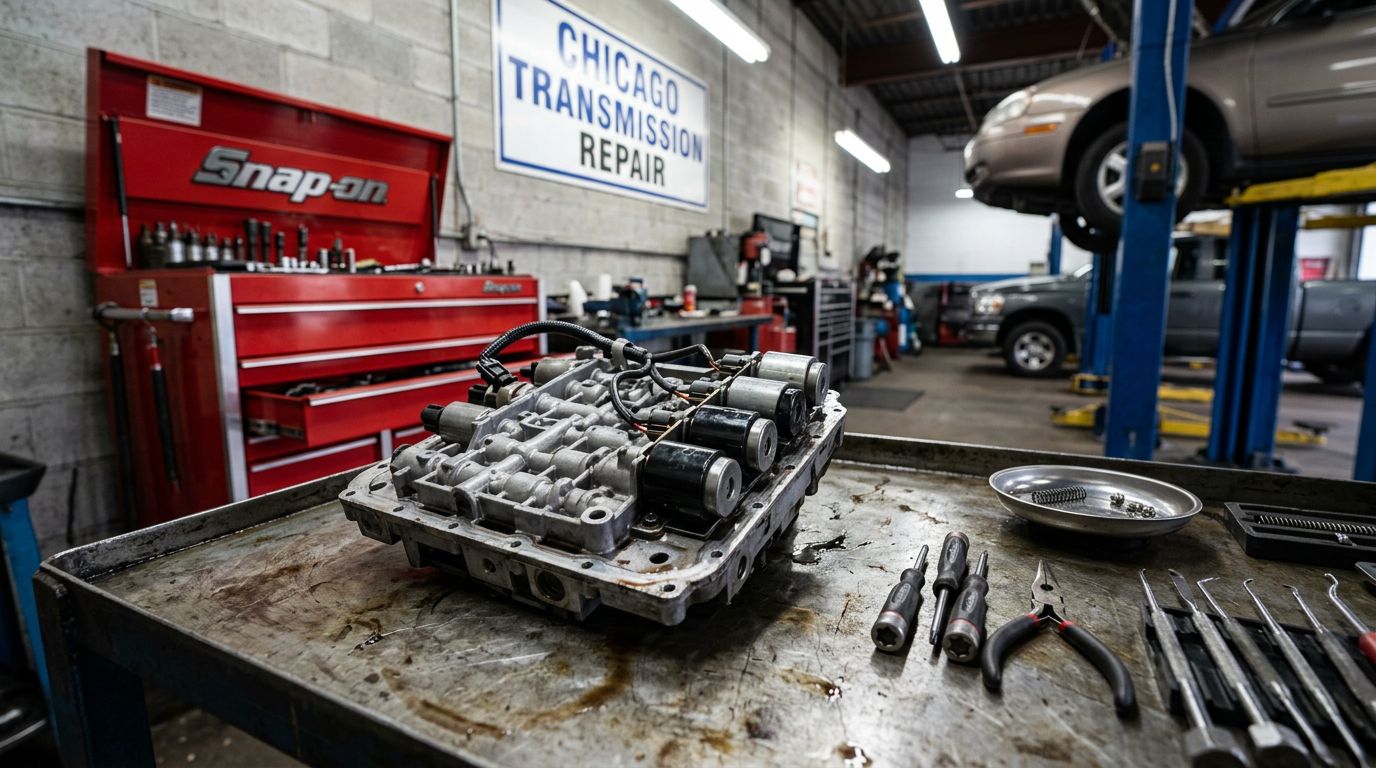
Valve Body or Pressure-Control Problems
The valve body routes fluid through the transmission. Worn valve-body passages, sticking valves, or weak pressure-control solenoids can cause low pressure on cold starts. These problems often show up as flare shifts, delayed gear engagement, or gear-ratio codes.
Torque Converter Clutch Issues
A torque converter clutch problem usually feels more like shudder than a pure slip, but drivers often describe both the same way. If the symptom happens at steady speed after the first few minutes of driving, especially around light throttle, the converter should be checked as part of a full transmission repair diagnosis.
When It Is Less Urgent
It may be less urgent if the symptom happened once, there are no warning lights, the vehicle moves normally, the fluid is clean and full, and the shift feels normal after a few seconds. Even then, write down when it happened: outside temperature, first start of the day, which gear, and whether the engine revved without acceleration.
That information helps a technician separate a normal cold-start calibration from a pressure problem.
When to Stop Driving and Get It Checked
Do not keep driving it if the slip is getting worse, the car hesitates before moving, RPMs flare between shifts, the transmission warning light is on, the fluid smells burnt, or the vehicle will not accelerate safely into traffic. Every slip creates heat. Heat breaks down fluid. Broken-down fluid carries debris through solenoids, valve-body passages, bearings, and clutch packs.
If it feels unsafe leaving a stop or merging, tow it. A tow is cheaper than turning a targeted repair into a complete rebuild.
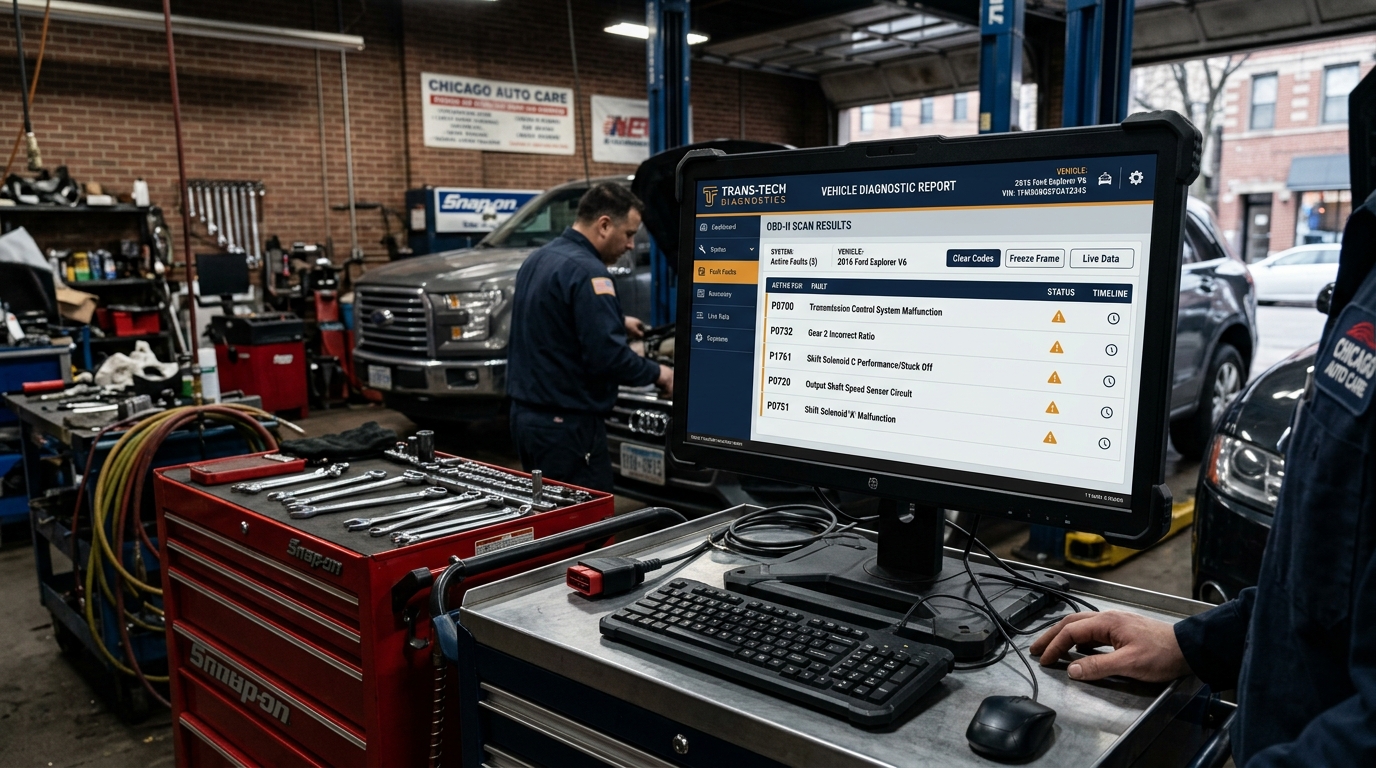
What a Proper Diagnostic Checks
A real diagnosis is more than reading one code. For cold slipping, we want to know what the transmission is doing before and after warm-up.
- Scan all transmission and engine modules, not just generic engine codes.
- Check fluid level, color, smell, and contamination.
- Road test cold if the symptom is repeatable.
- Watch live data for gear command, slip speed, line pressure, and temperature.
- Inspect for leaks, damaged cooler lines, and external electrical issues.
- Give a written estimate before any repair is approved.
Why You Should Not Just Wait for It to Warm Up
The danger with cold slipping is that it can hide in plain sight. The vehicle feels bad for the first mile, then normal enough that you put it out of your mind. But if the cause is low pressure, worn seals, or clutch material starting to fail, each cold-start slip is still wearing the unit.
Start with a free diagnostic. We will scan it, road test it, check the fluid condition, and tell you whether you are looking at a maintenance issue, a targeted repair, or something more serious. No pressure, no guessing, and no teardown promise hidden inside the word diagnostic.