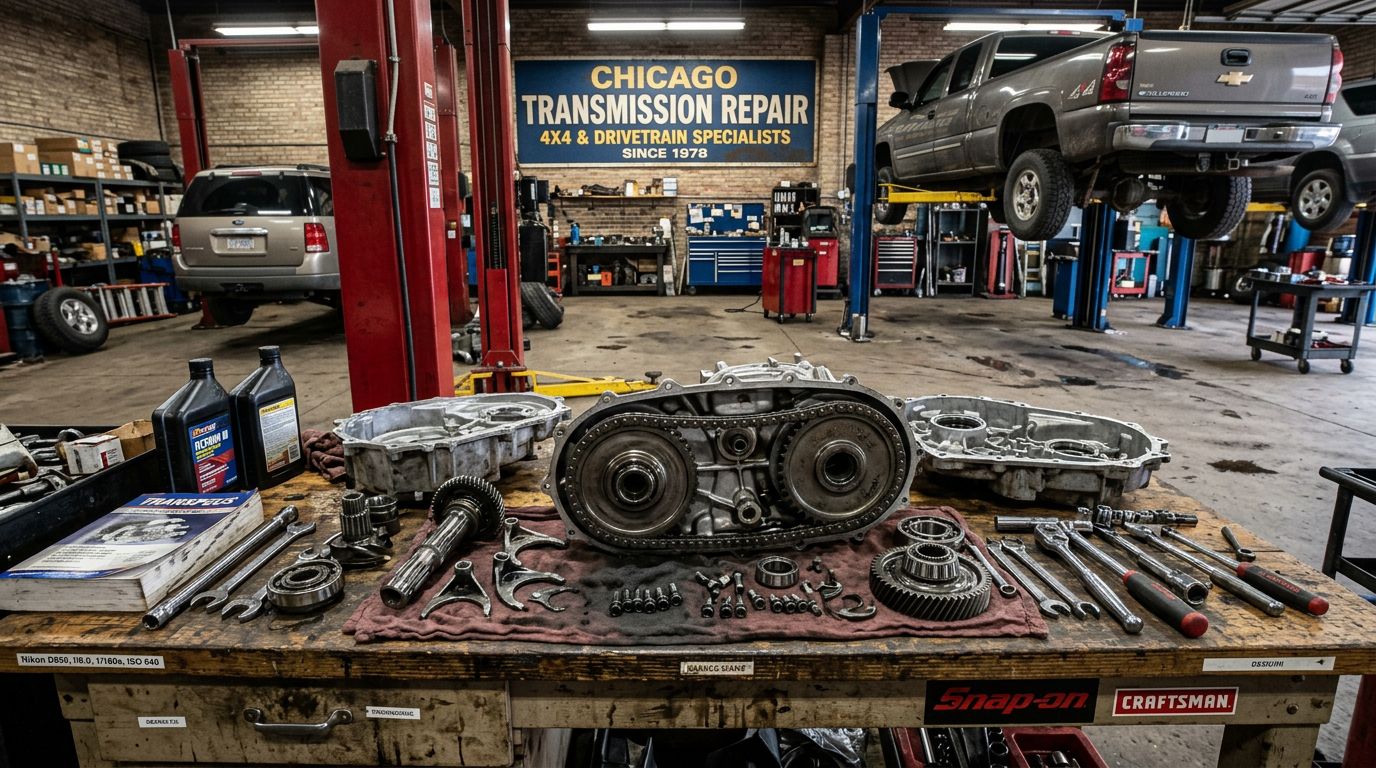
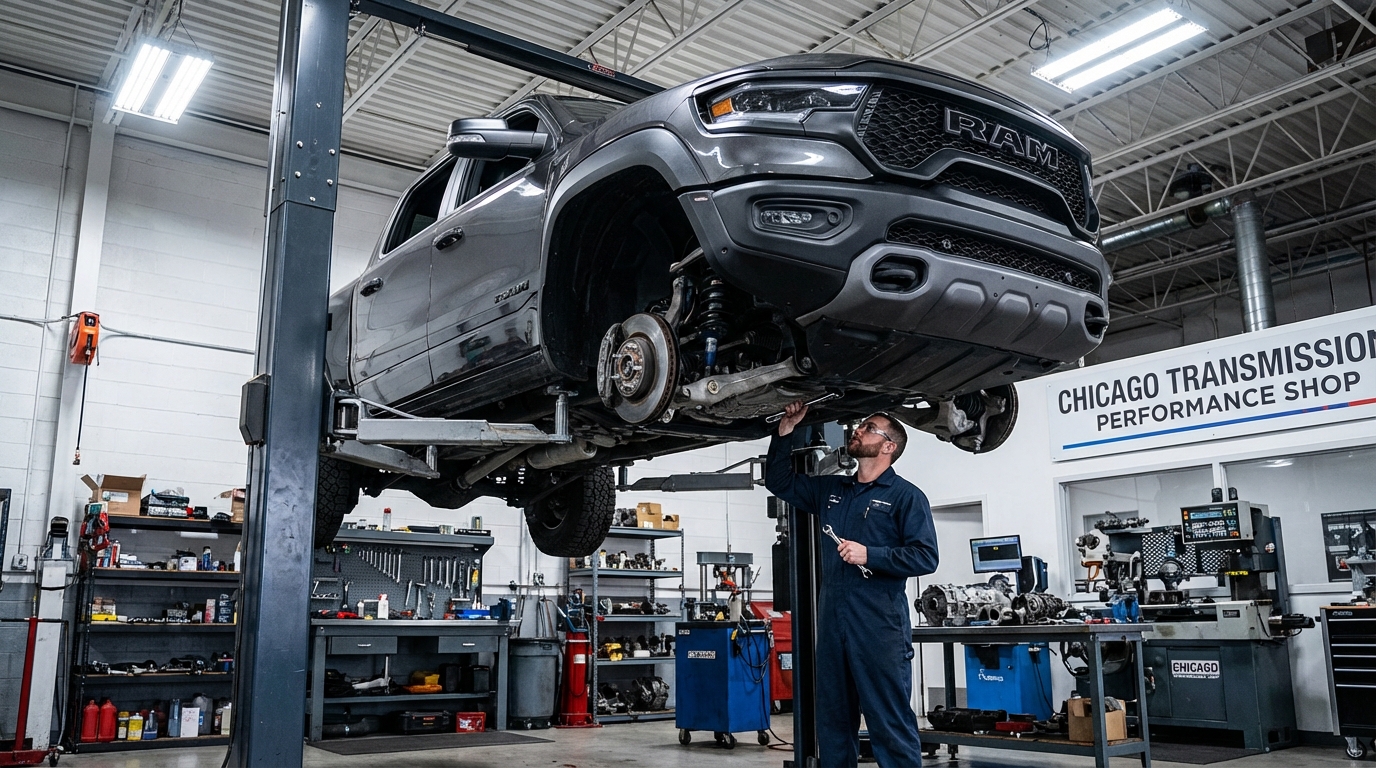
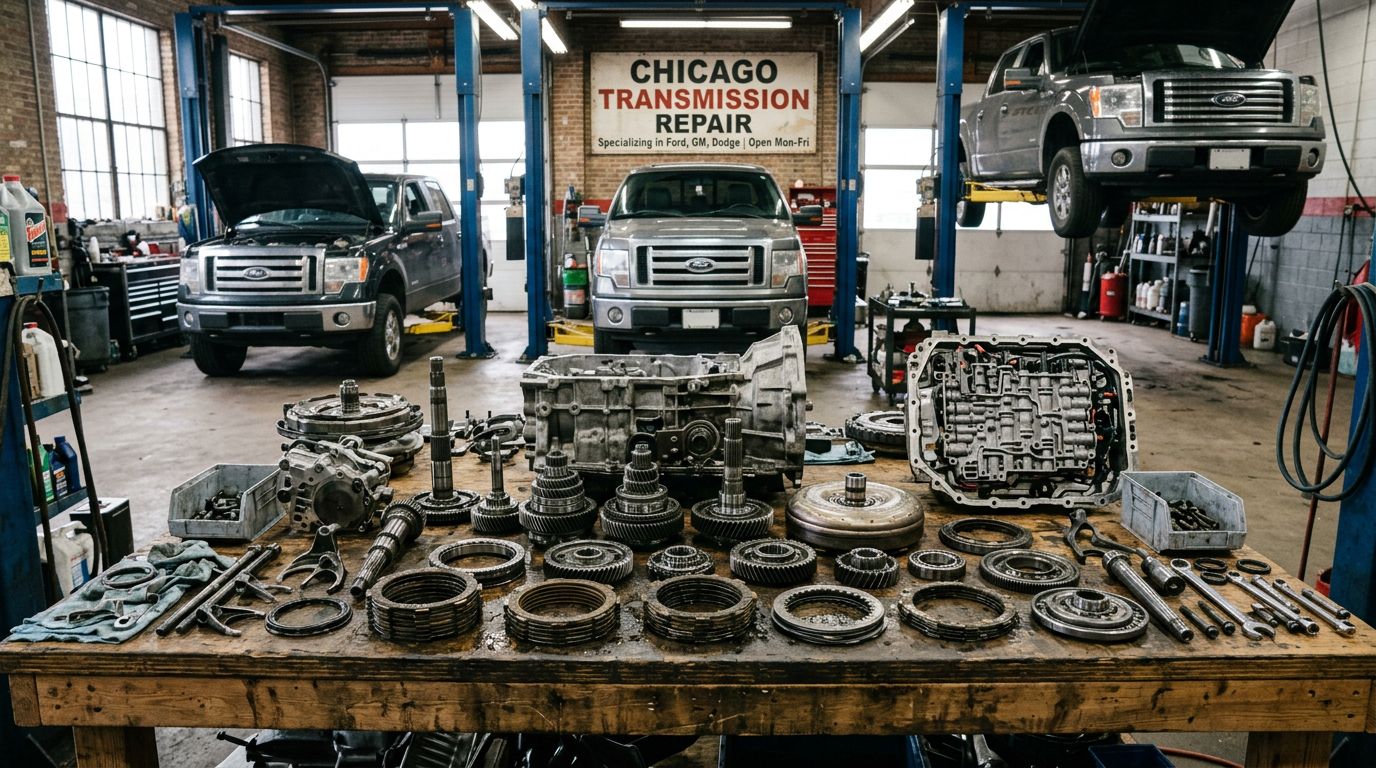
A failing transfer case can be mistaken for a bad transmission because both sit in the driveline and both can cause slipping, noise, vibration, or no movement. The first step is deciding whether the problem is actually inside the transmission or in the 4WD/AWD transfer case.
What The Transfer Case Does
The transfer case sends power to the front and rear driveline on 4WD or AWD vehicles. It may use chains, gears, clutches, motors, actuators, and fluid that needs service just like the transmission.
Common Warning Signs
- Grinding, whining, or chain-rattle noise under load.
- 4WD will not engage or disengage.
- Binding while turning.
- Fluid leak near the transfer case.
- Vibration or clunking that changes with speed or load.
Why Misdiagnosis Happens
A transfer case problem can feel like transmission slip, especially when power is not being delivered cleanly to the wheels. We inspect the transfer case, driveshafts, axles, differential, and transmission behavior before calling the unit bad.
Local Driving Factors
Winter salt, potholes, snow driving, and neglected fluid service are common around Arlington Heights, Palatine, Wheeling, and Buffalo Grove. Trucks and SUVs used in winter conditions should not skip transfer-case fluid checks.
Repair Path
The fix may be fluid service, seal repair, encoder motor or actuator work, chain/gears, rebuild, or replacement. The estimate should explain why the transfer case is the source and whether the transmission itself checks out.
Transfer Case Fluid Clues
Low fluid, metallic fluid, or fluid that smells burnt can tell us a lot. A transfer case can be damaged by a slow leak long before it makes a dramatic noise. On trucks and SUVs used through Arlington Heights winters, seal and case corrosion checks matter.
What Happens During Diagnosis
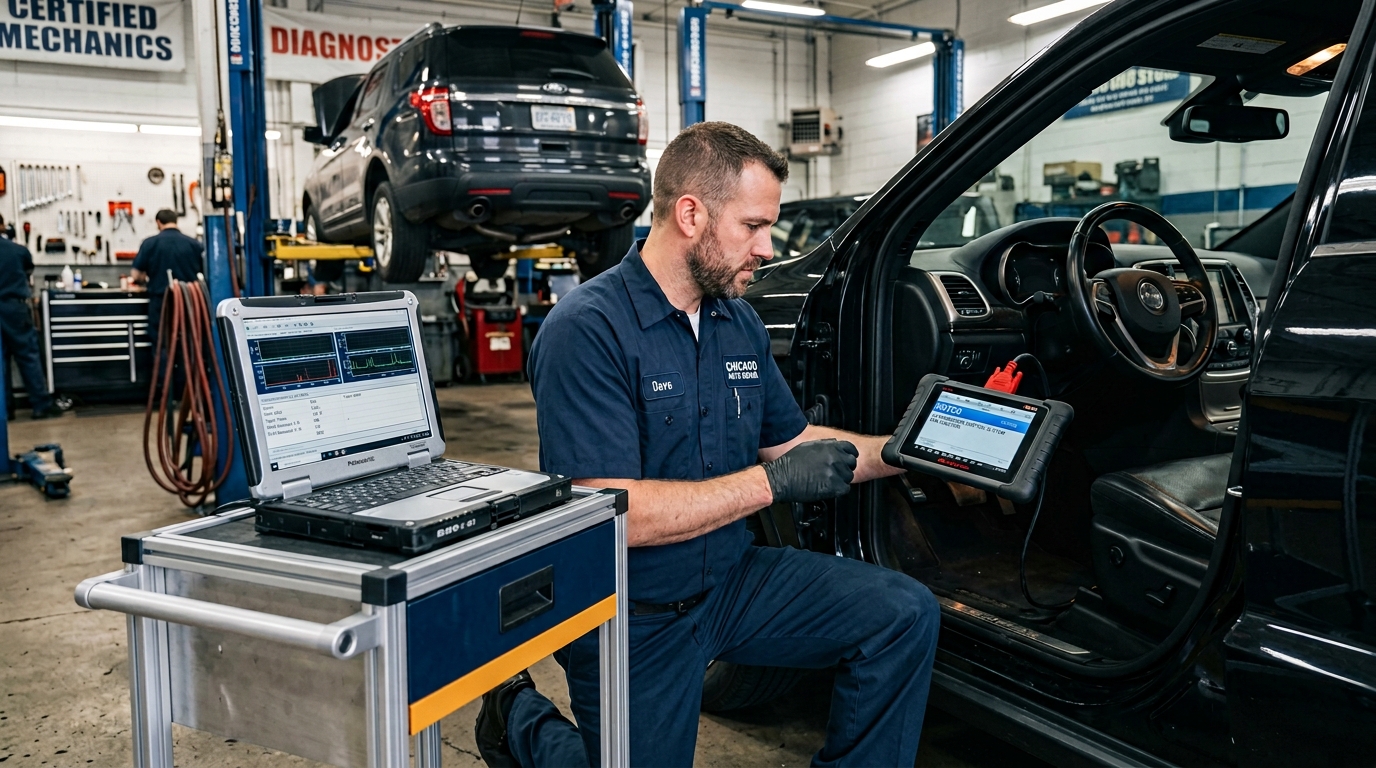
We listen for noise under load, inspect for leaks, check engagement commands, look at actuator operation, and verify whether the vibration or slip feeling changes in 2WD, 4WD, Auto, or AWD modes. That comparison helps separate transfer case, differential, axle, and transmission faults.
Why Waiting Gets Expensive
A stretched chain, low-fluid bearing, or damaged clutch pack can damage the case itself. Catching the problem while it is still a seal, fluid, actuator, or chain issue can keep it from becoming a replacement conversation.
Vehicles Where We See It Often
Transfer case complaints are common on pickups and SUVs that see winter duty, towing, family hauling, and occasional 4WD use. GM trucks, Ram trucks, Jeeps, Ford SUVs, Toyota trucks, and AWD crossovers can all develop transfer-case symptoms that first feel like a transmission issue.
Drive Mode Details Matter
Tell us whether the problem happens in 2HI, Auto, 4HI, 4LO, or only while turning. A bind in Auto mode points differently than a noise only under acceleration. A leak after highway driving points differently than a no-engagement complaint after a snowstorm.
Do Not Ignore Small Leaks
Transfer cases do not hold a huge amount of fluid. A small leak can become low-fluid damage faster than owners expect. If you see wetness around the case, output seals, or skid plate, have it checked before the chain, bearings, or clutches are damaged.
Why A Road Test Helps
Transfer case faults often show up only under a specific load. A parking-lot check may miss a chain noise that appears on acceleration or a bind that appears after the unit warms up. When safe, we reproduce the condition instead of guessing from a noise description.
What To Tell Us Before Bringing It In
Tell us whether the vehicle is 4WD, AWD, or selectable Auto 4WD; whether any lights are on; whether tires are matched; and whether the noise changes while turning. Mismatched tires and ignored fluid service can damage AWD and transfer-case systems quickly.