A transmission code is a clue, not a verdict. The same warning light can point to a loose connector, bad speed data, a pressure problem, converter-clutch slip, or internal wear. This matrix helps Arlington Heights drivers understand what the code family usually means before approving a repair.
How To Read Transmission Codes Without Guessing
Start with the code group. A range-sensor code is not diagnosed the same way as a gear-ratio code. A torque-converter code needs different testing than a pressure-control solenoid code. The first question is not "how much is a transmission?" The first question is "what system is the code actually pointing toward?"
The second question is whether the code matches the way the vehicle behaves. A speed-sensor code with a dead speedometer points one direction. A speed-sensor code with slipping, burnt fluid, and gear-ratio codes points somewhere else. Code combinations matter more than a single number.
P0700 And Control-System Flags
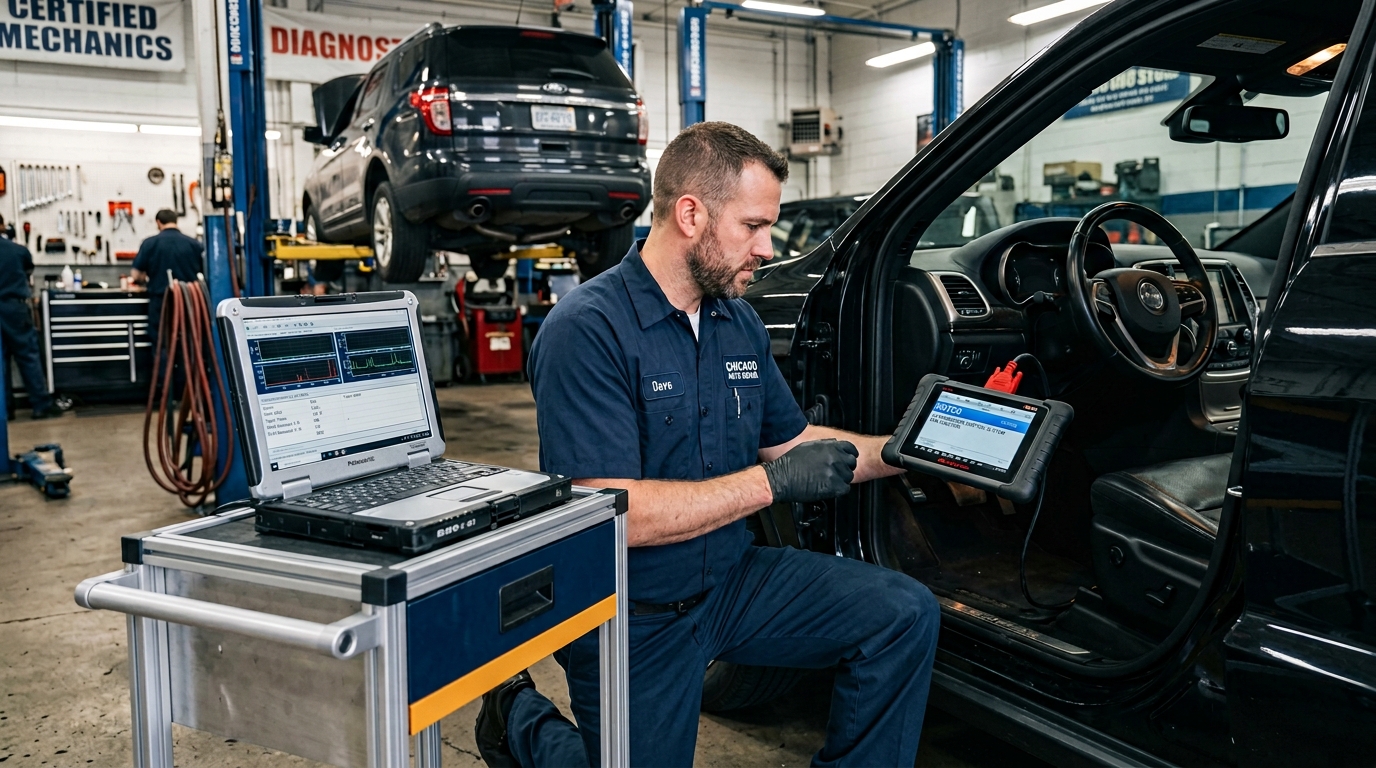
P0700 is the code many drivers see first, but it is rarely the useful one. It usually means the transmission module has stored another fault and asked the engine computer to turn on the light. A generic scan can stop there. A real scan reads the transmission module and pulls the deeper code set.
- P0700: transmission control system requested the warning light.
- P0705: the vehicle does not trust the Park/Reverse/Neutral/Drive signal.
- P0711-P0714: the fluid-temperature signal is missing, unreasonable, or outside range.
Speed-Sensor Codes
Input and output speed sensors give the computer the data it uses to calculate gear ratio and shift timing. Bad speed data can make the transmission act broken even when the clutches are still usable. That is why wiring, connector condition, live data, and sensor signal testing come before a major repair decision.
- P0715-P0718: input or turbine speed signal faults.
- P0720-P0723: output speed signal faults.
- Common clues: erratic shifting, limp mode, speedometer issues, or ratio codes that appear because the data is wrong.
Gear-Ratio Codes
P0730 through P0736 mean the commanded gear and the measured ratio do not agree. That can happen because a clutch is slipping, a band is not applying, line pressure is low, a solenoid is late, the valve body is leaking pressure, or the speed data is bad. The exact gear matters because it tells us which apply circuit to test.
For drivers coming from Palatine, Schaumburg, Hoffman Estates, Rolling Meadows, Mount Prospect, Wheeling, or Buffalo Grove, note when the slip happens. Cold takeoff, hot stop-and-go traffic, steady Route 53 cruising, and I-90 merge throttle all point to different failure patterns.
Torque Converter Clutch Codes
P0740-P0744 involve converter-clutch control. The converter clutch should lock during steady cruising and release when conditions change. A fault can feel like highway shudder, RPM flutter, stalling at stops, overheating, or poor fuel economy. Converter codes should be checked with commanded lockup, actual slip speed, fluid condition, and pan evidence.
Shift Solenoid And Pressure Codes
P0750-P0779 usually name a solenoid or pressure-control circuit. That does not automatically mean the named solenoid is the only failed part. A solenoid can be electrically bad, stuck from debris, starved by low pressure, or blamed because internal wear created the wrong shift result.
P0796 and related pressure-performance codes need special care. If pressure is unstable, the cause may be a solenoid, valve-body wear, pump wear, a restricted filter, or internal leakage. The written estimate should explain which evidence supports the repair.
When To Drive, When To Tow
If the vehicle shifts normally and the light just came on, schedule a diagnostic and drive gently. If it slips, overheats, smells burnt, bangs into gear, will not move in Drive or Reverse, or is stuck in limp mode, call before driving. Towing can be cheaper than adding clutch material to the pan and cooler.
What To Bring To The Diagnostic
Bring the full code list, mileage, a description of exactly when the problem happens, and any prior estimate. If another shop only gave you one code and a large number, bring that too. We will scan the transmission module, inspect the fluid, road-test when safe, and write the repair path around the evidence.
How We Separate A Sensor Problem From A Transmission Problem
The first pass is data quality. If the input speed, output speed, throttle position, brake switch, or fluid-temperature data is wrong, the computer may make bad shift decisions even though the geartrain is not destroyed. We look for data that drops out, freezes, spikes, or disagrees with the vehicle's actual behavior.
The second pass is pressure and fluid evidence. A clean pan with a dead sensor signal is a different job from a pan full of clutch material. A pressure command that looks correct while the shift still slips points us away from a simple electrical repair and toward hydraulic leakage or internal wear.
Why Prior Estimates Often Disagree
Two shops can see the same warning light and give different answers if one only reads the engine computer and the other reads the transmission module. A quick scan may find P0700. A deeper scan may find the real code behind it. A road test may then show whether the code matches the symptom. That sequence is why the cheapest scan is not always the cheapest repair decision.
Examples Of Useful Code Patterns
- P0700 plus P0741: check converter-clutch command and slip before quoting a rebuild.
- P0715 plus ratio codes: verify input-speed data before assuming the clutches are bad.
- P0756 plus burnt fluid: treat the solenoid code as a possible symptom of debris and wear.
- P0730 with several gear-specific codes: look for pressure loss, pump issues, or widespread clutch wear.
- P0705 with starting or reverse-light problems: inspect range-sensor alignment, cable adjustment, and wiring first.
What A Written Estimate Should Say
A useful estimate should not just repeat the code definition. It should say what was tested, what failed, what evidence was found in the fluid or pan, whether the vehicle was road-tested, and why the recommended repair is the right level. That is how you avoid paying for a rebuild when the real fix is a sensor, and how you avoid paying for a sensor when the real problem is internal wear.