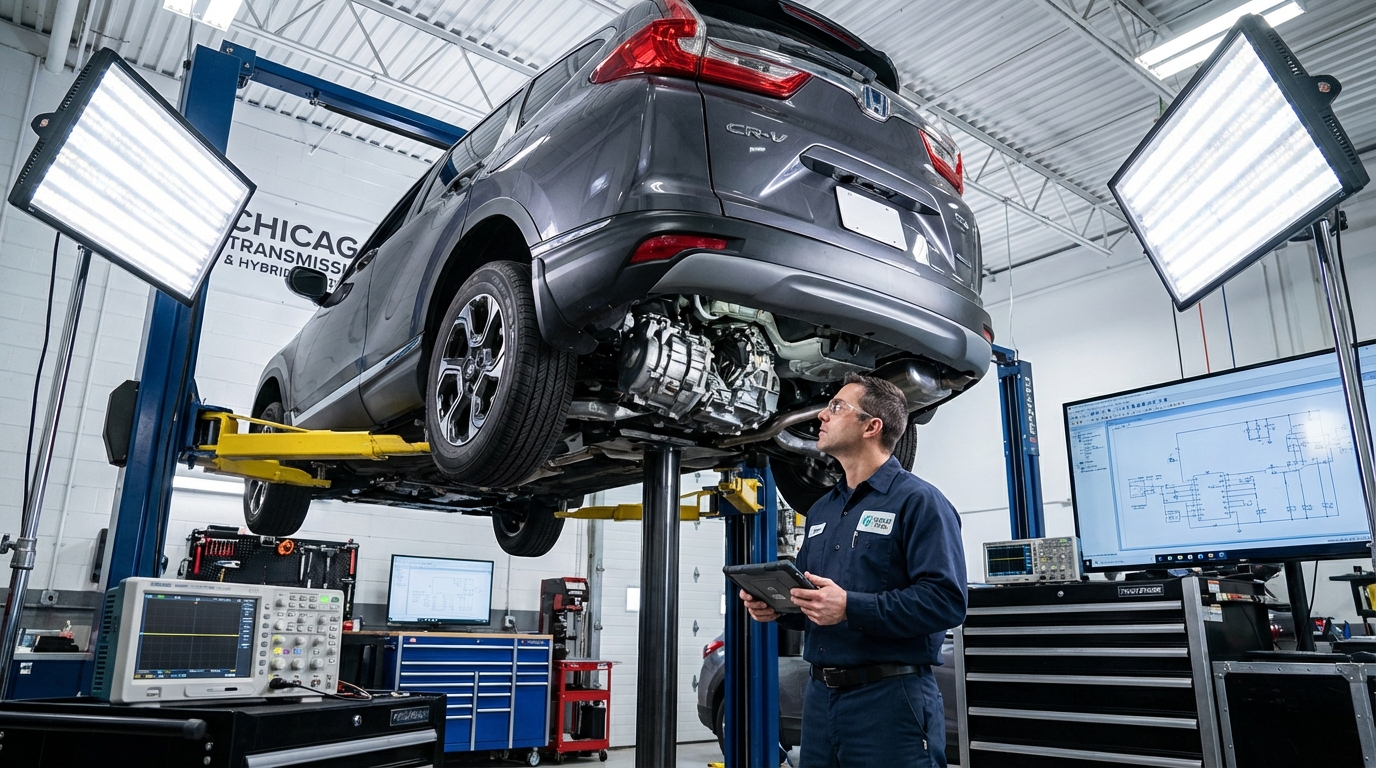
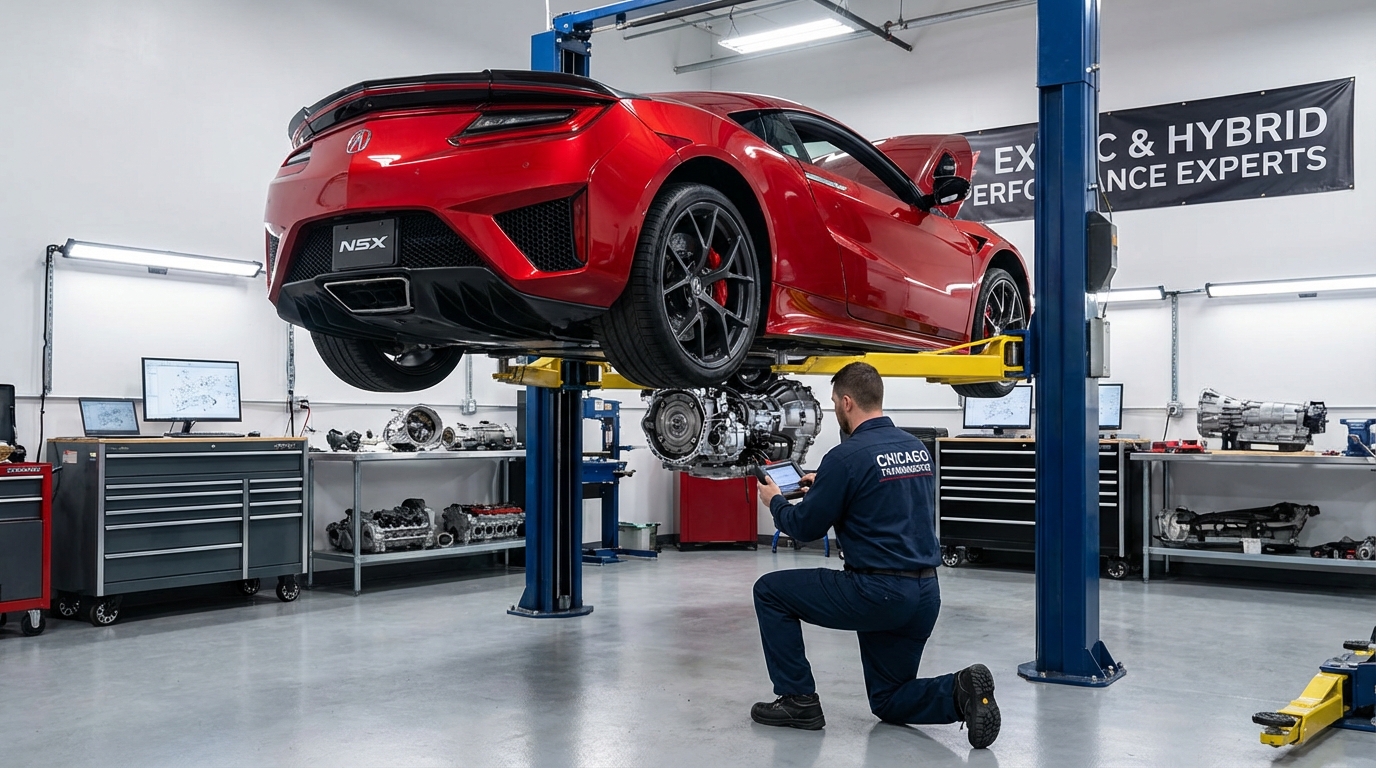
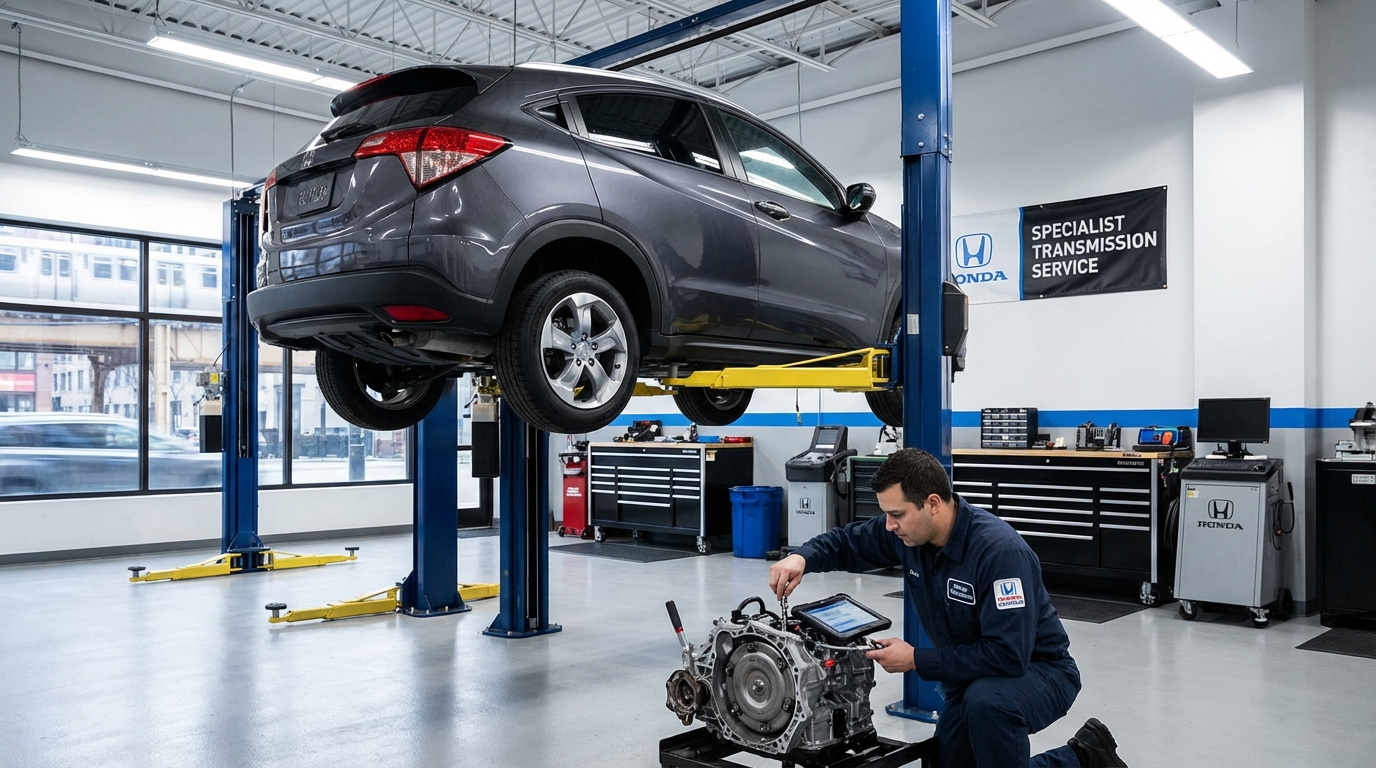
Honda Accords can run a long time, but the transmission history depends heavily on the year, engine, and transmission family. An older V6 automatic with delayed shifts is a different conversation than a newer four-cylinder CVT with shudder or flare. The right first step is identifying which Accord you have and what symptom is actually showing up.
Older V6 Accord Automatic Problems
Early-2000s V6 Accords are known for automatic transmission trouble. Drivers may feel a harsh 1-2 shift, delayed engagement, slipping on acceleration, or a check-engine light after the unit warms up. If the fluid is dark or the pan has clutch material, the repair usually moves beyond a simple service.
Four-Cylinder And Later Accord Concerns
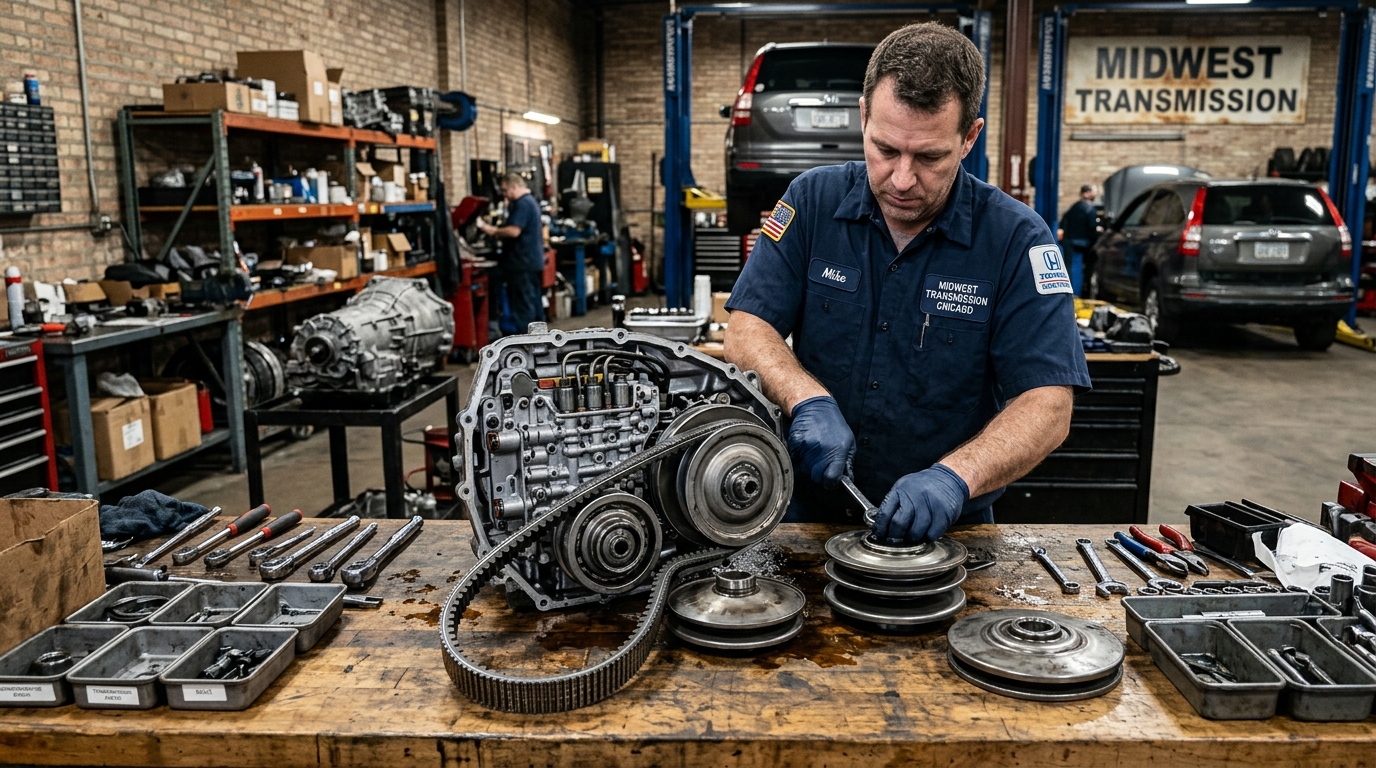
Later four-cylinder Accords have different failure patterns. Some use conventional automatics, while newer models may use CVTs. A CVT complaint can feel like shudder, whining, hesitation, or RPM flare rather than a classic hard shift. Treating every Accord like the same transmission is how bad estimates happen.
What We Check First
- Year, engine, mileage, and exact transmission type.
- Fluid level, color, smell, and service history.
- Whether the symptom is cold, hot, highway, or stop-and-go.
- Honda-specific codes and live shift or CVT data.
- Whether a targeted repair is realistic or the unit needs rebuild/replacement.
Arlington Heights Driving Patterns
Short trips around Arlington Heights and Mount Prospect can hide a weak transmission until it warms up. Longer Route 53 or I-90 driving can expose converter, pressure, or CVT belt/pulley symptoms. Tell us when the problem appears, not just what the warning light says.
Repair Decision
A clean-fluid Accord with a sensor or solenoid issue may still be a targeted repair. Burnt fluid, heavy debris, slipping under load, or repeated ratio codes point toward a bigger repair. We put the evidence in writing before recommending the path.
When An Accord Is Worth Fixing
Many Accord owners are trying to decide whether the car is still worth saving. That depends on body condition, mileage, engine condition, rust, and how severe the transmission damage is. A clean car with a documented repair can make sense. A neglected car with multiple major issues may not.
What To Bring For A Second Opinion
Bring the VIN, mileage, codes, any prior estimate, and notes about whether the problem happens in Drive, Reverse, during the 2-3 shift, at highway speed, or after the car warms up. If the vehicle is a CVT Accord, tell us whether the symptom is shudder, whine, flare, or hesitation.
Why We Do Not Quote Every Accord The Same Way
The word "Accord" covers several very different transmission designs. Older V6 automatics, four-cylinder conventional automatics, hybrid systems, and CVTs do not fail or price the same way. The estimate has to be built around the unit in your car, not a generic Honda reputation.
Common Accord Symptom Patterns
A delayed Reverse engagement usually sends us down a different path than a highway shudder. A hot flare on the 2-3 shift is different from a cold hesitation leaving the driveway. A CVT whine during steady throttle is different from an automatic that bangs into gear. Write down the exact behavior before calling because that saves diagnostic time.
When Fluid Service Helps And When It Does Not
If the fluid is only aged and the transmission still shifts cleanly, service may help protect the unit. If the fluid is burnt, gritty, or the car already slips badly, fluid service alone is not a repair. On worn Honda units, new fluid can reveal the damage that old thick fluid was masking.
Second Opinion Before Replacing The Car
Accord owners often face a repair-versus-replace decision. We help compare the transmission repair against the rest of the car: engine condition, rust, suspension, brakes, mileage, and whether the car still fits your commute. That is more useful than a one-line quote.
Questions We Ask On The First Call
Is it a four-cylinder, V6, hybrid, or CVT model? Does it move normally in Reverse? Does the RPM flare before the car catches? Did the issue start after a battery replacement, fluid service, overheating event, or long highway drive? Those answers narrow the likely failure before the car is on the lift.
Accord Warning Signs That Should Not Wait
Do not keep driving if the car slips badly, bangs into gear, smells burnt, or flashes a transmission warning. A light shudder with clean fluid may still be diagnosable as a smaller repair. A hot slip with burnt fluid usually means the damage is moving fast.
How We Talk Through The Repair Options
For an Accord, the choices usually come down to targeted repair, rebuild, remanufactured unit, used unit, or not repairing the vehicle. We explain the risk of each option. A used unit may be cheaper up front but carries unknown history. A rebuild can make sense when the rest of the car is solid. A targeted repair only makes sense when the failure is isolated and the fluid evidence supports it.
Local Second-Opinion Scenario
If you commute from Arlington Heights to Schaumburg, Palatine, or the I-90 corridor, tell us whether the Accord acts up after steady-speed driving or only in neighborhood traffic. Highway lockup complaints, hot shift flare, and stop-and-go delayed engagement point to different tests. That is why a five-minute scan is not enough.
What We Put In The Estimate
For Accord work, the estimate should identify the transmission family, the failure evidence, the repair option being recommended, and the warranty terms. If the concern is CVT-related, the estimate should say whether the symptom points to fluid condition, control data, belt/pulley wear, or replacement. If it is an older automatic, it should say whether pressure, clutch wear, converter behavior, or solenoids are driving the recommendation.