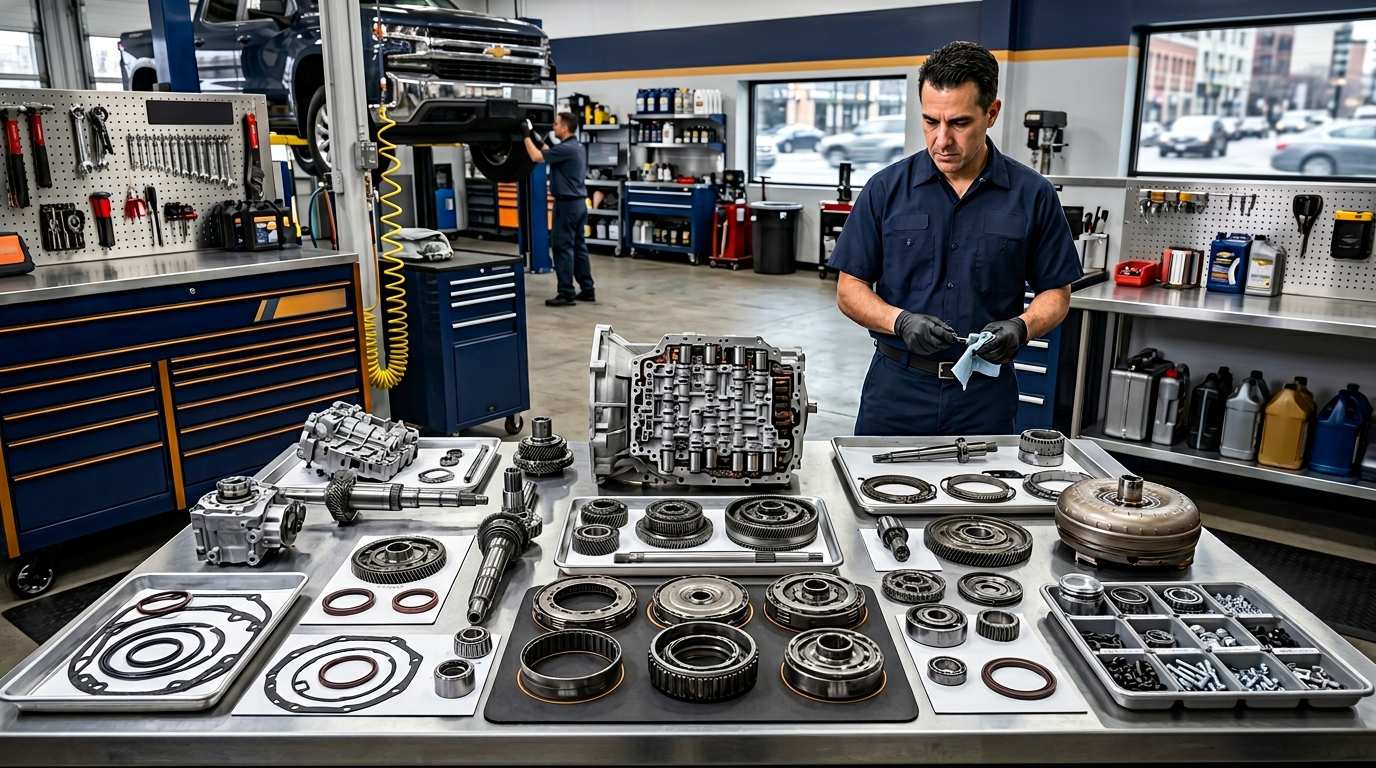
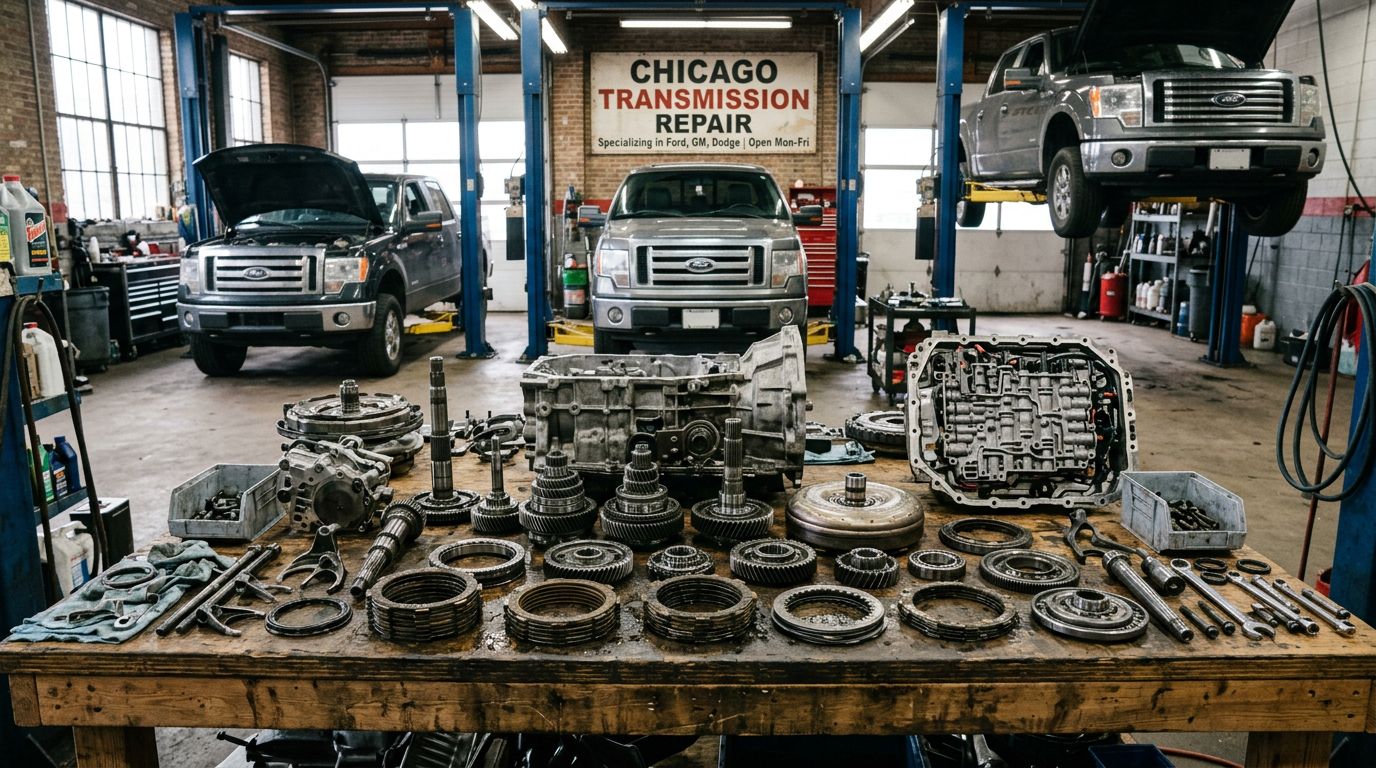
A grinding noise when shifting is one of those symptoms you can feel as much as hear - a rough, metallic protest from somewhere underneath the car that happens at a specific moment in the shift sequence. Unlike slipping, which is gradual, grinding is urgent. Metal-on-metal contact inside a transmission creates debris that circulates and accelerates damage to every other component. Here's what's causing it.
First: Automatic or Manual Transmission?
The causes and fixes differ significantly depending on which type of transmission you have. Both are serious, but the mechanisms are different.
Grinding in an Automatic Transmission
Automatic transmissions don't have gear synchronizers like manuals do - the shifting is hydraulic and electronic. Grinding in an automatic usually indicates one of three things:
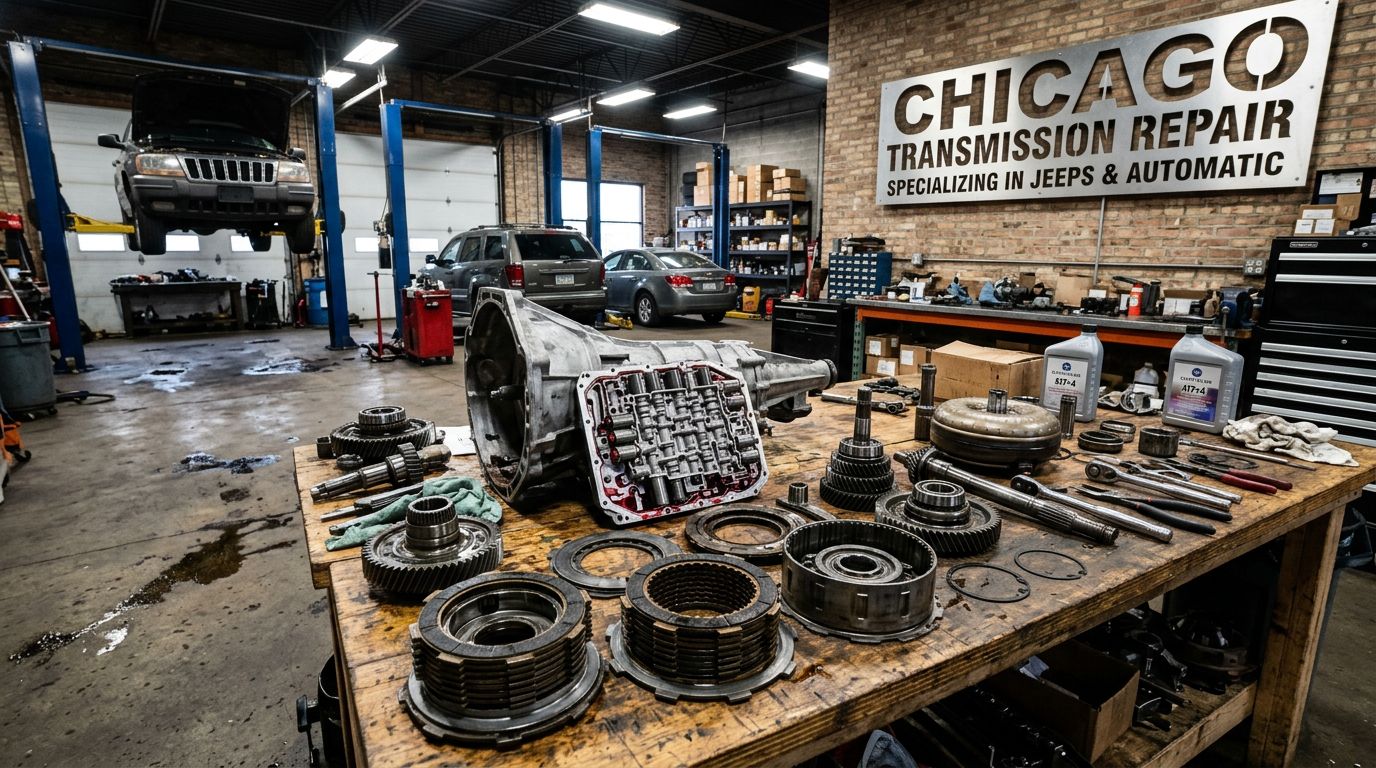
Planetary Gear Damage
The planetary gear sets inside an automatic are the mechanical heart of the transmission. When a gear or carrier fails - from overloading, overheating, or general wear - the broken or chipped gears grind against adjacent components. This produces a distinct metallic grinding sound at specific points in the shift sequence (often 2-3 or 3-4). This is serious and requires a rebuild to address the damaged planetary components.
Clutch Pack Debris
Worn clutch packs shed friction material that becomes metal contamination in the fluid. This debris enters the hydraulic circuits, damages valve body passages, and creates abrasion between moving metal surfaces. The noise from this type of failure is often more of a rough, gravelly sound than a distinct grind.
Torque Converter Issues
Internal converter damage - particularly bearing failure - can produce a grinding or humming noise that increases with vehicle speed. This noise is present even when you're not actively shifting, which helps distinguish it from planetary gear noise.
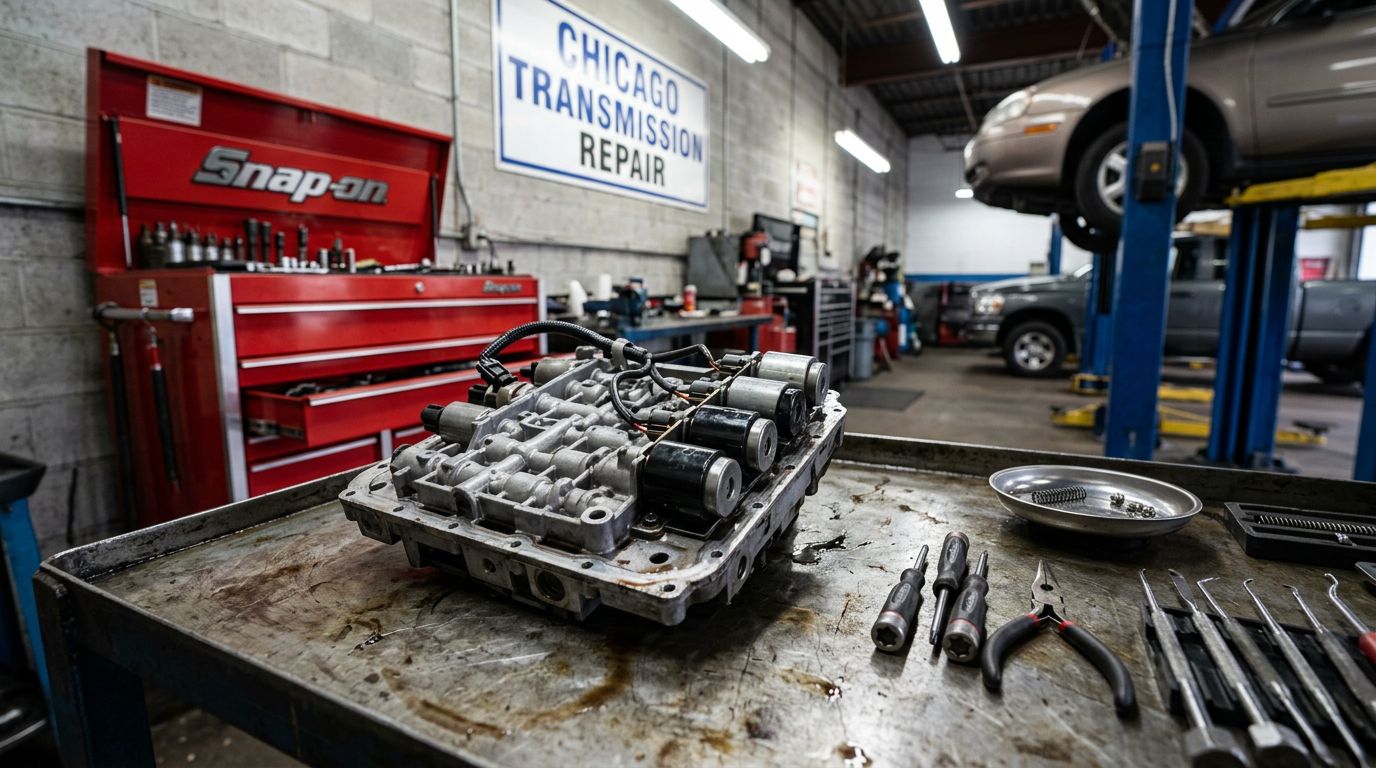
Grinding in a Manual Transmission
Manual transmissions are significantly more common in Arlington Heights than in many markets, particularly in enthusiast vehicles and older imports. Grinding in a manual has a narrower set of causes:
Worn Synchronizers
Synchronizers (synchros) are the components that match the speed of the gear you're shifting into with the speed of the gear shaft before engagement. When synchros wear out, they can't synchronize the speeds fast enough, and the gear "grinds" on engagement. This is the most common cause of grinding in a manual, particularly in high-use gears (2nd and 3rd take the most abuse).
Synchro replacement typically requires removing the gearbox but is less invasive than a full rebuild. Cost is quoted after diagnosis.
Low Gear Oil
Manual transmissions use gear oil rather than ATF. If the level drops from a leak, bearing and gear surfaces run without adequate lubrication and grind. Check this before assuming the worst - a quart of gear oil and a leak repair may be the entire fix.
Clutch Problems
A clutch that isn't releasing fully ("dragging") leaves the input shaft partially spinning when you depress the pedal to shift. The unsynchronized gear engagement causes grinding. This is a clutch problem, not a transmission problem - and it's fixable with clutch adjustment, bleeding, or replacement (quoted after diagnosis).
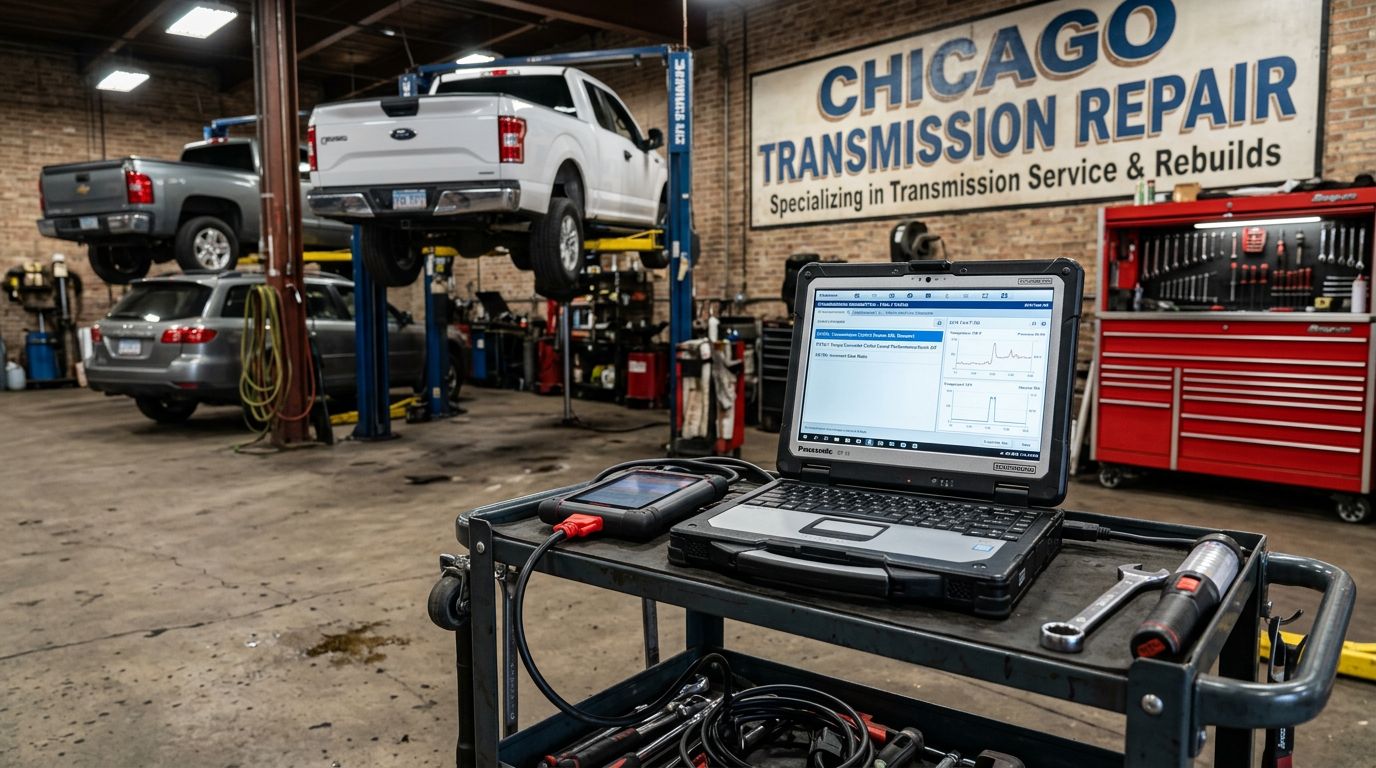
How Serious Is It? Can You Keep Driving?
Grinding in a transmission means metal is contacting metal in a way it shouldn't. Every mile you continue to drive spreads the damage further. In an automatic with planetary damage, continuing to drive can turn a repair into a rebuild within days of heavy use. In a manual, grinding synchros won't leave you stranded immediately, but the damage accelerates rapidly.
The safe answer: don't drive it until it's diagnosed. Call us at 847-393-0191 - we'll arrange a tow and have a diagnosis ready same day.
What Repairs Cost in Arlington Heights
- Gear oil refill (manual, if that's the issue): quoted after diagnosis
- Clutch replacement (manual): quoted after diagnosis
- Synchro replacement (manual): quoted after diagnosis
- Torque converter replacement (automatic): quoted after diagnosis
- Partial rebuild (planetary damage): quoted after diagnosis
- Full rebuild: quoted after diagnosis