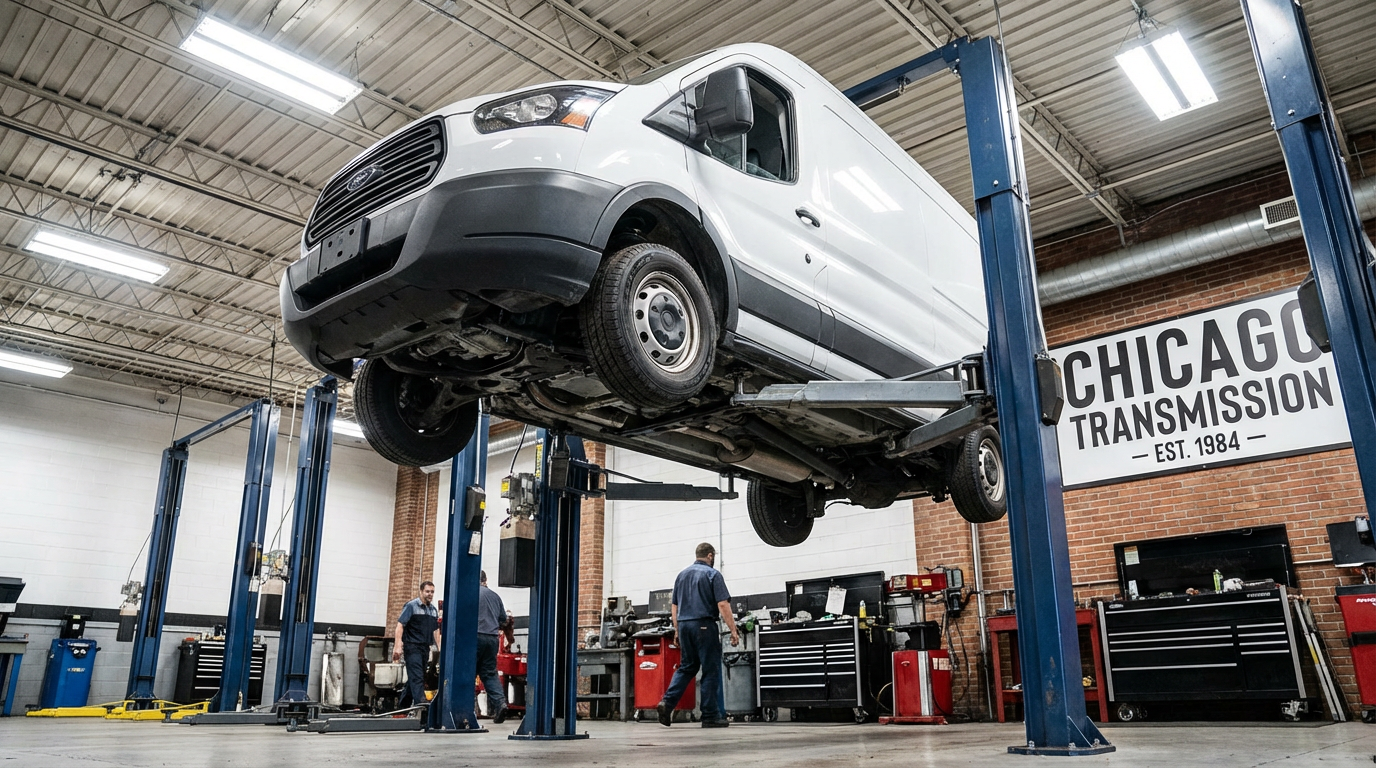
A commercial van sitting in a shop is a van that isn't making deliveries, serving customers, or generating revenue. When a Ford Transit, Mercedes Sprinter, Ram ProMaster, or Chevy Express has a transmission problem in Arlington Heights, minimizing downtime is the priority - not just doing good repair work, but doing it fast. Arlington Heights Transmission prioritizes commercial vehicles and offers the kind of turnaround that keeps business operations running.
The Commercial Van Transmission Landscape in Arlington Heights
Arlington Heights' commercial van market is dominated by four platforms, each with distinct transmission characteristics and failure patterns. Understanding which platform you're running helps set realistic expectations for repair scope and timeline.
Ford Transit: 6R80 and 10R80
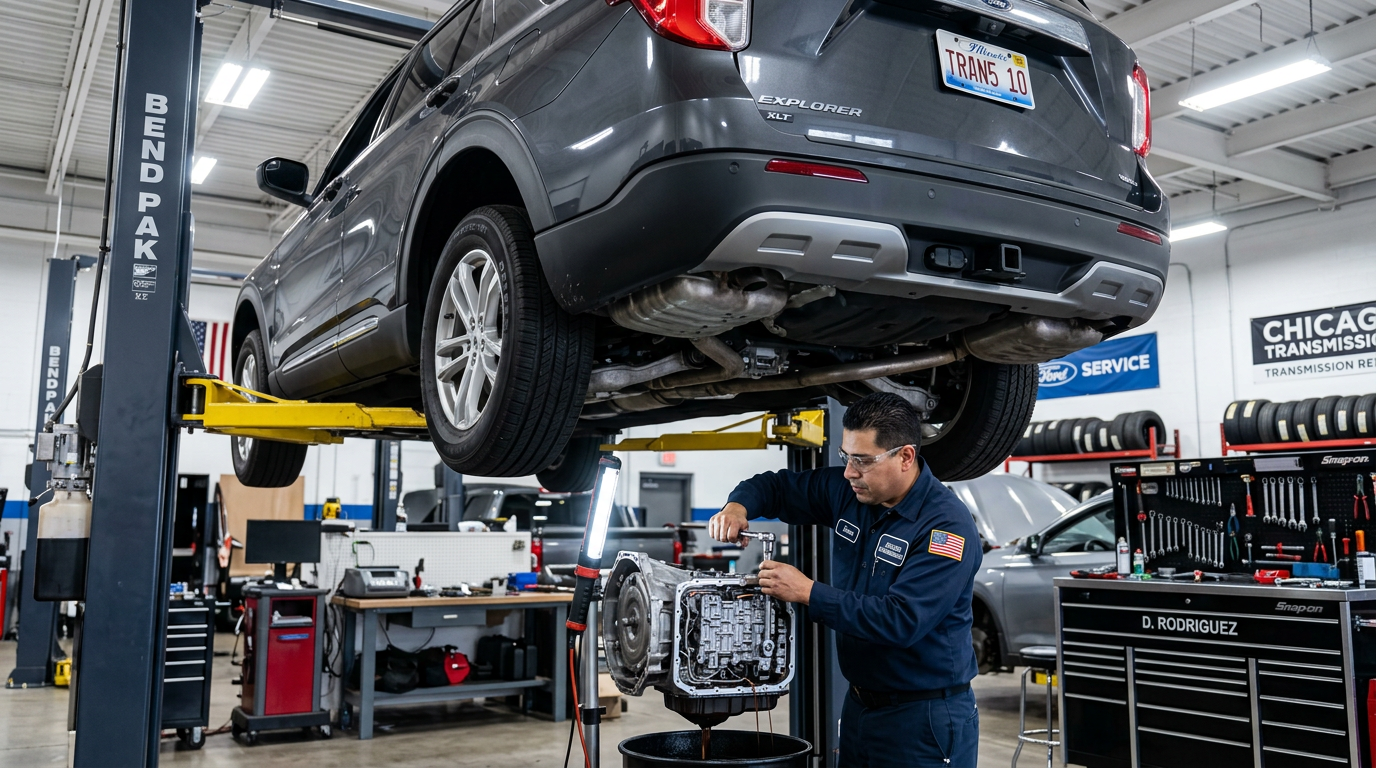
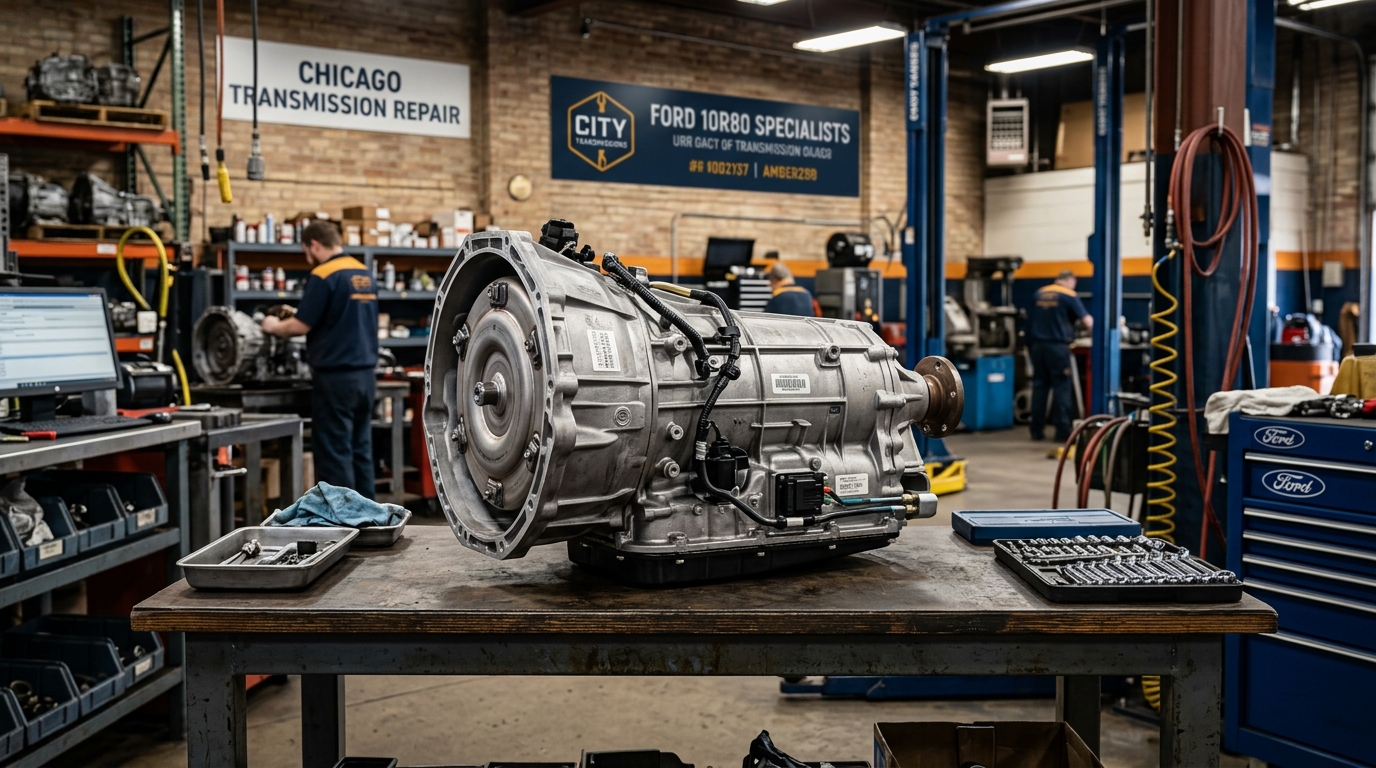
The Ford Transit is Arlington Heights' most common delivery van, and the 6R80 and 10R80 transmissions in the various Transit configurations are transmissions we rebuild regularly. The 10R80 in the newer Transit platforms has the same documented shudder and hunting issues as the F-150 version - often addressed with PCM calibration and fluid service on lower-mileage vans, solenoid or converter work on higher-mileage units.
The 6R80 in older Transits is a well-established unit with known wear patterns: TCC shudder (same mechanism), solenoid wear, and clutch pack degradation after 100,000+ miles of urban stop-and-go service. Rebuilds on the 6R80 are usually more predictable than newer 10-speeds because parts are mature and plentiful, but the final quote still depends on diagnosis and internal condition.
Our Transit turnaround time: diagnostic same day, solenoid/solenoid repairs typically 1 - 2 days, rebuilds 3 - 5 days with parts on order.
Mercedes Sprinter: 7G-Tronic and 9G-Tronic
The Sprinter's Mercedes-Benz automatic transmission is the most complex commercial van transmission we service. The 7G-Tronic (older Sprinters) and 9G-Tronic (newer models) are sophisticated units with electronic valve bodies that require Mercedes-specific diagnostic equipment to read fully. Generic scan tools see limited data on Sprinter transmissions - manufacturer-level access reveals the complete fault picture.
Common Sprinter failures include mechatronic valve body faults, solenoid circuit failures that trigger limp mode, and internal clutch wear at higher mileage. The Sprinter transmission is repair-intensive because access and programming are more involved than on most domestic vans, so a full rebuild should always be quoted in writing after scan data, pan inspection, and parts availability are confirmed.
We carry Mercedes-specific diagnostic equipment and stock Sprinter-common solenoids to reduce parts lead time.
Ram ProMaster: Aisin 6-Speed
The Ram ProMaster uses an Aisin-sourced 6-speed automatic - a different transmission than the Ram 1500 ZF 8HP. The Aisin unit in the ProMaster is generally reliable but shows solenoid and torque converter wear at high urban-duty mileage (60,000 - 80,000 miles of delivery service). Solenoid replacement and full rebuilds are quoted after diagnosis.
Chevy Express/GMC Savana: 6L80
The full-size Express and Savana vans use the 6L80 6-speed automatic - a GM transmission also found in Tahoes, Suburbans, and HD trucks. It's an excellent transmission for high-duty van service, but the 6L80 develops TCC shudder and solenoid wear after 100,000+ miles of urban stop-and-go. Rebuilds and reman swaps should be quoted after diagnosis, fluid inspection, and availability checks.
What We Offer Commercial Van Operators
- Same-day diagnostic: Any commercial van that arrives by 10am gets same-day diagnosis and written quote
- Priority repair queue: Commercial vehicles move ahead of routine maintenance in scheduling
- Free towing: We arrange towing at no charge for vans coming in for repair
- Fleet account billing: Monthly consolidated invoicing for multi-van operators
- Rental coordination: We work with local rental agencies if you need a temporary replacement while the van is in the shop
Call 847-393-0191 for commercial van service. We're open Monday - Friday 7:30am - 6pm, Saturday 8am - 2pm.