A car that will not go into gear is a safety issue first and a transmission issue second. The important question is whether the selector is trapped in Park, the shifter moves but the transmission stays in Neutral, or the vehicle engages briefly and then slips out.
Start Here: What the Symptom Means
1. Stuck in Park or Neutral
If the shifter will not leave Park, start with the brake-shift interlock, brake light switch, shifter assembly, and park release mechanism. A failed brake input can keep the solenoid locked even when the transmission itself is healthy.
If the shifter moves but the dash or transmission does not agree with the selected gear, the range sensor or cable adjustment may be lying to the TCM. That can leave the vehicle in Neutral while the lever appears to be in Drive.
2. Shift Cable, Linkage, and Clutch Checks
On automatic vehicles, a stretched shifter cable, broken bushing, or loose bracket can make the lever feel normal while the manual lever on the transmission never reaches the requested position.
On manual vehicles, a dragging clutch, leaking clutch master or slave cylinder, air in the hydraulic line, or worn linkage can keep the transmission from entering gear without grinding.
3. Fluid Level and Hydraulic Pressure
Low fluid, aerated fluid, a filter restriction, or an internal pressure leak can prevent an automatic transmission from applying the clutch packs that hold Drive or Reverse. If there is a fresh red or brown puddle under the vehicle, towing is safer than trying one more drive.
Warning Signs That Need Diagnosis
- The shifter leaves Park, but the vehicle rolls like it is still in Neutral.
- Drive works cold and disappears hot after traffic or a highway run.
- Reverse works but Drive does not, or Drive works while reverse is missing.
- The gear indicator flashes, shows the wrong range, or does not match the lever.
- Manual gears grind, the clutch pedal feels soft, or the vehicle creeps with the clutch fully depressed.
- The check engine light appears with range sensor, pressure control, or TCM communication codes.
More Serious Causes
Failed Transmission Range Sensor or TCM Command
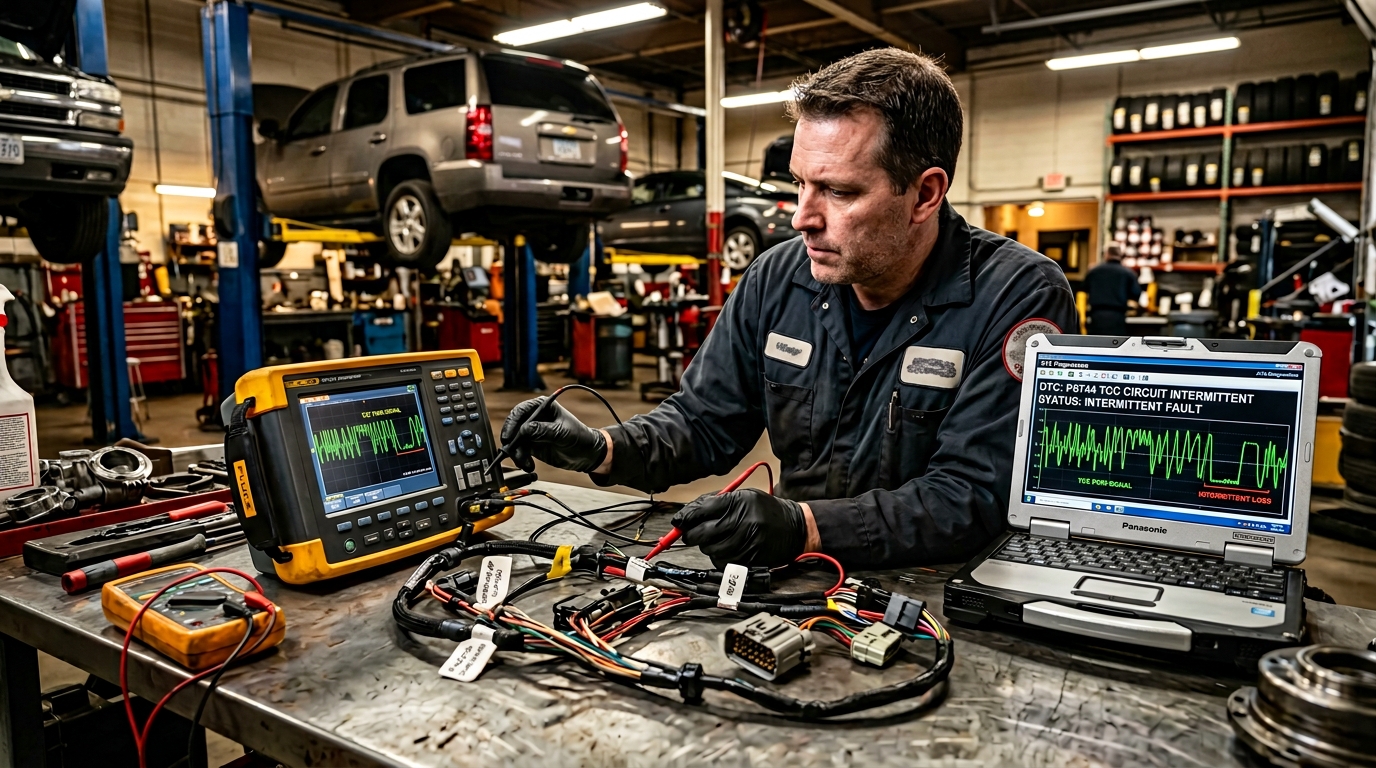
The range sensor tells the computer which gear has been selected. If the sensor, wiring, or TCM command is wrong, the vehicle may block engagement, enter limp mode, or refuse certain ranges until the signal is corrected.
Faulty Valve Body or Pressure Control
If the car starts, seems to catch a gear, then slips back toward Neutral, the valve body, pressure control solenoid, or hydraulic circuit may not be holding the clutch pack applied.
Torque Converter or Internal Apply Failure
A failed torque converter, broken input component, or damaged clutch pack can keep the vehicle from moving even though the engine runs and the selector changes position.
Severe Internal Damage
When clutch packs, bands, shafts, or gears fail mechanically, the transmission may engage one direction but not the other or refuse every gear. That is when teardown, rebuild, or replacement becomes part of the written estimate.
Won't Go Into Reverse Specifically
No Reverse with normal Drive is a specific failure pattern, not the same complaint as a shifter stuck in Park. It often points toward the reverse oil circuit or internal reverse apply components.
- Low/reverse clutch wear or reverse apply leakage inside the transmission.
- Valve body wear, stuck valves, or low line pressure in the reverse circuit.
- Range sensor or solenoid command problems that keep reverse from being applied.
This symptom deserves a focused reverse diagnosis before anyone quotes a full rebuild. The vehicle may still drive forward, but parking nose-in or backing into traffic can leave you stranded.
Stuck in Park - Won't Shift at All
If the shifter physically will not move out of Park, treat it as a control or release problem until testing proves otherwise.
- Check whether the brake lights work when the pedal is pressed.
- Use the owner-manual park release procedure only if the vehicle is secure and the parking brake is set.
- If the override releases the shifter, inspect the brake switch, interlock solenoid, shifter assembly, and related wiring.
- If the override does not release it, inspect the cable, linkage, and shifter mechanism for binding or breakage.
What Diagnosis Costs
We do the diagnostic at no charge. The inspection starts with the exact range complaint, then moves through scan data, brake input, range sensor signal, shifter cable movement, fluid level, clutch or hydraulic behavior, and road testing only when it is safe.
Pricing depends on what failed: a brake switch, cable bushing, clutch hydraulic repair, fluid-related pressure issue, range sensor, TCM/limp-mode fault, valve body repair, or internal rebuild are very different jobs. Call 847-393-0191; if the vehicle will not move safely, we can help arrange a tow.
Process: How We Narrow It Down
- Confirm whether the vehicle is stuck in Park, stuck in Neutral, slipping out of gear, or failing only in Drive or Reverse.
- Check brake input, shifter cable movement, linkage, clutch hydraulics, fluid level, and leak evidence before assuming internal failure.
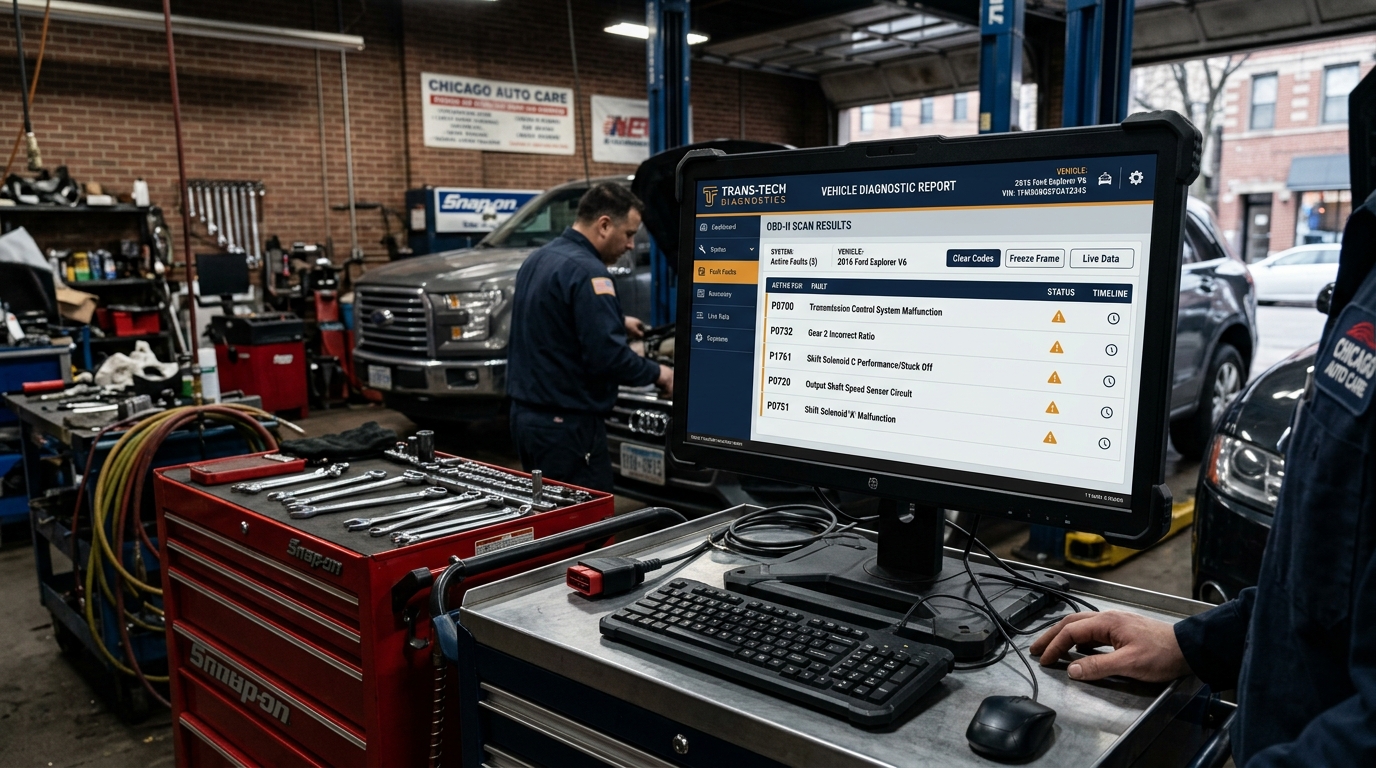
- Scan for range sensor, pressure control, TCM, and limp-mode codes that can block engagement.
- Give a written estimate that separates external control repair, hydraulic repair, valve body work, programming, rebuild, and replacement.
FAQ
Should I keep trying to force it into gear?
No. Repeated throttle attempts can overheat fluid, damage clutch packs, or make a stuck vehicle harder to recover. Set the parking brake, move only if it is safe, and call for guidance.
Can low fluid really keep a car from moving?
Yes. Automatic transmissions need hydraulic pressure to apply clutches. If the pump pulls air because fluid is low, the vehicle can act like it is in Neutral.
Is a stuck Park problem always transmission failure?
No. Brake-light switches, interlock solenoids, shifter assemblies, and cables can trap the selector in Park while the transmission itself is not damaged.
Do repairs include a warranty?
Yes. Repairs carry a minimum 12-month/12,000-mile warranty, and complete qualifying rebuilds include the written 2-year / 24,000-mile rebuild warranty.
These related articles are useful when the no-gear symptom follows a known truck transmission pattern or when the next step is comparing rebuild-level repair options.