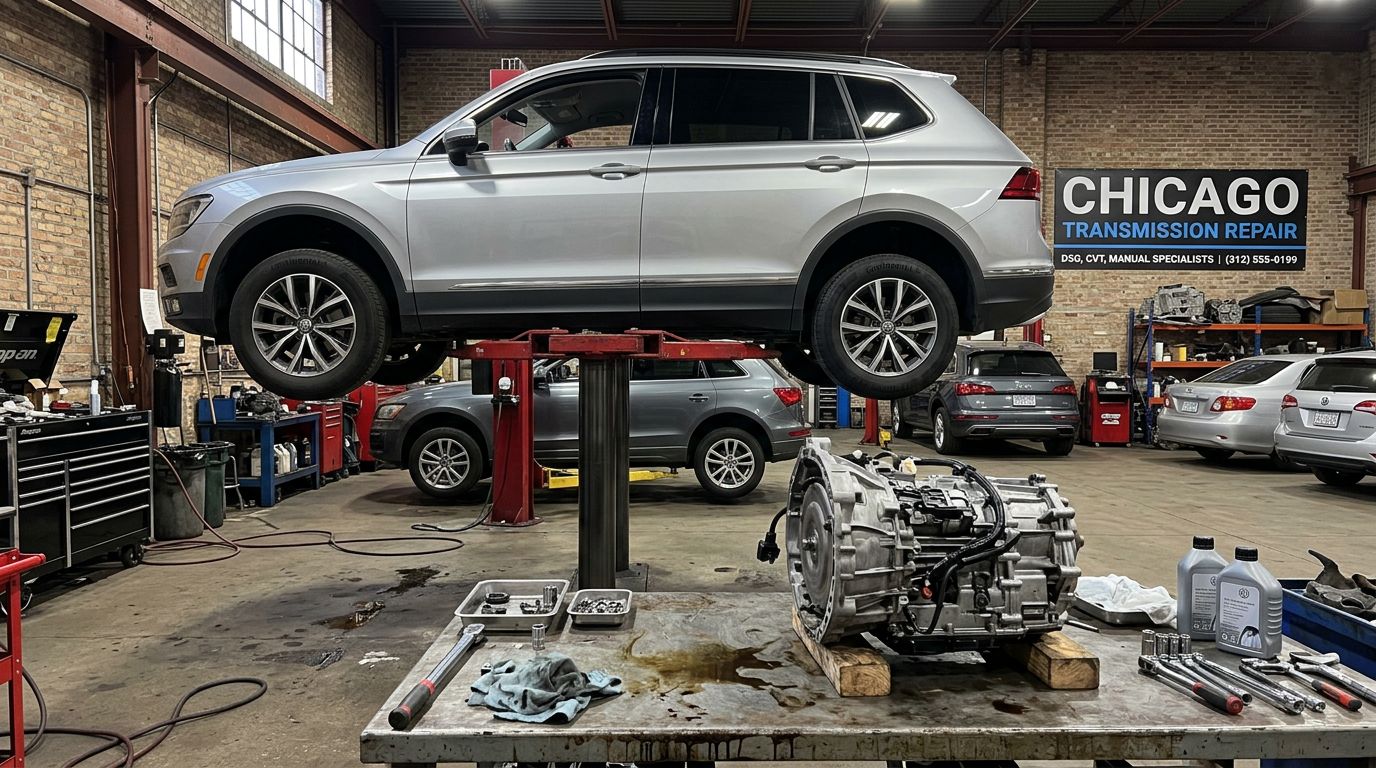
Complaint pattern
Cold engagement, warm shift flare, highway shudder, and limp-mode timing help point testing toward pressure, converter, electrical, or internal wear.
The ZF 5HP19 is an older five-speed automatic used in many VW and Audi import applications, with different failure patterns than newer ZF 6HP and 8HP units. We check scan data, fluid condition, valve body behavior, converter lockup, leaks, and driveline symptoms before recommending repair, rebuild, or replacement.
Send the import model, mileage, service history, and the exact shift complaint you want checked.
The 5HP19 is commonly tied to older VW and Audi Tiptronic complaints: delayed engagement, warm shift flare, converter shudder, fluid leaks, and fault codes that need more context than a quick scan.
For drivers from Arlington Heights, Palatine, Schaumburg, and nearby northwest suburbs, we separate serviceable issues from internal wear before money is spent. Fluid condition, pan material, harness condition, mounts, axles, and converter behavior all matter on these cars.
This page is for the older 5HP19 family, not a newer ZF 6HP or 8HP. The test process is built around the age, parts availability, and repair choices that come with a five-speed import automatic.
Get Free Diagnostic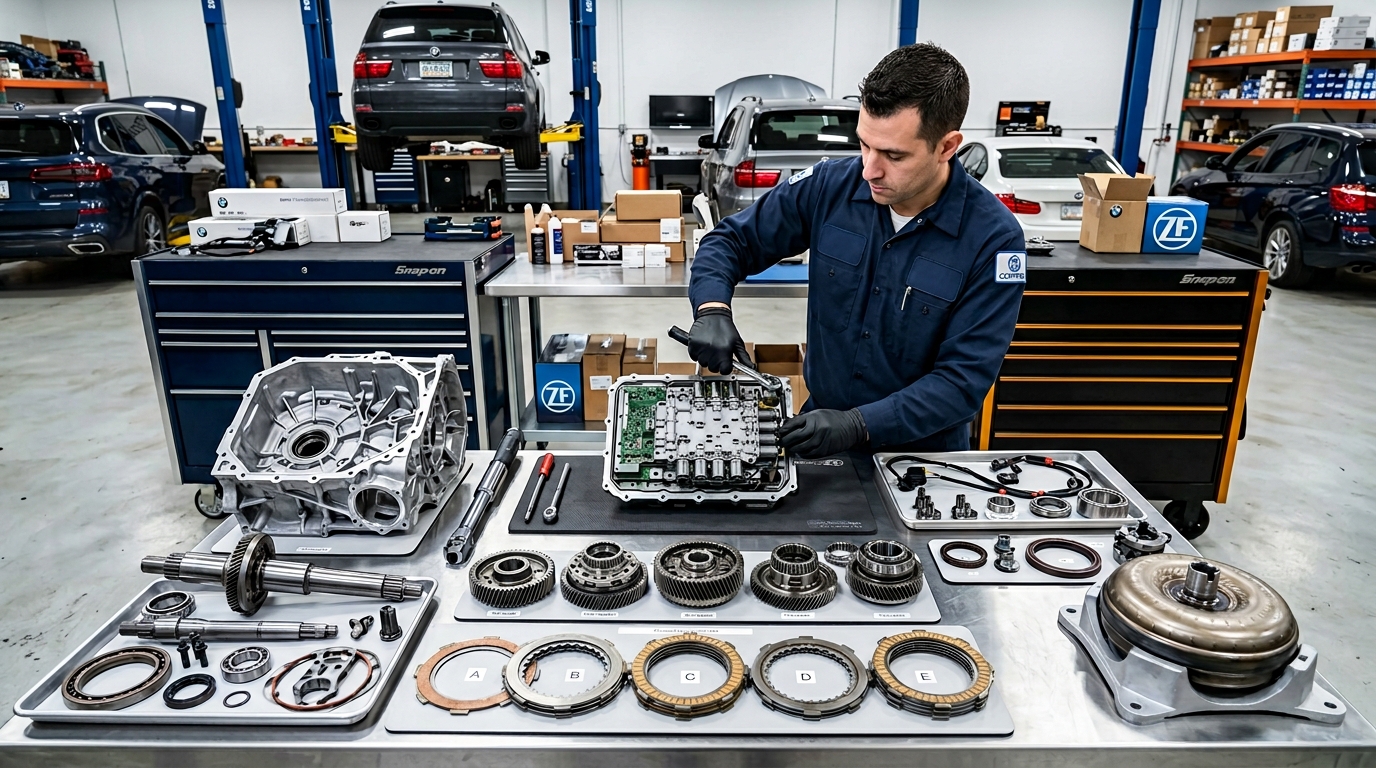
A 5HP19 problem can start small, especially after the car is warm. These symptoms should be checked before heat, low pressure, or converter debris turns a targeted repair into a full teardown.
If the evidence points to an axle, mount, engine misfire, sensor, or leak instead of internal ZF damage, we explain that first.
A useful 5HP19 estimate should explain whether the fault is external, valve-body related, converter-related, or internal before repair money is committed.
Cold engagement, warm shift flare, highway shudder, and limp-mode timing help point testing toward pressure, converter, electrical, or internal wear.
Scan data, fluid condition, pan findings, leak checks, wiring condition, and road-test notes keep the estimate tied to the actual failure path.
The ZF 5HP19 VW Audi repair path should make clear whether the right move is fluid or sleeve leak service, mechatronic/valve-body work, converter diagnosis, adaptation concerns, rebuild, replacement, and vehicle value.
Pricing depends on the car, test results, fluid and pan condition, older ZF parts availability, and whether the problem is still serviceable without a full teardown.
Call or text with the vehicle model, mileage, warning lights, and whether the issue shows up cold, warm, or during steady cruising.