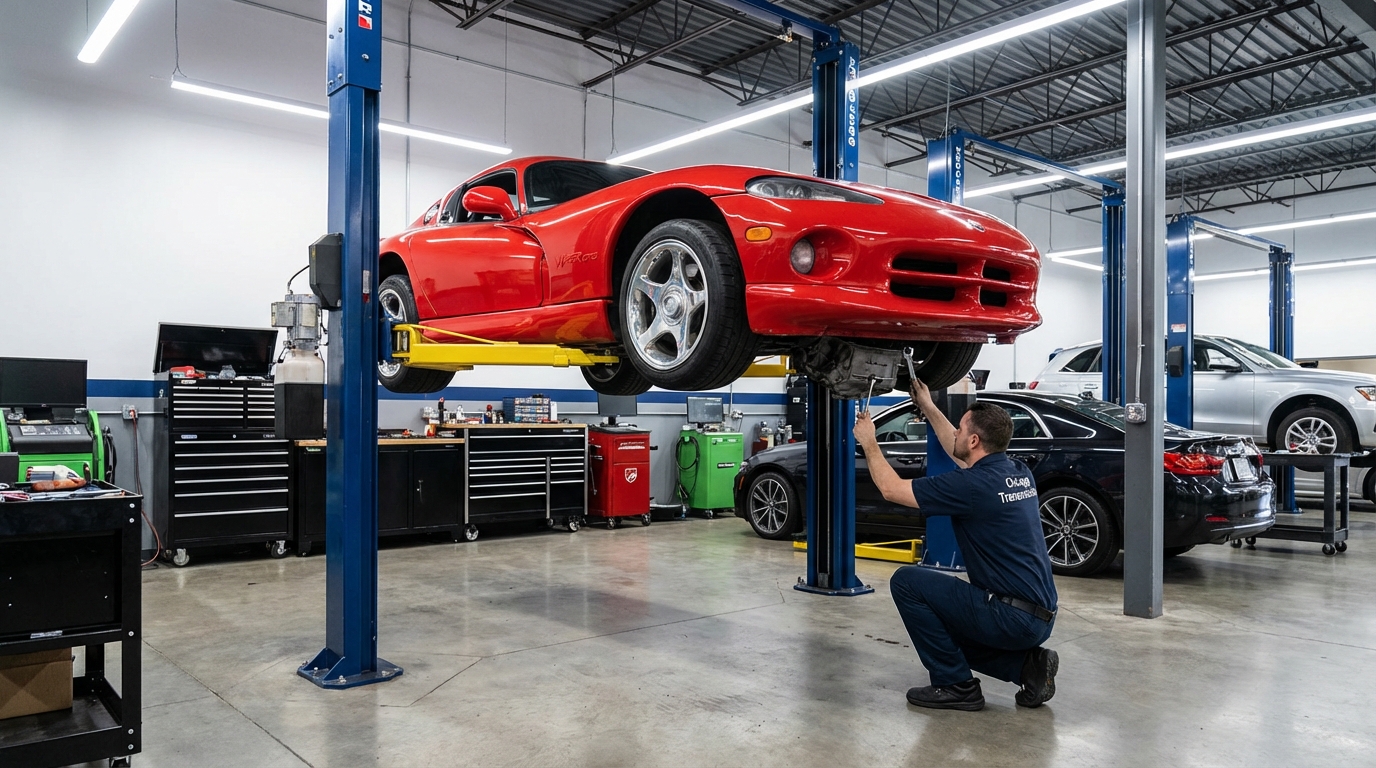
Symptoms
We ask whether it is stuck in limp mode, delays into gear, bangs after warm-up, slips on takeoff, or only acts up after a longer drive.
The 41TE is a Chrysler transverse four-speed used in older minivans and front-wheel-drive cars. Before pricing a major repair, we check the codes, solenoid pack, input and output speed sensor data, fluid condition, pan material, leak points, and the way it behaves on the road.
Tell us the model, mileage, warning lights, and when the shift problem shows up.
A 41TE complaint often begins as limp mode, a harsh shift, delayed engagement, or a speed-sensor code in a Chrysler or Dodge daily driver. That does not automatically mean the transaxle needs to come out.
We compare scan data with what the vehicle does cold, hot, in stop-and-go Arlington Heights traffic, and after longer Route 53 or I-90 drives. Fluid condition, pan debris, wiring, connectors, axle seals, cooler lines, and mounts all matter before anyone calls it internal failure.
If the cause is outside the case, the estimate stays there. If the clutches, converter, pump, valve body, or hard parts are worn, we explain the internal repair path and warranty before work starts.
Get Free Diagnostic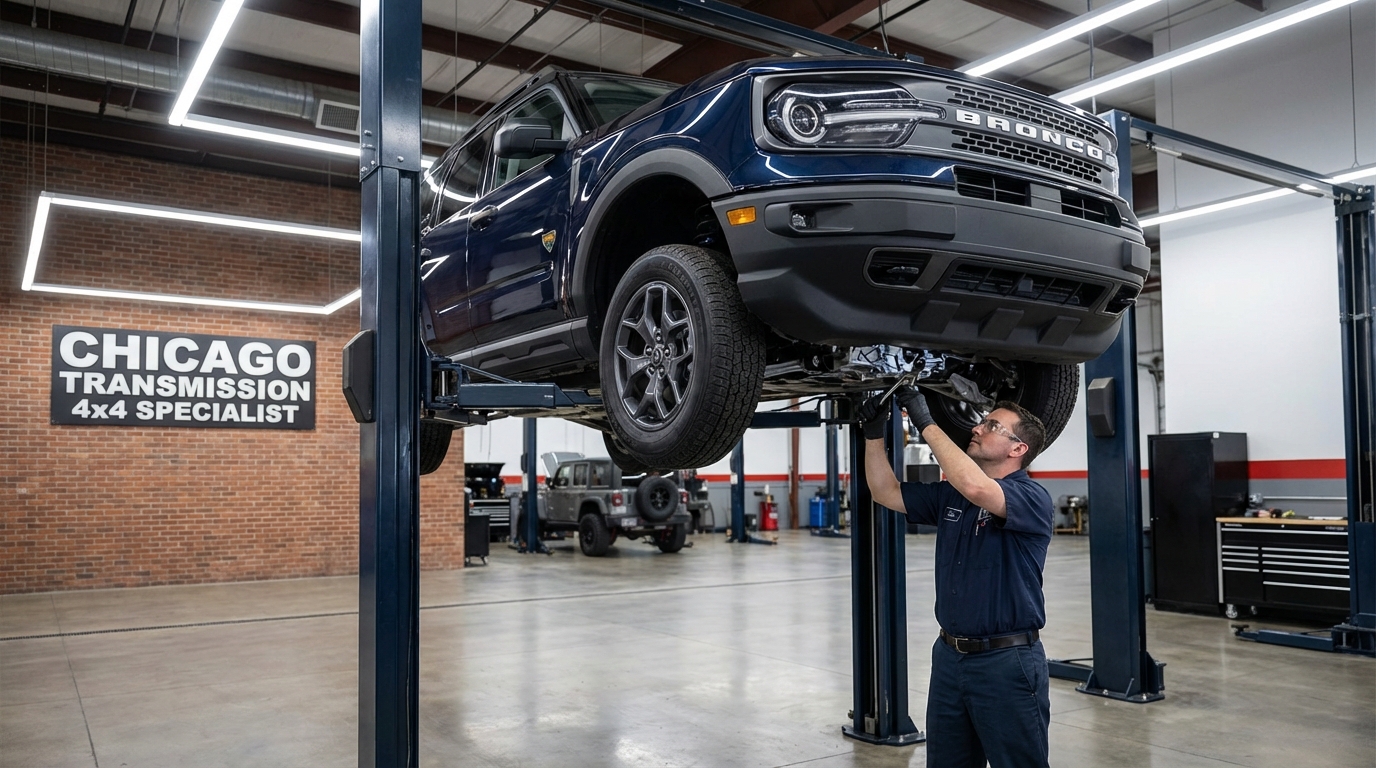
Small 41TE problems can get expensive when the vehicle keeps being driven after pressure drops, fluid overheats, or the computer locks it into limp mode.
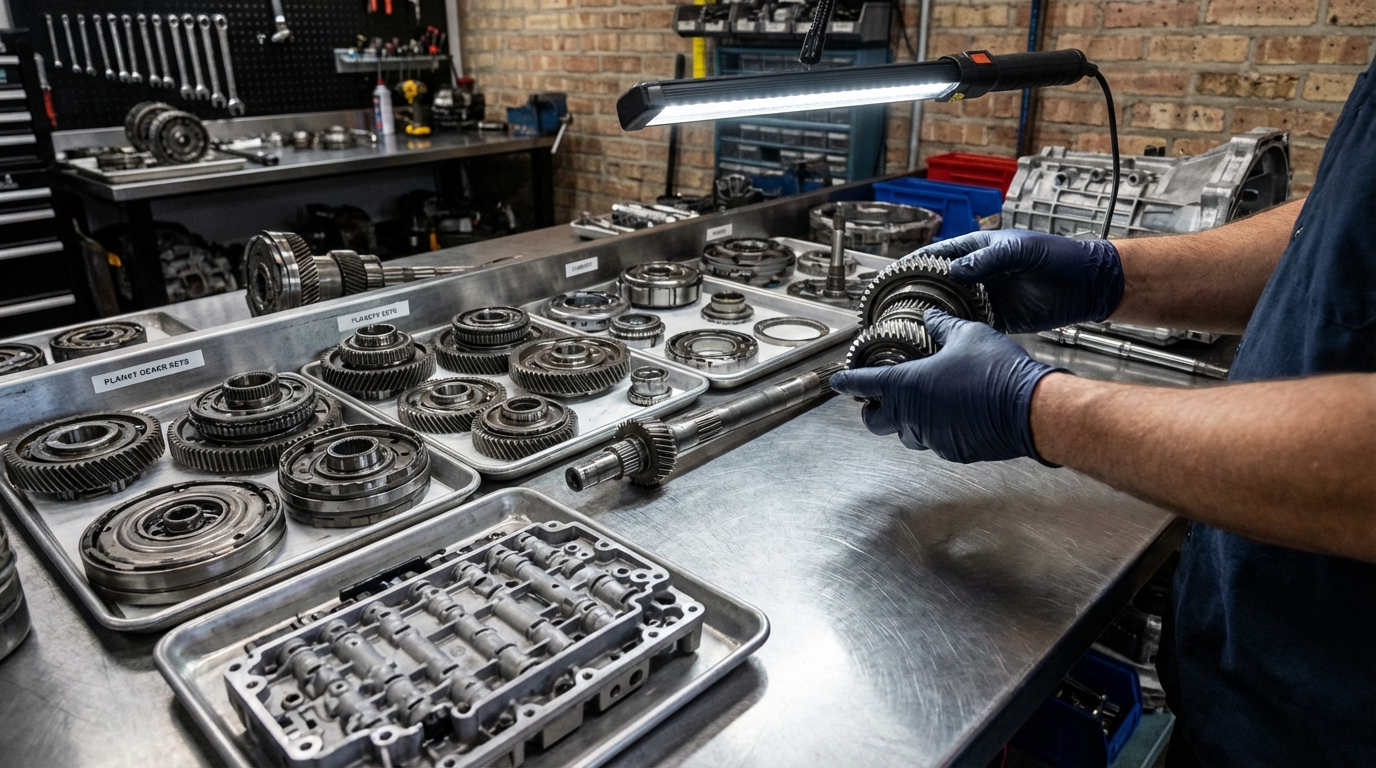
If the vehicle should not be driven from Palatine, Wheeling, or Mount Prospect, we will recommend a tow before a repairable 41TE turns into a larger failure.
A useful 41TE estimate separates control faults from internal wear. Limp mode can come from an electrical issue, a hydraulic issue, or damage inside the unit, and those repairs do not cost the same.
We ask whether it is stuck in limp mode, delays into gear, bangs after warm-up, slips on takeoff, or only acts up after a longer drive.
The inspection checks codes, live data, fluid, pan evidence, wiring, solenoid operation, axle seals, cooler lines, mounts, and road behavior.
The 41TE Arlington Heights repair path should make clear whether the right move is leak repair, electrical or solenoid diagnosis, valve-body work, converter repair, rebuild, replacement, and whether the vehicle justifies the larger repair.
Pricing depends on whether the 41TE needs an external fix, a control repair, valve body work, converter work, or a full internal repair. The right number comes after the evidence is checked.
Call or text with the vehicle, mileage, codes, and what changed in the shift pattern. We will help decide whether it is safe to drive in from Arlington Heights or whether towing is the smarter move.