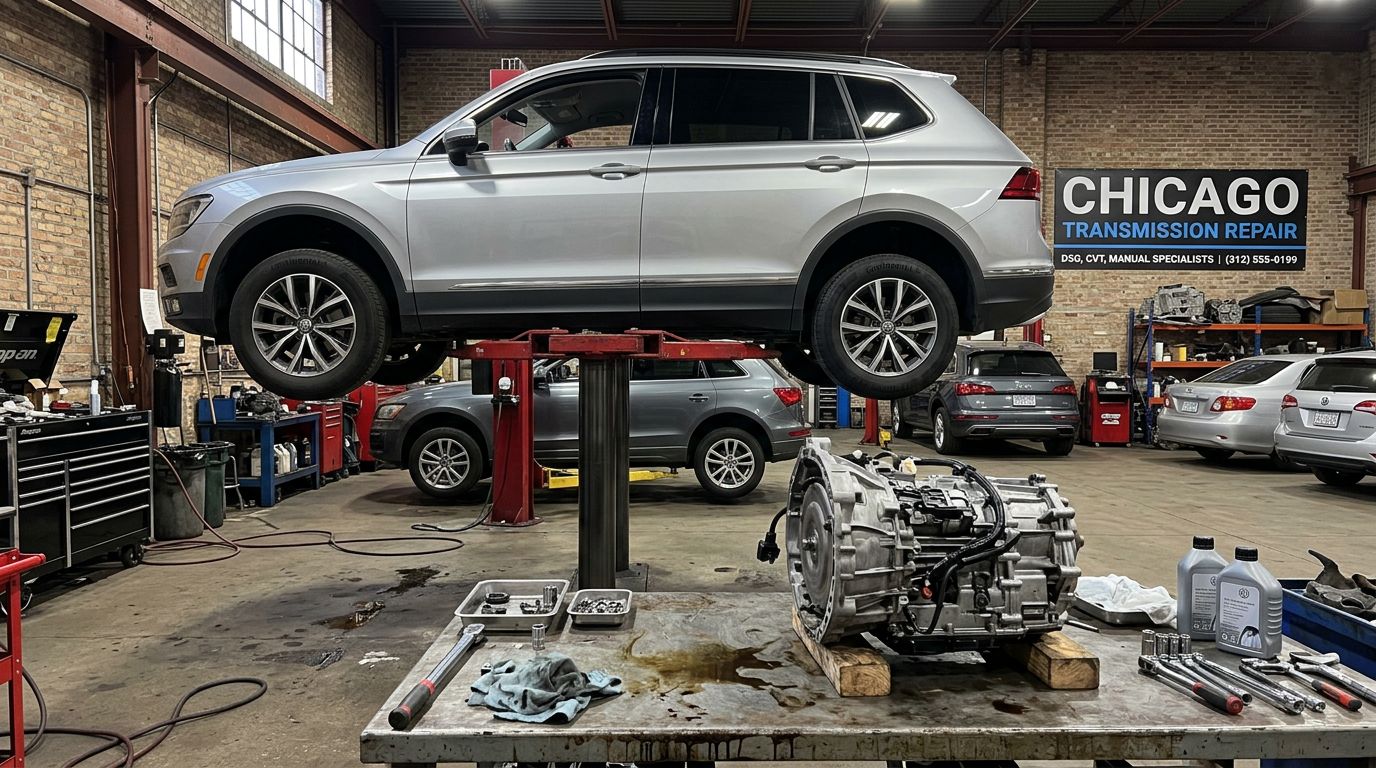
Converter feel
We listen for lockup shudder, rpm flutter, steady-speed vibration, and light-throttle complaints that can point toward converter or pressure-control behavior.
09L ZF longitudinal six-speed help for Arlington Heights Audi drivers with converter shudder, harsh or delayed shifts, heat-related complaints, fluid service questions, or mechatronic and valve body behavior. Free diagnostic, written estimates, and warranty-backed repair options.
Send the Audi model, mileage, quattro or rear-drive layout, when the shudder or harsh shift happens, and whether another shop mentioned the converter or mechatronic unit.
The 09L ZF six-speed is used in longitudinal Audi layouts where converter lockup, mechatronic control, valve body wear, fluid condition, and quattro driveline load can all change the way the vehicle shifts.
Our Arlington Heights diagnostic looks for the pattern behind the complaint: shudder during lockup, harsh gear changes after heat soak, delayed engagement, codes, cooler performance, fluid history, and whether the driveline is adding load.
That keeps the estimate focused on the cause instead of treating every 09L complaint as the same rebuild decision.
Get Free Diagnostic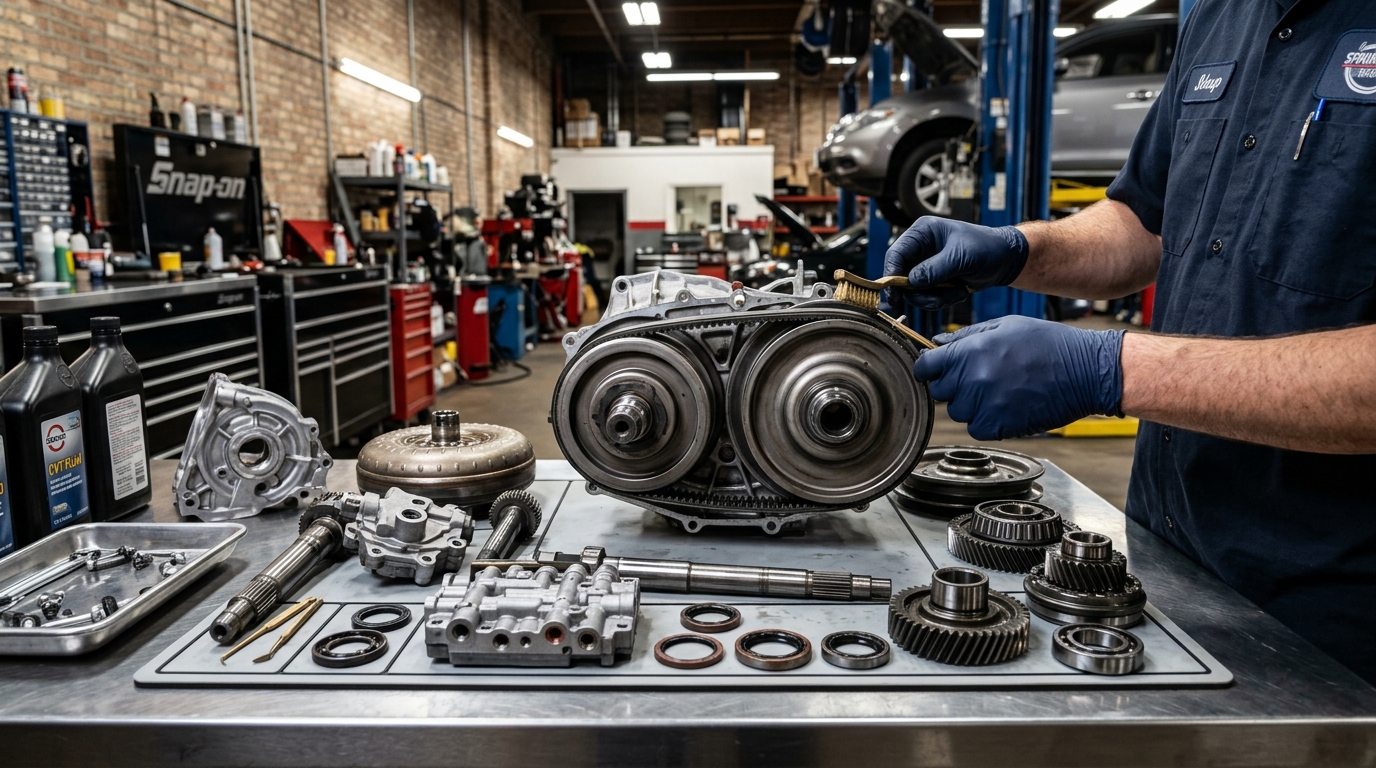
Bring the vehicle in when the complaint appears during converter lockup, after the fluid is hot, or while the vehicle is carrying load through the quattro driveline.
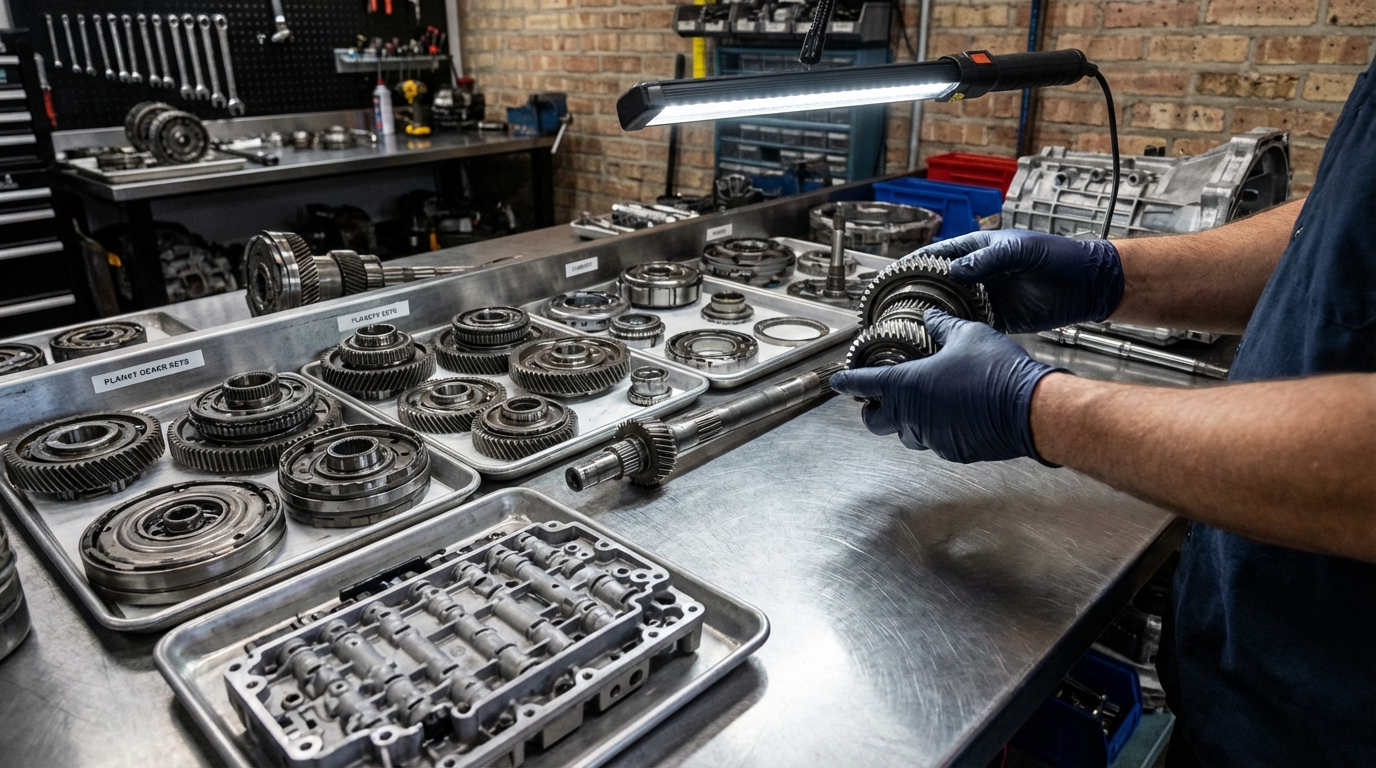
If the evidence points to fluid service, converter work, mechatronic or valve body repair, cooler correction, or rebuild/replacement, the estimate lays out those choices in plain language.
A useful 09L estimate should connect the complaint to converter behavior, mechatronic control, fluid condition, heat, load, or internal wear before repair options are compared.
We listen for lockup shudder, rpm flutter, steady-speed vibration, and light-throttle complaints that can point toward converter or pressure-control behavior.
Fluid level, color, smell, pan debris, cooler-line condition, leak points, and operating temperature help show whether service or repair is appropriate.
Valve body, solenoids, adaptation values, wiring, and module data are reviewed alongside quattro load before a targeted repair or rebuild path is quoted.
The final estimate depends on converter behavior, fluid condition, mechatronic data, leak location, cooler performance, parts availability, and whether internal damage is present.
Call or text with the Audi model, mileage, symptoms, codes, and any prior estimate. We will separate converter, mechatronic, valve body, fluid, and internal-wear possibilities before you approve a repair.