
Symptoms
We ask whether it bangs into gear, flares warm, shudders at cruise, delays after sitting, or only acts up after a long drive.
The 09G, also known as the TF-60SN, is an Aisin six-speed used in many Volkswagen and Audi models. Harsh shifts, valve body wear, solenoid faults, converter shudder, overheating, leaks, and adaptation problems need to be tested before anyone quotes a rebuild.
Tell us the VW or Audi model, mileage, codes, fluid history, and when the shift complaint appears.
The 09G can feel like a simple fluid problem when the real cause is temperature, valve body wear, solenoid behavior, converter slip, or adaptation strategy. Guessing from one harsh shift is not enough.
We check scan data, fluid level, fluid condition, temperature history, leak points, live solenoid command, valve body symptoms, mounts, cooler flow, and the exact driving pattern that makes the complaint show up.
If a service, leak repair, solenoid diagnosis, or valve body repair is the right path, we keep the estimate focused there. If the unit is worn internally, the written estimate explains why before work is approved.
Get Free Diagnostic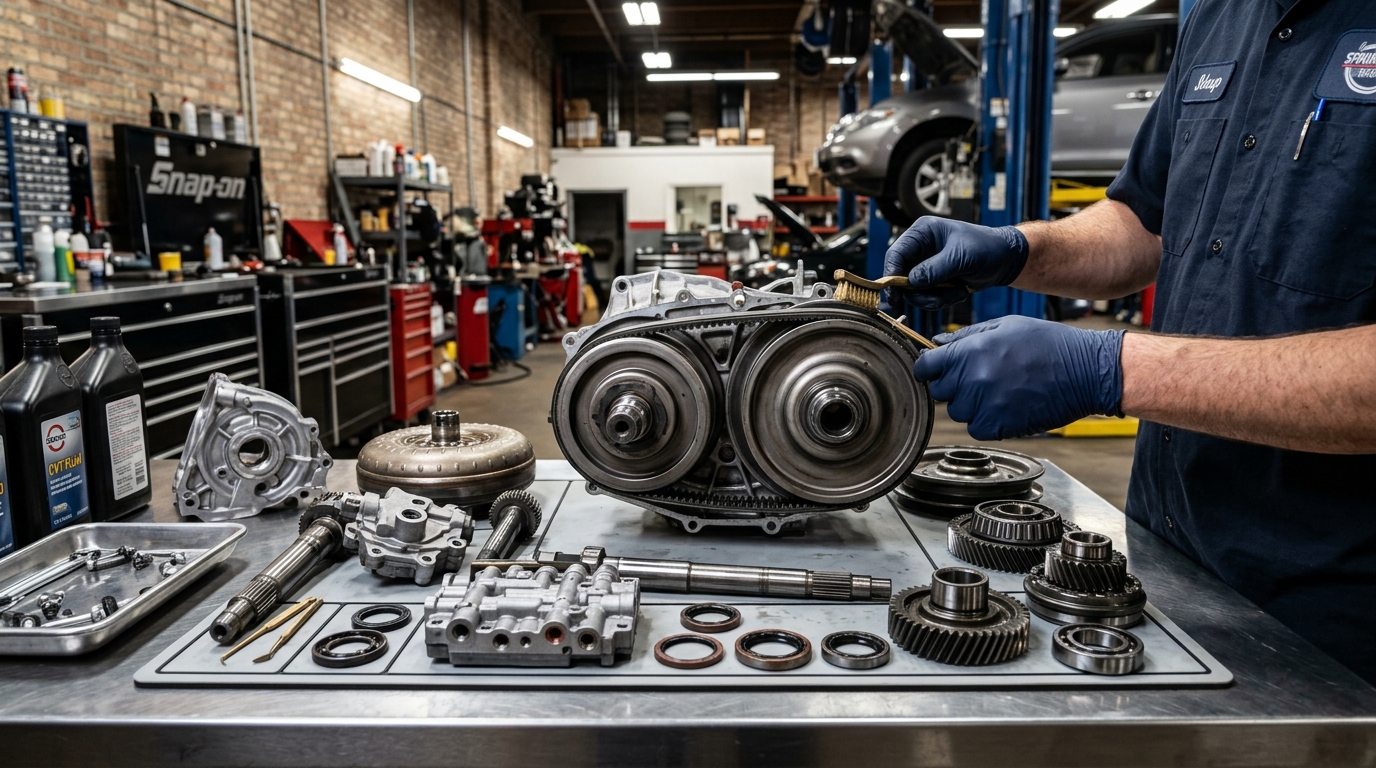
09G complaints often appear after the transmission warms up, which is why a short test drive can miss the problem. These are the signs to document before calling.
If the vehicle should not be driven from Palatine, Schaumburg, or Rolling Meadows, we will recommend towing before the 09G overheats further.
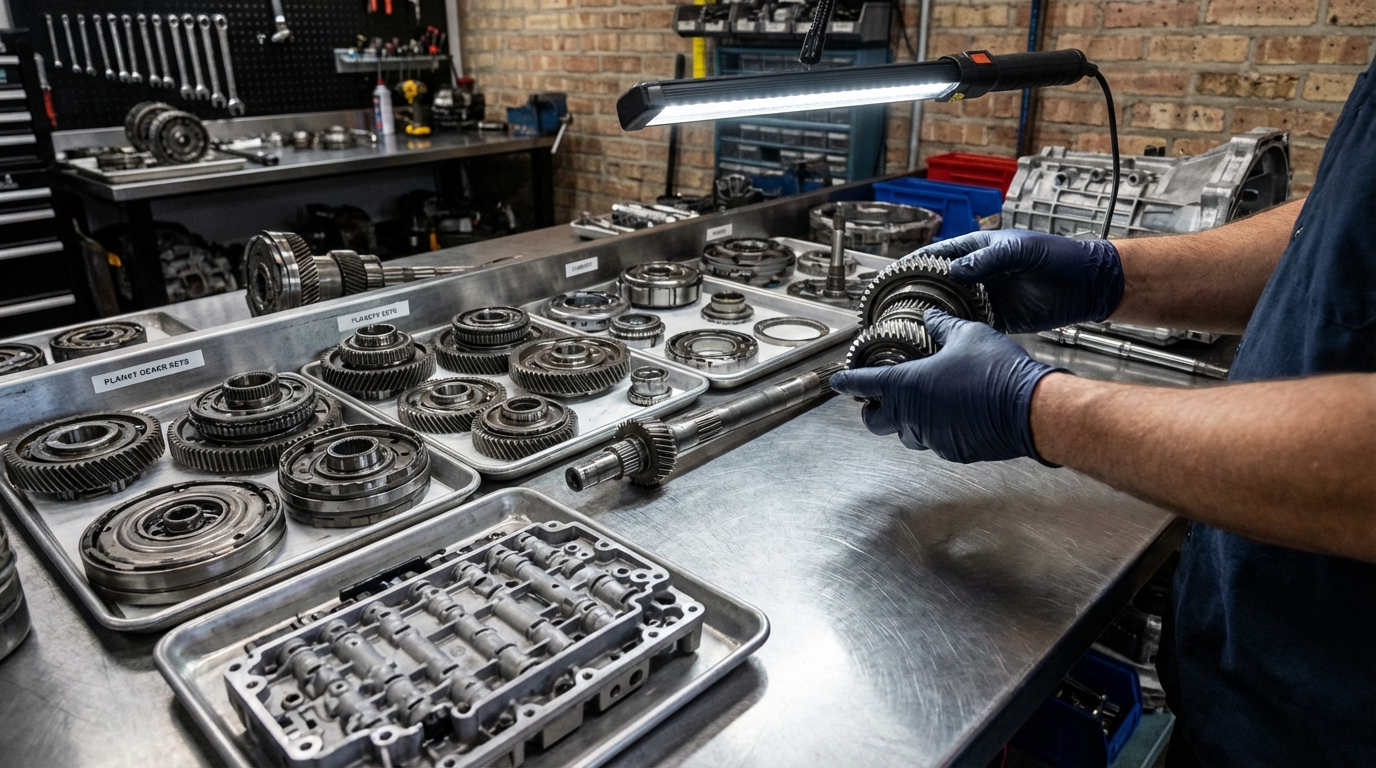
A useful 09G estimate should explain whether the fault is fluid-related, valve-body-related, converter-related, electrical, or internal instead of treating every harsh shift like a full replacement.
We ask whether it bangs into gear, flares warm, shudders at cruise, delays after sitting, or only acts up after a long drive.
The check includes scan data, fluid condition, temperature behavior, leak points, solenoid clues, valve body evidence, mounts, and cooler flow.
The 09G (TF-60SN) Arlington Heights repair path should make clear whether the right move is adaptation or software concerns, leak and fluid service, valve-body/mechatronic work, converter diagnosis, rebuild, replacement, and Mercedes value.
Pricing depends on whether the 09G needs fluid service, valve body work, solenoid testing, converter work, cooler repair, or internal transmission repair.
Call or text with the VW or Audi model, mileage, codes, fluid condition, and whether the harsh shift happens cold or hot. We will start with a free diagnostic and put the options in writing.