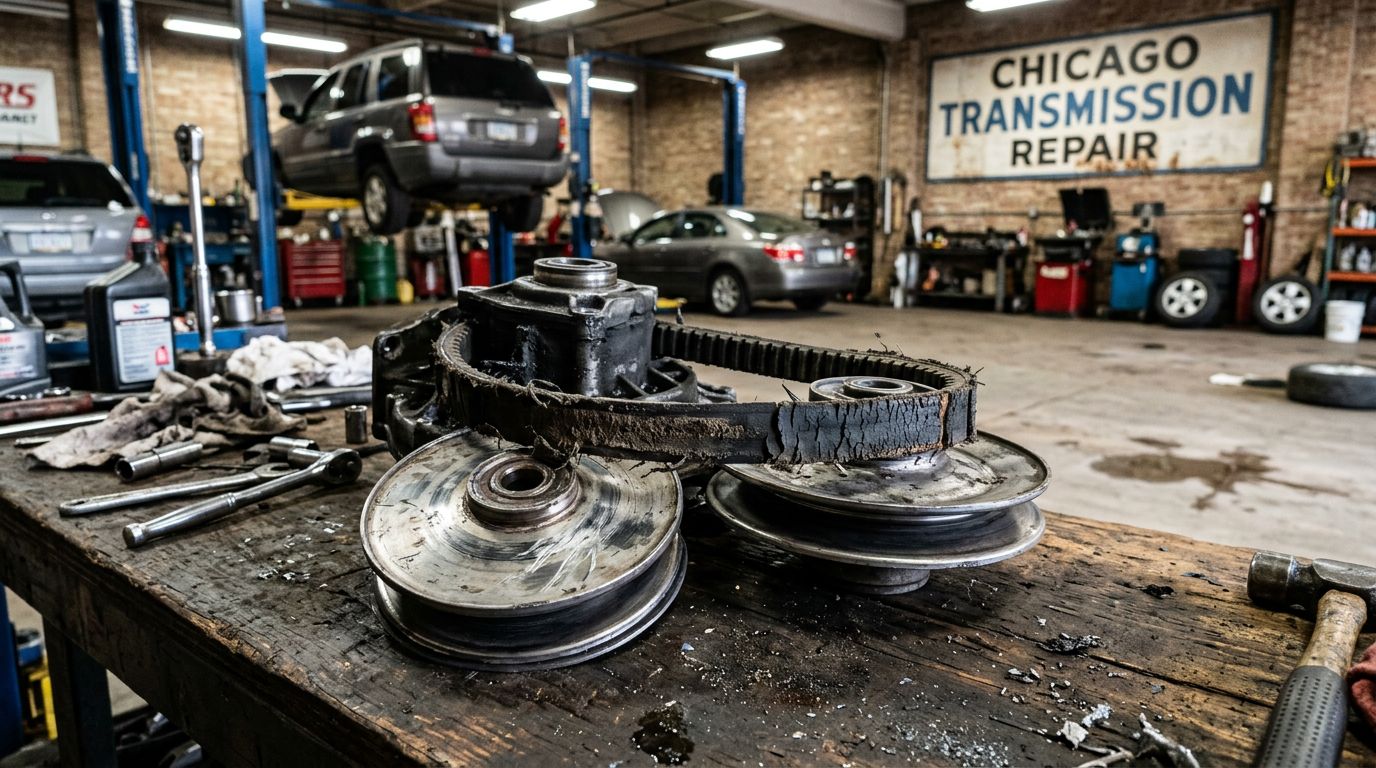
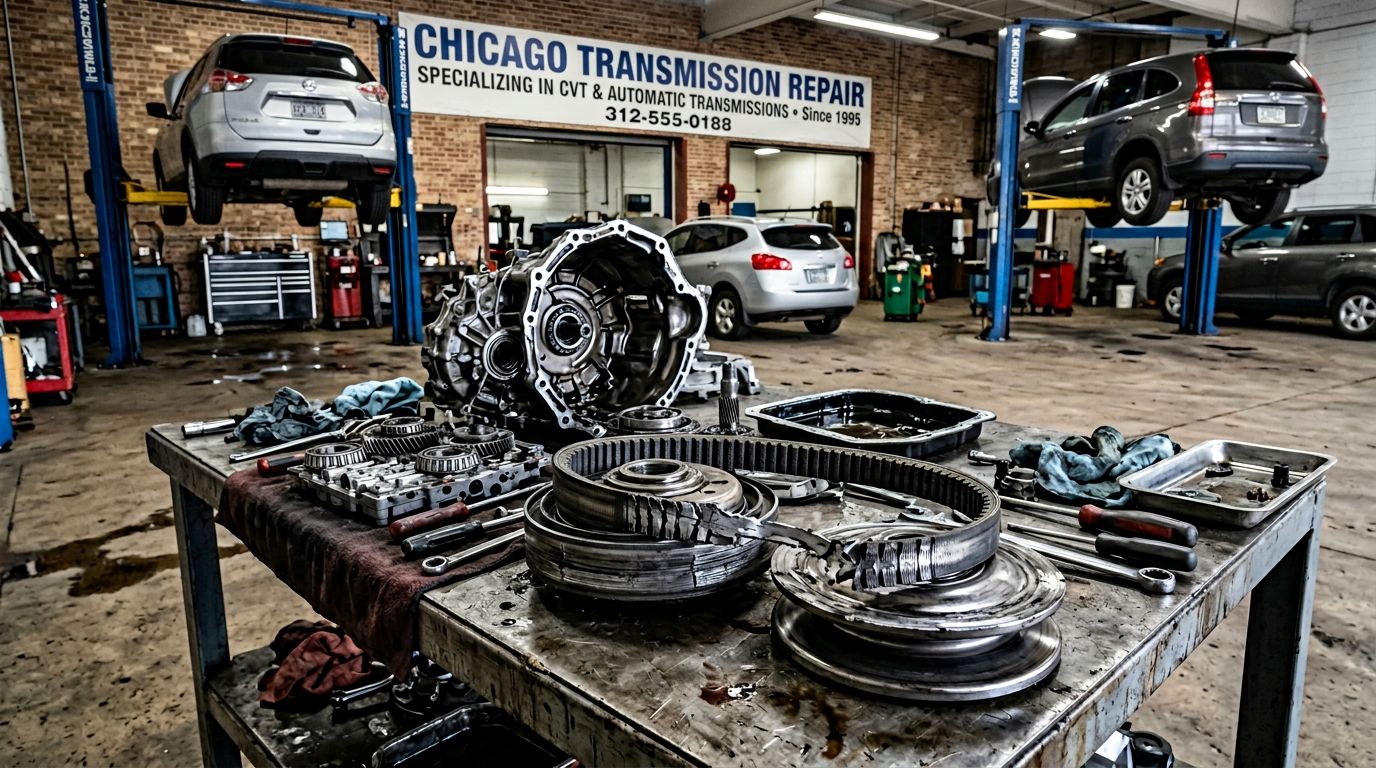
A CVT does not shift like a regular automatic, so its problems often get described the wrong way. Drivers may say it slips, drones, hesitates, shudders, or feels like it has no gears. The right repair depends on whether the issue is fluid, controls, cooler flow, belt and pulley wear, or internal damage.
How A CVT Is Different
A traditional automatic changes through fixed gear ratios. A CVT changes ratio continuously with pulleys and a belt or chain. That design can be smooth and efficient, but it is sensitive to heat, wrong fluid, neglected service, and load. When a CVT starts failing, it may not bang between gears because there are no conventional gear steps.
Common CVT Symptoms
Shudder On Takeoff
Takeoff shudder can point to fluid breakdown, start-clutch behavior on some designs, belt and pulley wear, or control issues. It matters whether the shudder happens cold, hot, uphill, or under light throttle.
Hesitation From A Stop
A delay when pulling into traffic is a serious complaint. It may be pressure-related, fluid-related, or an internal CVT issue. If the vehicle hesitates badly, do not keep forcing it through busy intersections.
Whining Or Drone
Some CVT sound is normal. A new whine that grows with speed or worsens hot is not. Bearing wear, pulley damage, fluid condition, or internal pressure problems can all change the sound.
Overheat Or Limp Mode
CVTs are heat-sensitive. Long traffic backups, highway commuting, towing, low fluid, restricted cooler flow, or internal slip can trigger overheat protection. Once limp mode appears, the vehicle should be inspected before normal driving continues.
Fluid Is Critical
CVTs require the correct fluid specification. Universal fluid, wrong fill level, or missed service can create expensive problems. A drain-and-fill may be the right maintenance step on a healthy CVT, but it is not a cure for metal in the pan, burnt fluid, or pulley damage.
Brands We Commonly Discuss
Nissan Rogue, Altima, Sentra, and Murano complaints are common, but Honda, Subaru, Toyota, Mitsubishi, and other CVT vehicles also need careful diagnosis. Each design has different service requirements and failure patterns, so the estimate should identify the unit and not treat all CVTs the same.
Arlington Heights Driving Conditions
CVTs around Arlington Heights see short winter trips, stop-and-go suburban traffic, Route 53 and I-90 heat, and plenty of salt exposure around cooler lines and underbody hardware. Those conditions do not automatically cause failure, but they can expose weak fluid, cooling, or pressure control faster.
Repair Versus Replacement
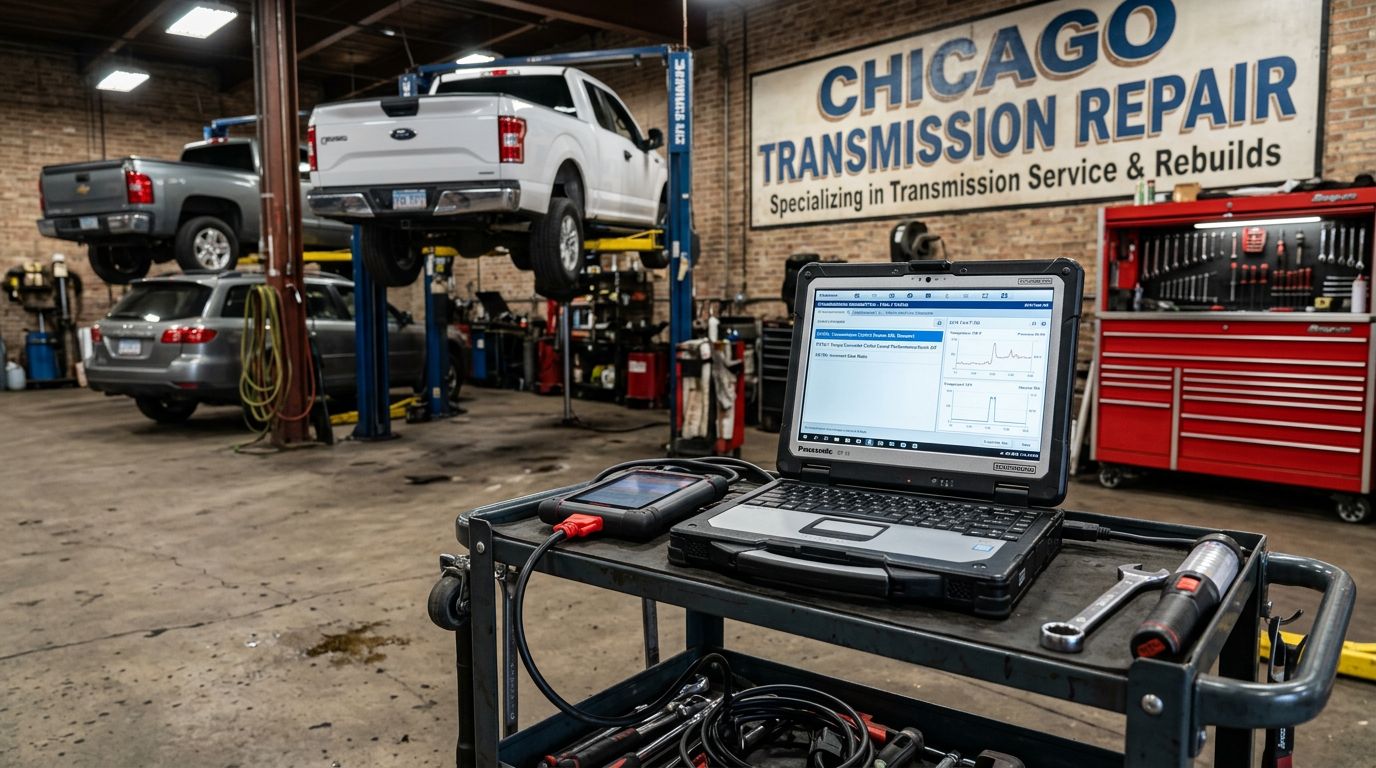
Some CVT complaints can be handled with fluid service, cooler work, valve-body repair, programming, or targeted repair. Others need a remanufactured unit or replacement. The dividing line is evidence: codes, fluid, road-test behavior, temperature data, and contamination.
What Not To Do
- Do not add random friction modifier or universal fluid.
- Do not approve a replacement quote without codes and fluid condition.
- Do not keep driving a CVT that is slipping, overheating, or stuck in limp mode.
- Do not assume a short test drive proves the CVT is fine; many symptoms appear hot.
What To Send Us
Text 847-393-0191 with the year, make, model, mileage, symptom, when it happens, and any codes or prior estimate. If you know the fluid history, include it. We will help you decide whether the vehicle is safe to drive in or should be towed.
Have a Transmission Problem?
Get a free computer diagnostic from Arlington Heights transmission repair support.